Essay
The Birth of Contemporary Fashion: How Comme des Garçons Made the Non-Trivial Ordinary — A Review of The Met’s Rei Kawakubo/Comme des Garçons: Art of the In-Between
This text was originally written in Japanese under the pen name Minoru Izumi, not under the name YUSUKE KOISHI, and published on FASHIONSNAP.COM on June 22, 2017. This English version translates and edits the archival manuscript for KLEINSTEIN TEXTS.

Minoru Izumi
The exhibition Rei Kawakubo/Comme des Garçons: Art of the In-Between, held at the Metropolitan Museum of Art in New York, carries a meaning larger than many people in fashion may imagine.
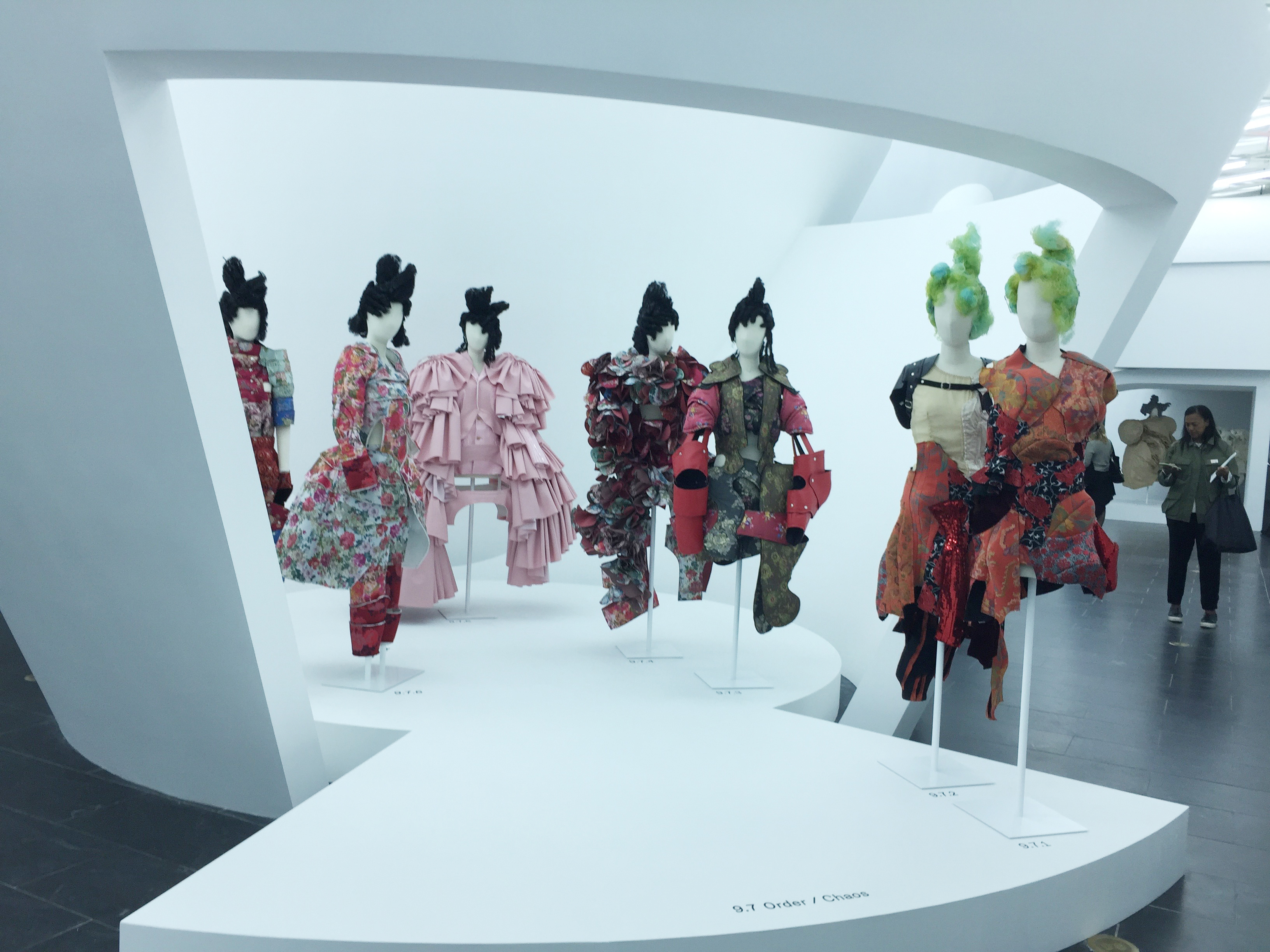
As many media outlets have noted, it was only the second time the Met had presented an exhibition devoted to a living designer. The previous case was Yves Saint Laurent in 1983. Curated by Diana Vreeland, who had been editor-in-chief of Vogue from 1963 to 1971 and later served as a consultant to the Costume Institute, that exhibition presented 150 looks. The archives of the Style section of The New York Times from the time convey the energy around the gala on the eve of the opening.11 The New York Times Style: “GALA NIGHT AT MET HAILS SAINT LAURENT” (December 6, 1983)
http://www.nytimes.com/1983/12/06/style/gala-night-at-met-hails-saint-laurent.html

It is surprising to learn that, after that exhibition, the museum apparently avoided exhibitions of living designers for more than thirty years because of criticism from the art world. In the catalogue for the Kawakubo exhibition, Costume Institute chief curator Andrew Bolton discusses the atmosphere around the 1983 Saint Laurent exhibition in his interview with Rei Kawakubo.
In 1983 Diana Vreeland presented a retrospective of Yves Saint Laurent. It was celebrated in the fashion press, but denigrated in the art press for its perceived commercialism. But in the early 1980s, art critics still clung to nineteenth-century definitions of what constituted art, despite the fact that Duchamp, the Dadaists, and certainly Warhol had made it problematic to define only one category of cultural production as art. I’m afraid that the Museum listened to the criticism.
The Kawakubo exhibition also opened just after a generational shift at the Costume Institute, following the retirement of former chief curator Harold Koda, who had long supported the institute together with Anna Wintour. There may have been a desire to do something new, free from older obligations and inherited anxieties.
It may be surprising that the wall between fashion and art existed so strongly in New York at that time. Even now, however, there are many people in culturally sensitive communities in the city who are not interested in fashion. As Bolton suggests, this comes partly from the long-standing view of fashion as commercial activity. And, in fact, American fashion design has often had a somewhat commercial character. There are also people who regard fashion as a culture belonging only to limited spheres such as particular subcultures or gay culture. In museums, fashion was long placed within the frame of craft or product design, and it was only after the 1990s that fashion began to be treated seriously in an art context. The art world also maintains a pyramid-like hierarchy, with classical art at the summit and contemporary art2 following beneath it.2 The contemporary art we now encounter so frequently was built on surprisingly recent foundations. Before the war, Julien Levy introduced Surrealists, and around the same time Peggy Guggenheim, advised by Marcel Duchamp, began collecting work in a new context. After the war, the foundation that allowed contemporary artists to work at a commercial level was built by figures such as Betty Parsons and Leo Castelli, who created galleries for contemporary art, as well as major curators including Dorothy Miller and Alfred Barr. It took more time before the social position of contemporary artists became established at a general level. When one compares the activities of fashion designers from that period with the critical force of contemporary art, which opposed existing values, it is understandable that fashion did not come into view. As a book that offers a glimpse into the history of contemporary art through its people, I recommend Laura De Coppet and Alan Jones, The Art Dealers: The Powers Behind the Scene Tell How the Art World Really Works (Cooper Square Press, 2002). Within that structure, fashion has never been placed particularly high.
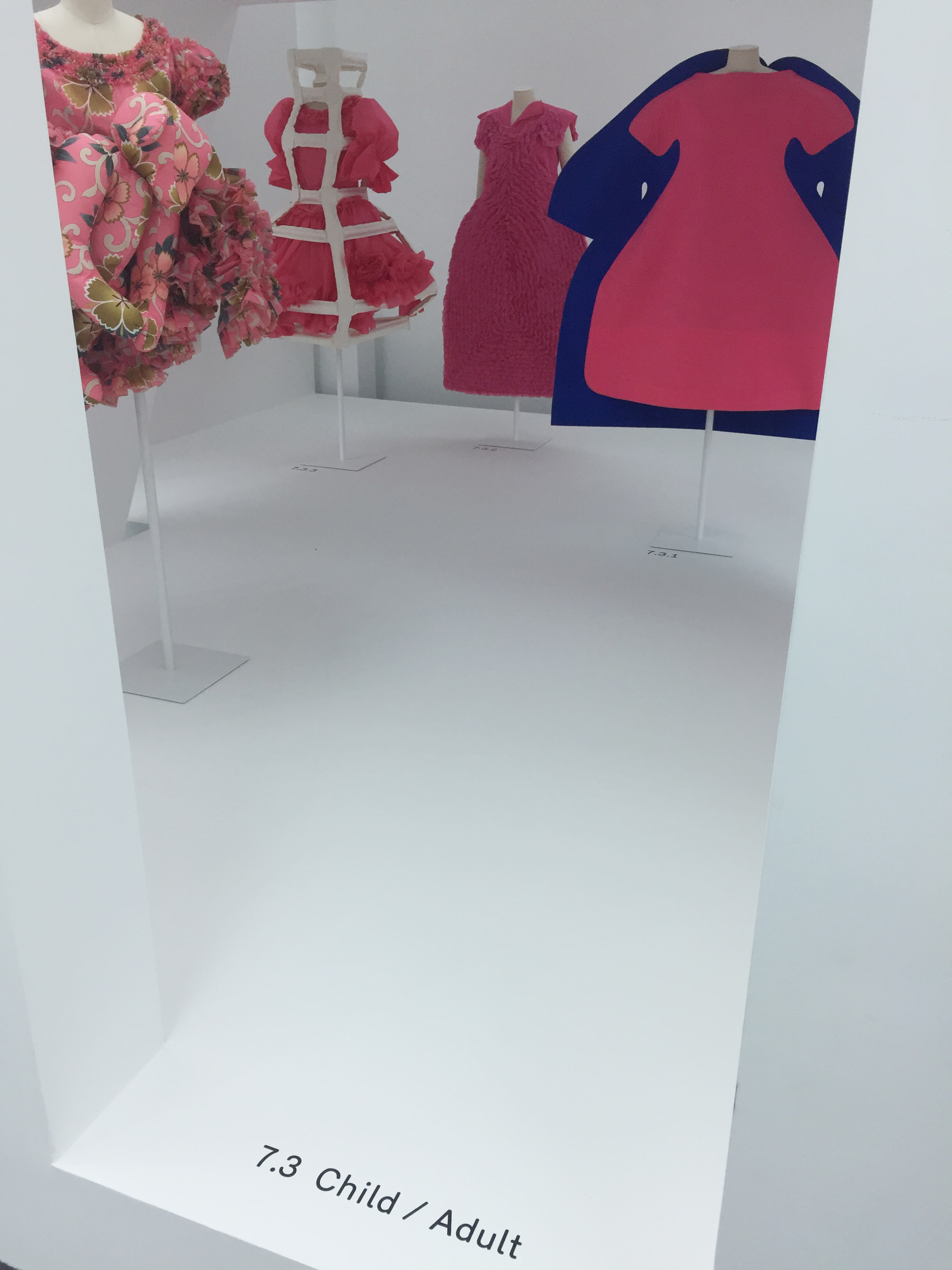
Yet as this exhibition became a topic of conversation, I sensed that the wind had begun to shift slightly. Two or three years ago, when I asked people working at art galleries in Manhattan whether they knew Comme des Garçons, most replies were limited to “only the name” or “the store on West 22nd.” Many did not know that Dover Street Market New York existed in Manhattan, who Rei Kawakubo was, or even that the brand was operated by a Japanese company.
But the Metropolitan Museum of Art, a museum that sees itself as one of the greatest in the world, presents exhibitions that people connected to art in New York, editors in publishing, and others involved in cultural content feel they need to follow. The situation has shifted a little. Now the name appears in conversation. Even for people who were not especially interested in fashion, or who had not been interested in Comme des Garçons, “Comme des Garçons” and “Rei Kawakubo” seem to have become proper nouns that they must track. Google Trends shows that searches for these two terms increased explosively after May.

Why Comme des Garçons, rather than another brand or designer? Who is Rei Kawakubo?
In the catalogue, Andrew Bolton answers this question in his interview with Kawakubo:
You are one of only a handful of designers, past and present, whose clothes can sustain a monographic exhibition in the context of an art museum.
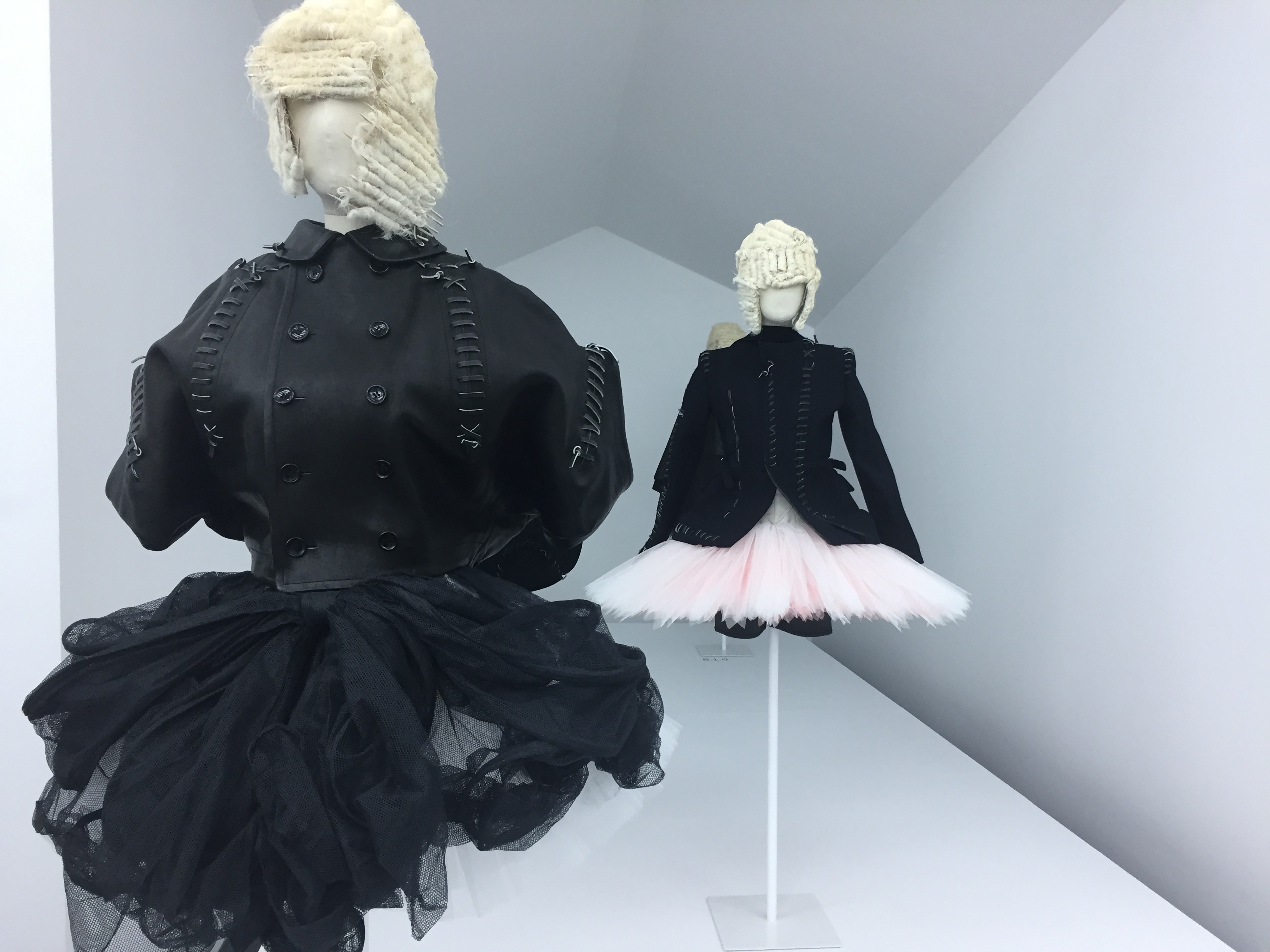
Seen historically, what is it about Comme des Garçons that stands out and makes this exhibition possible in a proper form? New art opened the field called “contemporary art” by making visible and articulating a critical perspective toward existing values and inherited art. What Comme des Garçons has done, I think, is to create a field that could be called “contemporary fashion.”
As Bolton says, beyond the symbolic garments on display, the brand has left behind too many things to count. Before Comme des Garçons, it was not normal to sell clothing that had been damaged or processed from the beginning, clothing left in an unfinished state, or clothing that did not follow the form of the human body. Before Comme des Garçons published the magazine SIX in 1988, it was not normal to treat abstract visuals as fashion visuals. The brand also continually found its own position within the industry. In Europe and the United States, there has sometimes been an unspoken custom in which designers seek advice, or almost ask permission, from powerful fashion editors before a collection is shown, in hopes that the collection will be covered. Comme des Garçons has kept its distance from such customs. Comme des Garçons has made what was not ordinary become ordinary.
As an aside, the worlds of both fashion and art have become more commercial than ever. The internet has opened the world, but at the same time people now see only the information they want to see. Communities have become enclosed, and the walls between cultural fields have grown stronger. In this situation, celebrities have become increasingly useful tools for breaking through walls between communities, and their influence has grown. If Kanye West, Rihanna, or Katy Perry is involved, people from any world end up seeing the news. In an age when the reach of information can be calculated precisely, enormous amounts of money are invested around such figures, orbiting them like satellites in order to capture attention. One representative figure who recognized this situation early and created a new media-business structure within the industry is Anna Wintour, editor at Vogue, the fashion magazine owned by Condé Nast.
Comme des Garçons, however, is a brand that has built media in another form. Dover Street Market, opened more than ten years ago, is a physical shop where one can actually handle clothes, but it has now gained a commercial influence comparable to powerful media within the industry. In this way, although Comme des Garçons was born as an outsider organization in the Far East, it has become impossible for industry people to ignore, even if they try. The fact that its exhibition is being held not anywhere else in the world, but at the Metropolitan Museum of Art, makes that clear.
Curator Andrew Bolton has said in media interviews and in the catalogue that working with Comme des Garçons was a tough and creative experience. Comme des Garçons is a brand that has continued to step into common sense and convention, and in this exhibition as well, it designed the entire exhibition space itself, co-producing the exhibition while challenging the museum’s regulations and the curator’s intentions. Watching that process, I imagine that the Met staff and executives, many of whom had not been familiar with fashion, were strongly impressed by that critical spirit. The impression they formed of Rei Kawakubo as a fashion designer may have a positive effect on fashion as a whole in the future.
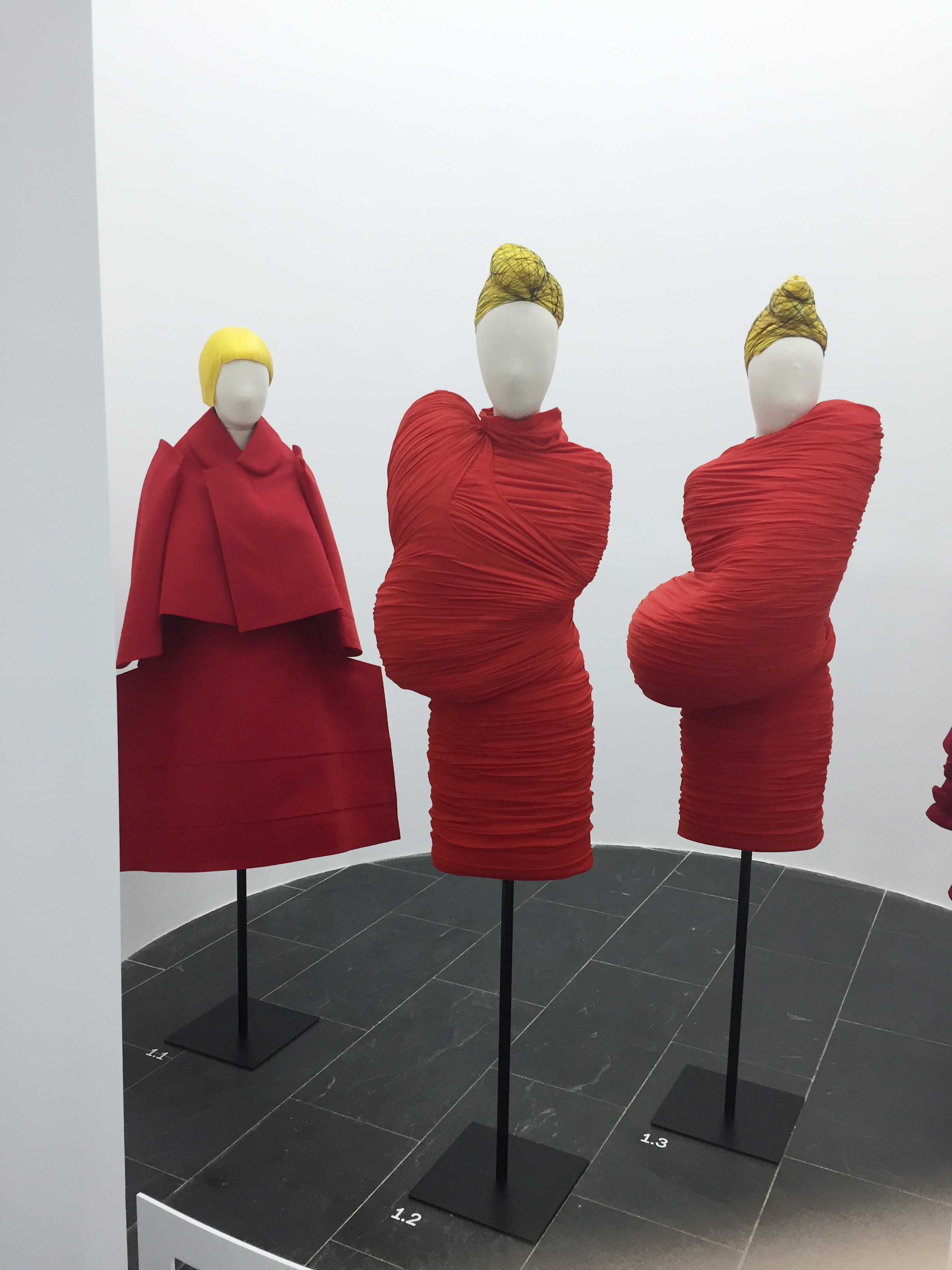
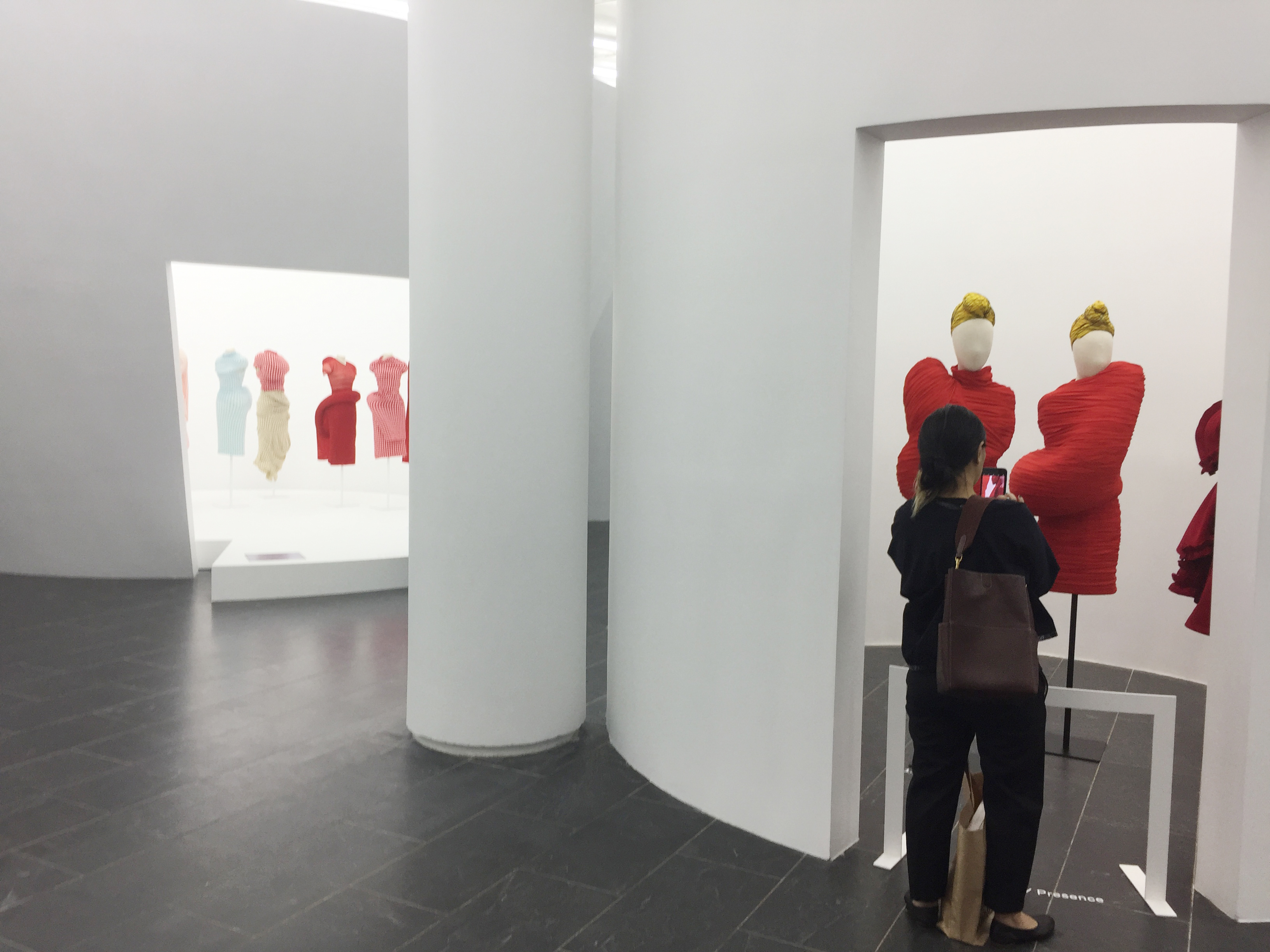
On May 4, the first public day of the exhibition, as I looked at the works and the space within the exhibition rooms where white walls rose up, I felt strongly the presence of what could not be displayed by the exhibition. Alongside the things that were exhibited, perhaps the process that was not exhibited was what the exhibition had truly tried to express. The presence of the “now,” in which what had not been ordinary had become ordinary. On the way back after the exhibition, in Central Park, I saw a young man wearing Comme des Garçons walking his dog, and felt the sign of a new wind beginning to blow.