Talk
Why Is the World So Crazy About Street Culture? — Street Culture Will Change the World; Fashion Hacks “Class”
Originally published by amana INSIGHTS as a report on a talk session organized by Omoshiro Future Laboratory / amana design. Photographs by Kazuma Hata. Text by Kazuyuki Koyama. This English version has been edited and translated from the original Japanese article.
Street culture now exerts an influence large enough to make even luxury brands, those old monarchies of taste, pretend they were born in an alleyway. Dapper Dan’s collaboration with Gucci and A$AP Rocky’s appearance in a Mercedes-Benz campaign are no longer exceptions. They are symptoms. The street has become a place from which fashion, design, music, and art repeatedly borrow their voltage.
For this talk, writer, DJ, and lecturer Hiroshi Egaitsu joined Yusuke Koishi of KLEINSTEIN to discuss the history of hip-hop culture and the fashion system that allows street culture to cross, disturb, and sometimes rewire social class.
Hip-Hop Culture and the Reconstruction of Identity
Keisuke Tajiri: Today’s event is the first talk organized by Omoshiro Future Laboratory, a new cultural think tank launched by amana design. Before we begin, M.C.BOO from the laboratory will introduce the project.
M.C.BOO: Thank you all for joining us. I started Omoshiro Future Laboratory after setting up my desk at amana design in July. The aim is to think about interesting futures and to develop a kind of cultural think tank. My own career began when I encountered the Beastie Boys and made my debut on CD. Since then I have stayed in the world of culture. I first knew Hiroshi Egaitsu as a fan of his DJ work, and we have known each other for about twenty years. Today I would like to ask how a culture that was once “sub” or “counter” came to occupy the position it has now.
Hiroshi Egaitsu: Thank you for coming. My name is Hiroshi Egaitsu. I work as a DJ and also teach at Kyoto Seika University, Tokyo University of the Arts, and other art schools.
Yusuke Koishi: I’m Yusuke Koishi, representative of KLEINSTEIN. I work in fashion. Thank you for having me.
Egaitsu: The theme today is “Why is the world so crazy about street culture?” I will begin by talking about street culture centered on hip-hop: what it is, where it began, and why it matters. Later, Koishi will take up street culture from the viewpoint of fashion.
When we say “street culture” tonight, we are mainly referring to cultures rooted in hip-hop, which began in New York in the 1970s, and skate culture, which also emerged in California around the same period. I will focus especially on hip-hop culture. It appeared in New York’s Bronx borough from the mid-1970s into the 1980s. New York at the time was in a severe economic condition and had even fallen into fiscal crisis.
Out of that situation came the four elements of hip-hop: rap, DJing, breakdance, and graffiti. They began as forms of play among children in the Bronx. The children who were absorbed in breakdancing came to be called B-boys.
Behind this was the collapse of community caused by New York’s fiscal crisis. Public support was cut, and in some poor neighborhoods public school children were released around noon because programs could no longer be sustained. Children spilled out into the streets and began rapping, DJing, breakdancing, and painting graffiti.
Their fashion mixed European brand items in ways that were not supposed to go together: Kangol berets from Britain, Cazal sunglasses from Germany, Adidas or Puma sneakers with “fat laces” ironed wide. These things arrived in the Bronx as surplus stock from wealthier areas such as Manhattan. At the time, it looked strange. But for them, the strangeness became identity. That question, whether a supposedly strange way of dressing can become identity, connects directly to what Koishi will discuss later.
South Bronx: Community Collapse and the Making of a Crew
Egaitsu: South Bronx, often named as the birthplace of hip-hop, had been a residential area for office workers commuting to Manhattan in the 1950s. By the 1970s, through discrimination by administration and real estate, income inequality, and failed urban planning, it had become almost postwar in appearance.
What happened there was the collapse of administration and community. Local identity was lost. Hip-hop culture emerged from that condition. B-boys called their friends “crews,” “squads,” and “posses,” emphasizing bonds and drawing lines between inside and outside. In doing so they created something like a substitute family. Fashion played an extremely important role in that process.
Hip-hop culture was, in this sense, a way for children from poor neighborhoods, especially African American children, to reconstruct who they were through fashion, music, dance, and visual expression. Behind them was the history of people forcibly brought to America through the slave trade and slavery. Then, in the 1970s, they faced another form of deprivation in the places where they lived.
Rap, DJing, graffiti, and breakdance can be understood as acts through which people whose identities had once been broken apart gathered materials and rebuilt themselves by hand.
In fashion, Dapper Dan symbolizes this movement. He originally worked in Harlem as a fur tailor in the 1970s. Harlem was not the Bronx, but it was also an area where Black culture flourished in the 1980s. Later he began making bootleg pieces using luxury-brand imagery. He disappeared for a time after being accused of copyright infringement, but in 2018 he collaborated officially with Gucci. That shift, from something illegal and street-based to something acknowledged by high fashion, expresses one of the major currents of our time.
Why Did Hip-Hop Become Global?
Egaitsu: Why, then, did hip-hop culture become so popular around the world? The poet and Meiji University professor Keijiro Suga has written on this, and I think one answer is that African-descended cultures exist everywhere now because the West forcibly carried African people across the world through the slave trade. The foundation of modern society contains that history of exploitation. When the world becomes fascinated with hip-hop or street culture, that background is never far away.
Hip-hop culture has now spread globally, crossing social class. A symbolic example is the 2017 Mercedes-Benz campaign on YouTube featuring A$AP Rocky. The film tells the story of his life, coming from Harlem in New York. Mercedes-Benz seems to have understood that hip-hop culture has allowed many people to reconstruct identity and move across social class. Behind an identity that must be reconstructed, there is always a story. From stories of desire, justice, contradiction, and reconciliation, new aesthetics and new standards of value are born.
This reconstruction of identity is not limited to African Americans. One example I would mention is the Korean rapper Keith Ape. Hip-hop is now deeply rooted among Asian youth, but in the 2000s it was rare to see young Asians dressed in this way. This, too, is a process of mixing elements and defining an Asian identity by oneself. Hip-hop culture has spread throughout the world as a method for reconstructing identity. From here, I would like Koishi to discuss how street culture and hip-hop culture can be understood from fashion.
Thinking Street Culture Through Fashion
Koishi: Today the theme is street culture, so I would like to connect the history of hip-hop culture with the way fashion thinks. When you hear the word “street,” what do you imagine? Probably not Fifth Avenue in Manhattan or Omotesando in Tokyo. The street is not the grand avenue. It is the back street, a slightly dangerous place. One side of street culture’s history is the story of how that back street becomes consumed as culture.
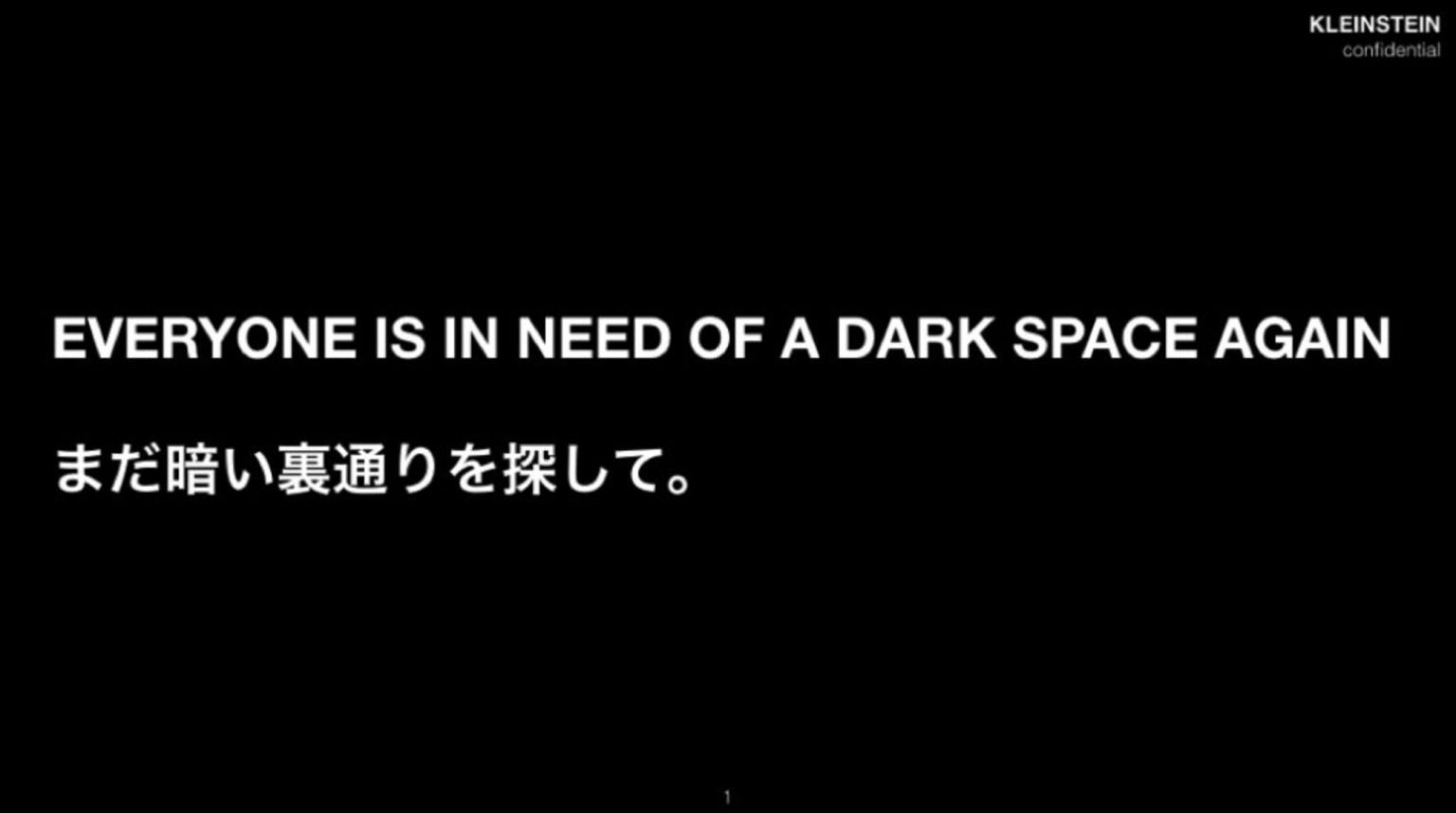
To state the conclusion first: fashion keeps looking for the next dark back street. A place where slightly dubious people once walked is developed, consumed, and lit up. Then people search again for another different place as a source of inspiration. That, I think, is one aspect of street culture.
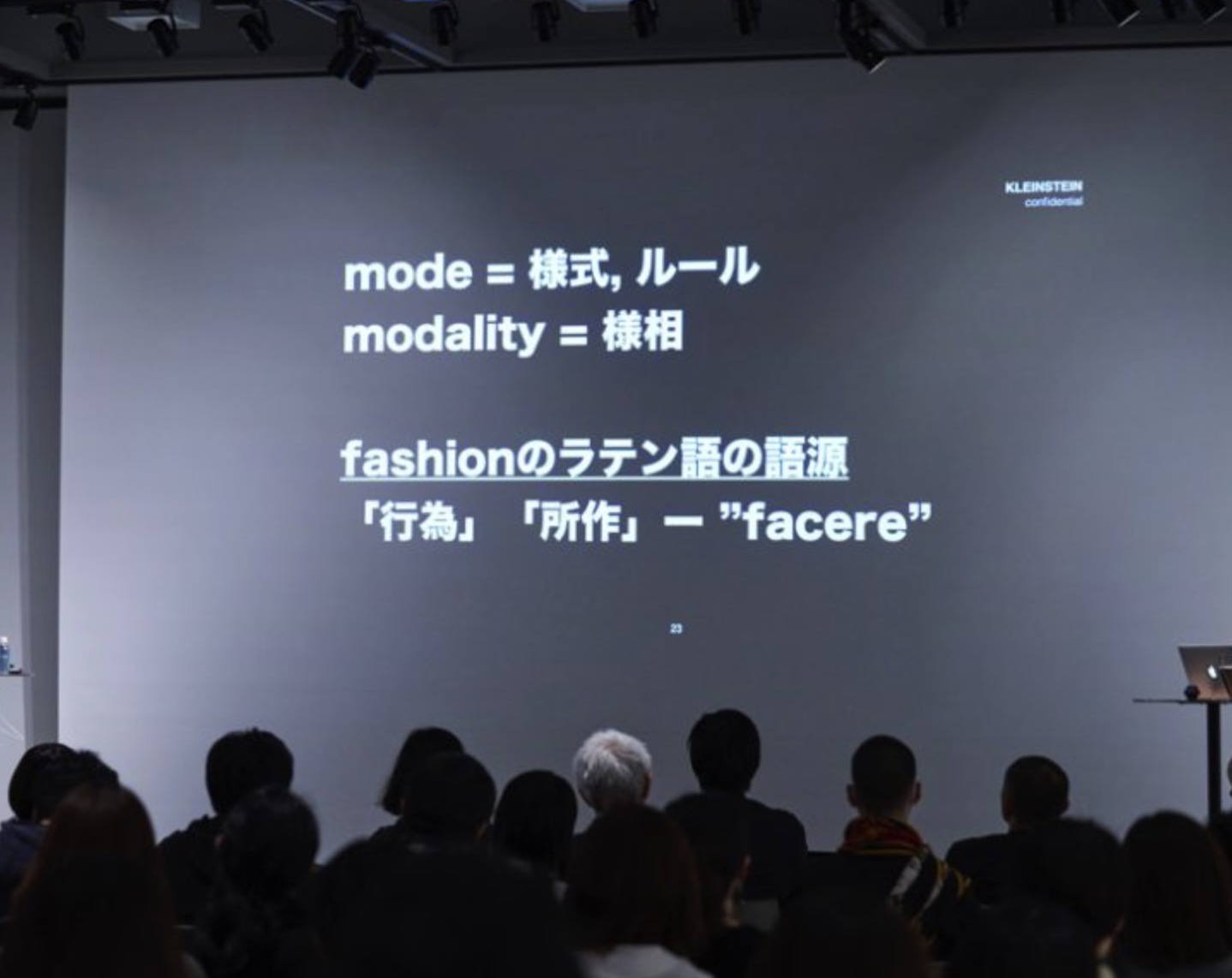
Before thinking about street culture from fashion, let us think about the word “fashion” itself. In Japanese dictionaries it is often translated as ryuko, meaning trend. But fashion is not merely trend. If we translate ryuko back into English, we get “trend.” Search for the Japanese word and you will find comedians, characters, and whatever happens to be popular. Search for “trend” and the situation becomes even less helpful.
In Chinese, fashion is shishang, literally something like “the clothing of the time.” That translation has the elegance of a civilization that has spent four thousand years thinking in characters. In Russian, it is moda, the same root as the French mode. In English, “mode” can mean style, manner, or modality. If we trace the etymology of fashion, we find meanings related to action and gesture.
Looking at all of this, fashion appears as something more ambiguous than a simple trend. It does not match our actual sense of the word to define it only as what is popular. Many fashion designers say they want to create a larger movement, not only clothes. That, too, hints that fashion cannot be contained within garments.
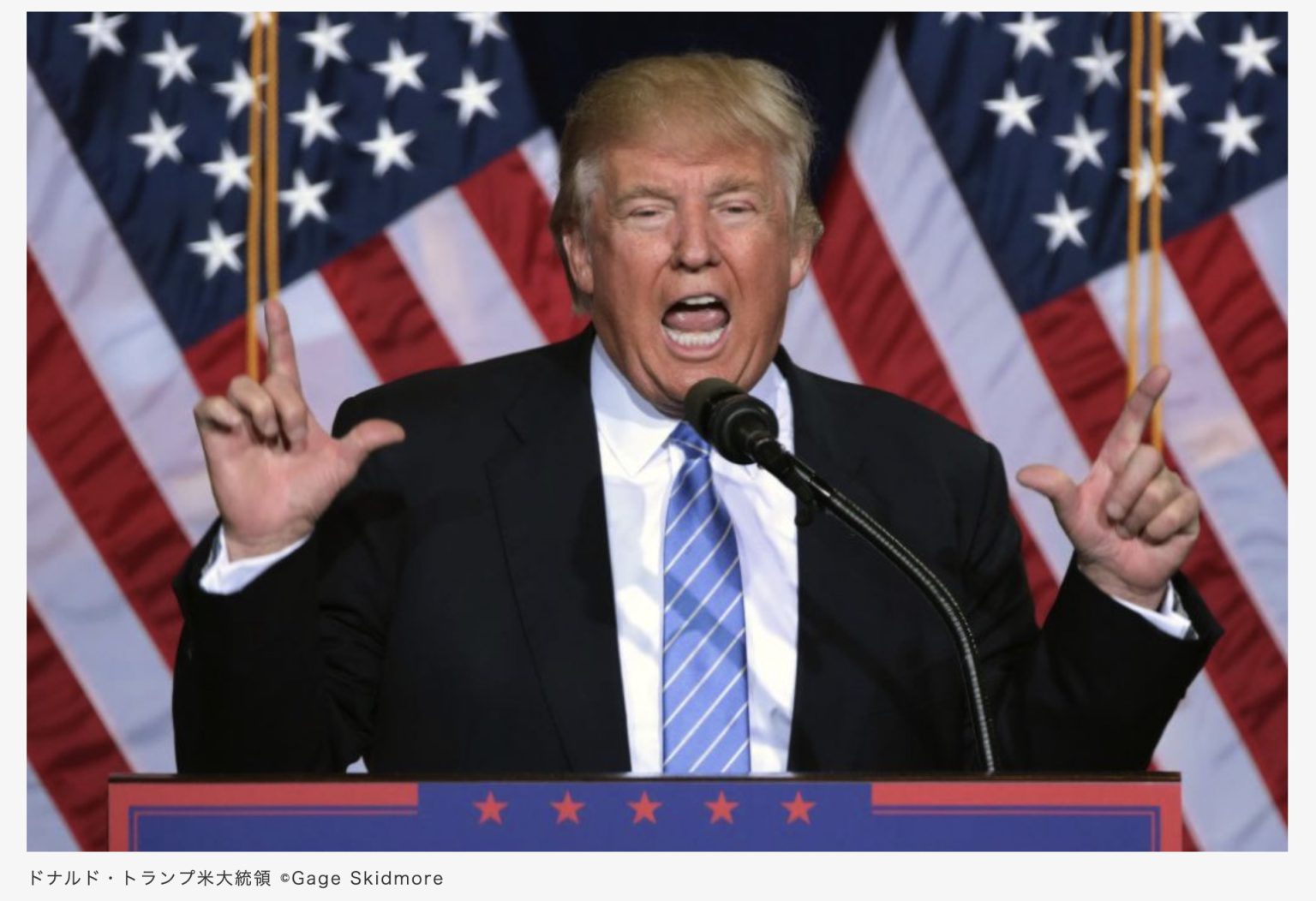
If creating a large movement is part of what a fashion designer does, then perhaps Donald Trump was, in an indirect and unpleasant sense, one of the hottest “fashion designers” of his moment. His appearance created a large movement in society. Anti-Trump art, fashion, and culture emerged in opposition to him. If fashion-making includes the indirect creation of social conditions and not only direct design, then what arose around him was enormous.
Even people who are not professional fashion designers can create noise in society and affect “the phenomenon of human appearance,” or even ways of living. Looking again at the origins of the word, fashion may mean the phenomenon of how human beings appear. I sometimes think the Japanese word should be yoso, “the modality of appearance,” rather than simply trend.
Making Modality, Making Community
Koishi: Mark Twain wrote, “Clothes make the man.” If producing fashion means producing a new modality of appearance, can a new modality create a new person?
Human beings are fond of labeling. “I am A, this person is B, that person is C.” This tendency causes all kinds of problems, or, to put it more technically and less politely, bugs. Fashion has the power to exploit those bugs.
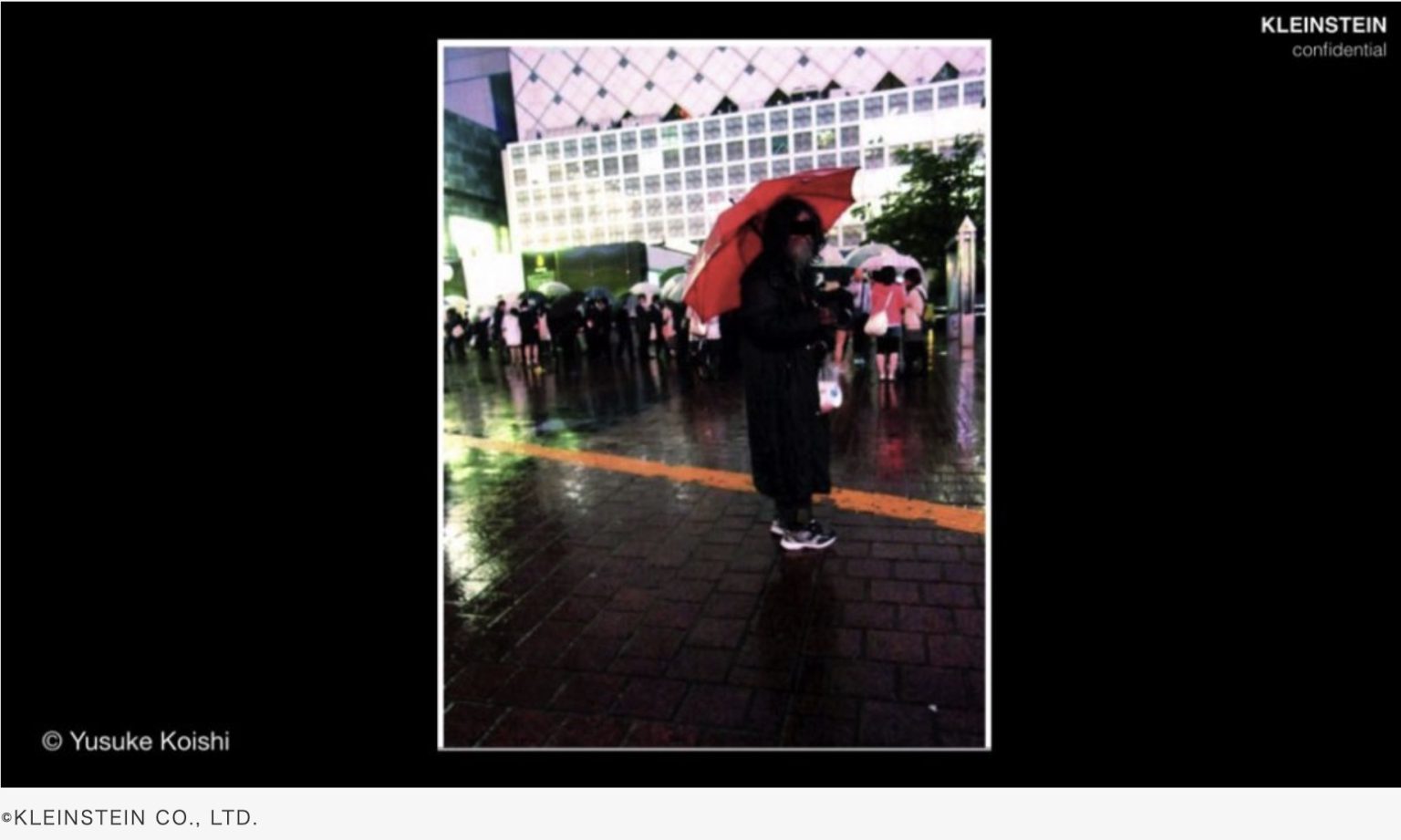
I once encountered a man wearing a black coat and carrying a red umbrella. He wore technical sneakers more than ten years before they became fashionable. I used to photograph people at night in Shibuya, and he looked cooler than anyone else. Was he homeless? A hermit? A philosopher? An artist? He was someone who could not be categorized. That inability to categorize him seemed to reveal a bug in society. That kind of phenomenon is, for me, close to the essence of fashion and perhaps a clue to how a new person is made.
The fashion system generalizes styles born from social bugs. The Paris fashion system, if I may put it with some bias, is like a water-treatment plant. Fashion containing bugs is collected and filtered through Parisian values. Dangerous back-street cultures and unnamed modalities of appearance are absorbed there.
RUN-DMC and the Hacking of Class
Koishi: Why did the system become like that? One reason is that the history of modern fashion developed through the process of selling culture to the West. Presenting kimono or African patterns in Paris allowed people to wear something different from others and say, without words, “I am not like you.” Fashion distinguishes self from other within communities and hierarchies, creating identity by bringing in something foreign from outside.
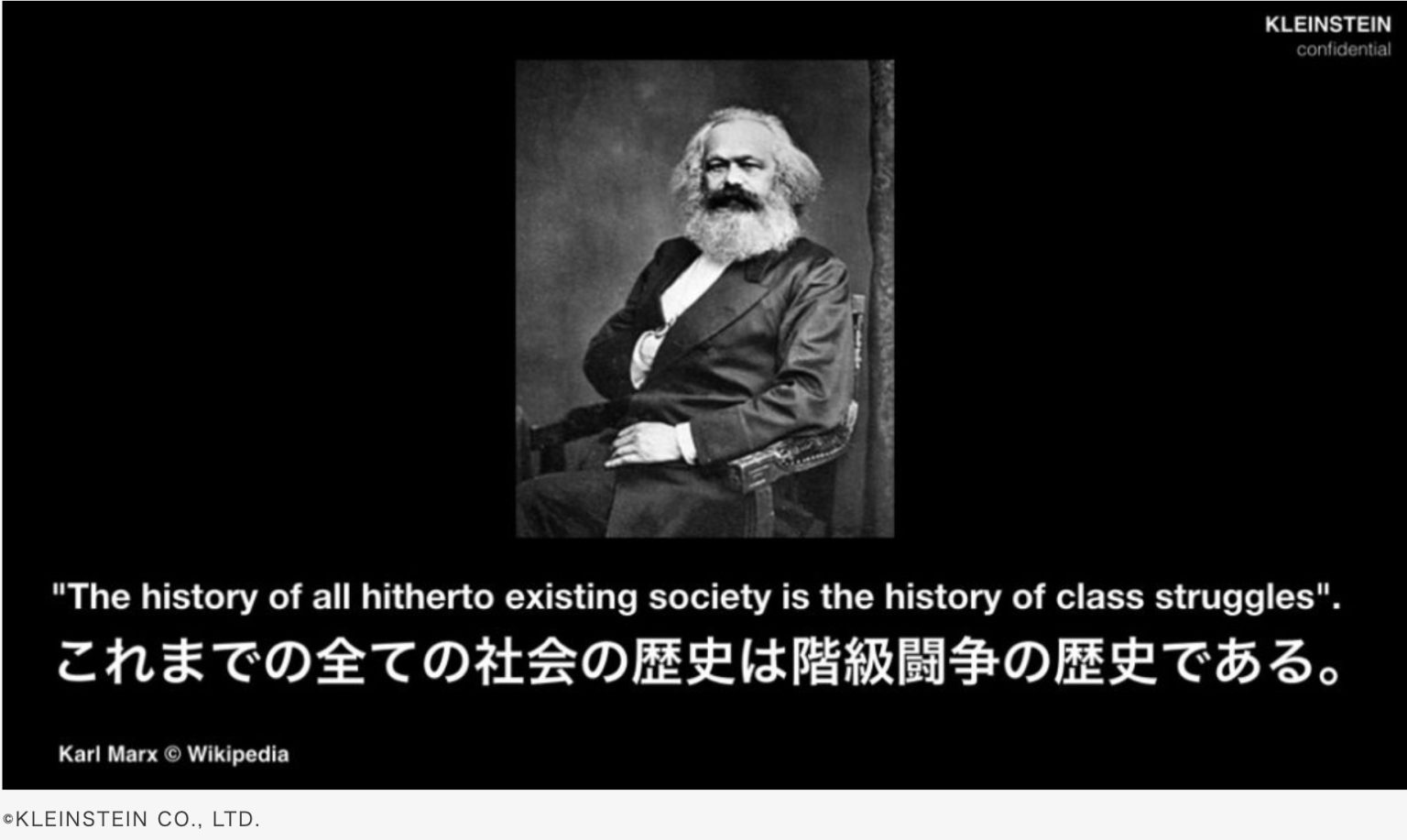
Another way fashion developed was by making uniforms for “new people.” For designers, the important question was whether they could gather people who could not be categorized within existing common sense and give them something like a shared uniform. Marx wrote that the history of all hitherto existing society is the history of class struggles. Whether we like it or not, we live in a class society. People understand where they stand within it. In connection with hip-hop, I want to give one example of how fashion hacks class.
Looking at hip-hop history, it seems that new figures repeatedly appear who build another hierarchy beside the existing one. RUN-DMC, revolutionary stars in hip-hop history, are one example.
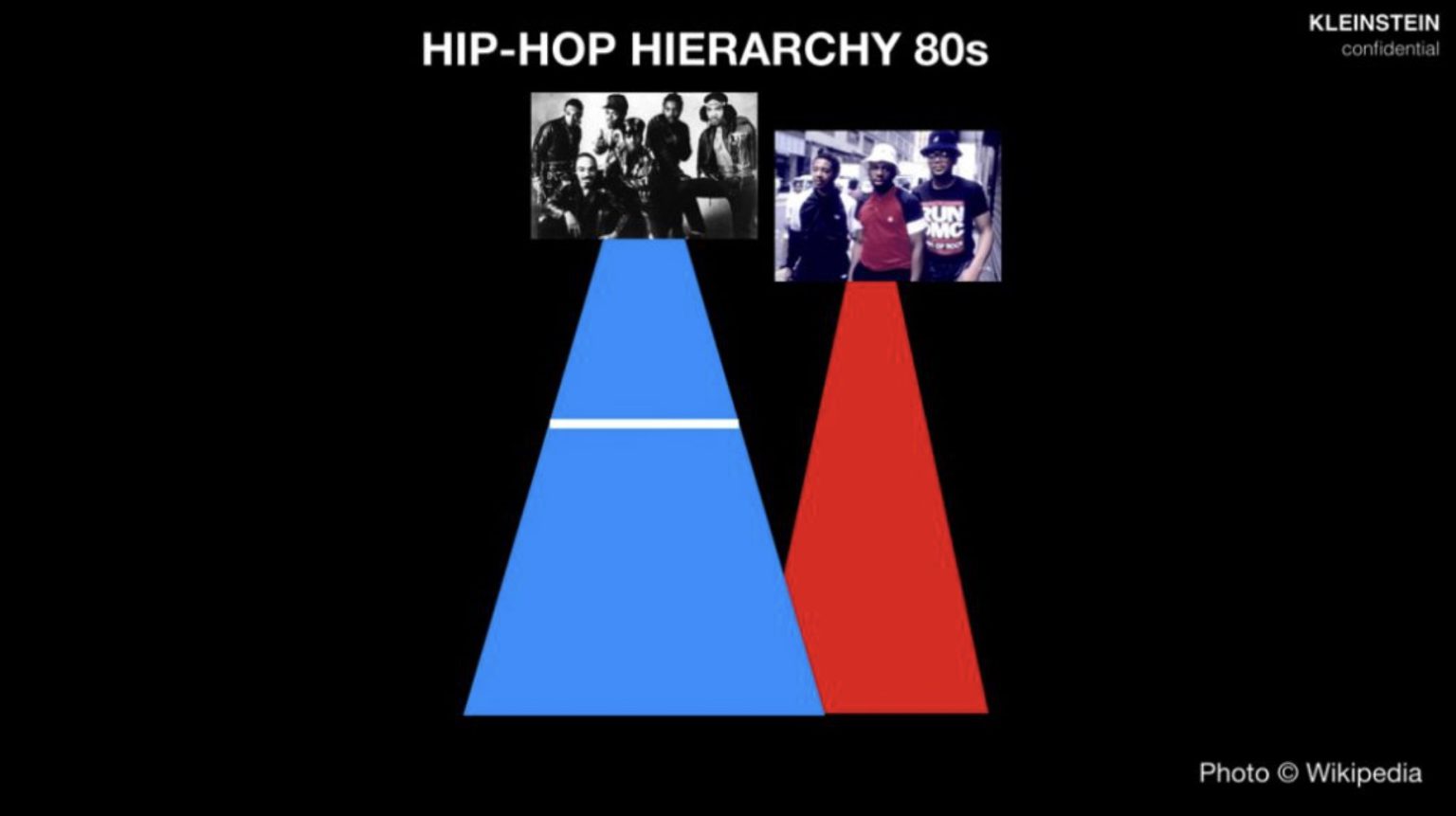
Before they emerged, there was Grandmaster Flash, a legendary DJ who helped create early hip-hop. His group, Grandmaster Flash and the Furious Five, dressed flamboyantly, and later groups often followed that style. RUN-DMC did the opposite. They appeared wearing the same clothes as the young people around them. They stepped outside the game of competing through more powerful and more extravagant performance and instead adopted a strategy that made the audience think: they are one of us.
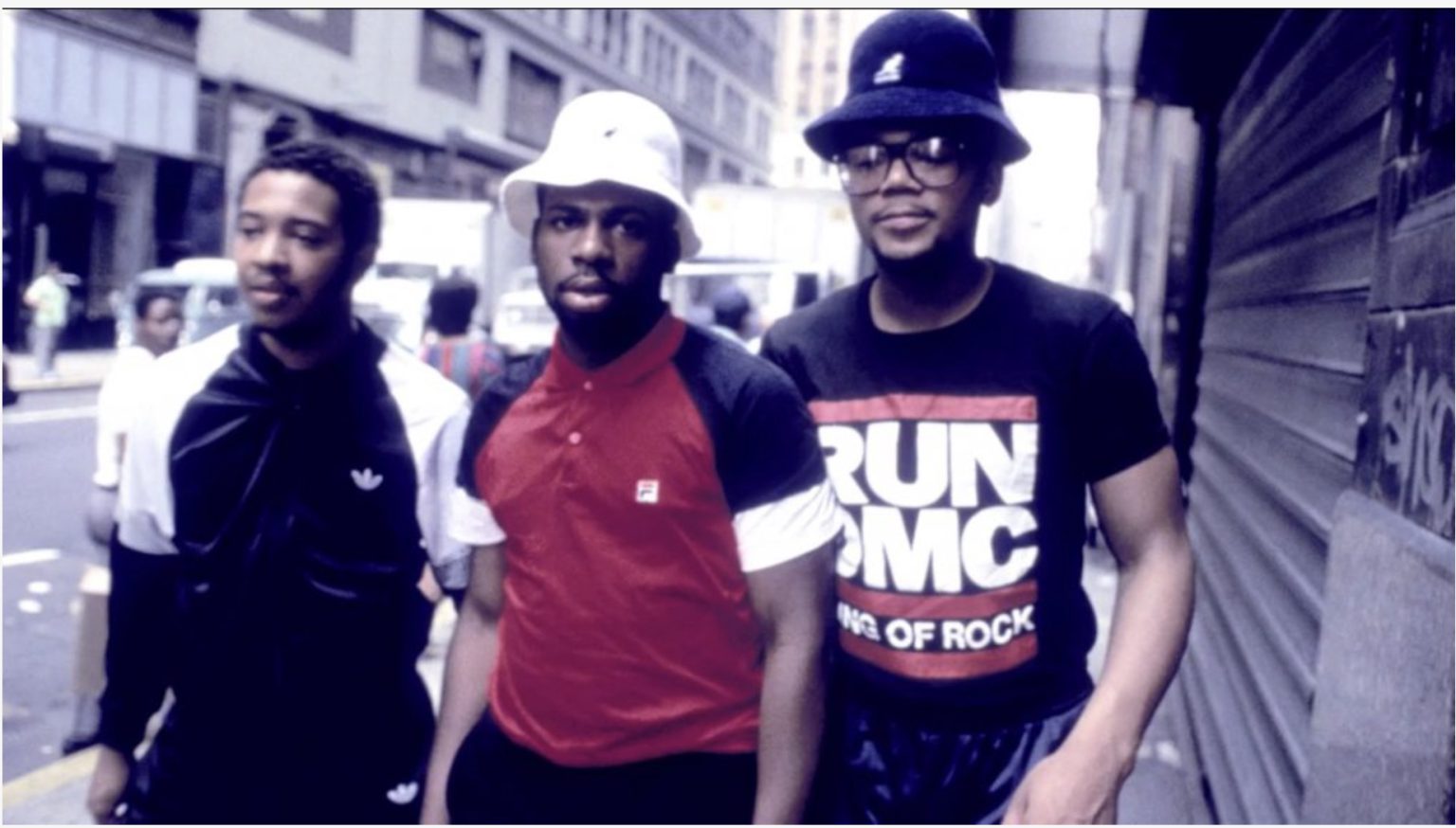
It would have been difficult to reach the top of the hierarchy created by Grandmaster Flash and the Furious Five by playing the same game. RUN-DMC avoided that wall and entered from the side. Through fashion, they hacked class. Their casual style later became one of the origins of hip-hop’s uniform.
Buy Low, Sell High
Koishi: This is one of the basic pleasures of the fashion system. During the 2016 presidential campaign, Michelle Obama responded to the Trump camp with the phrase, “When they go low, we go high.” It is a noble sentence, of course. But from the viewpoint of innovative fashion, it is not always correct. Often the more promising move is: when they go high, we go low; when they go low, we go lower.
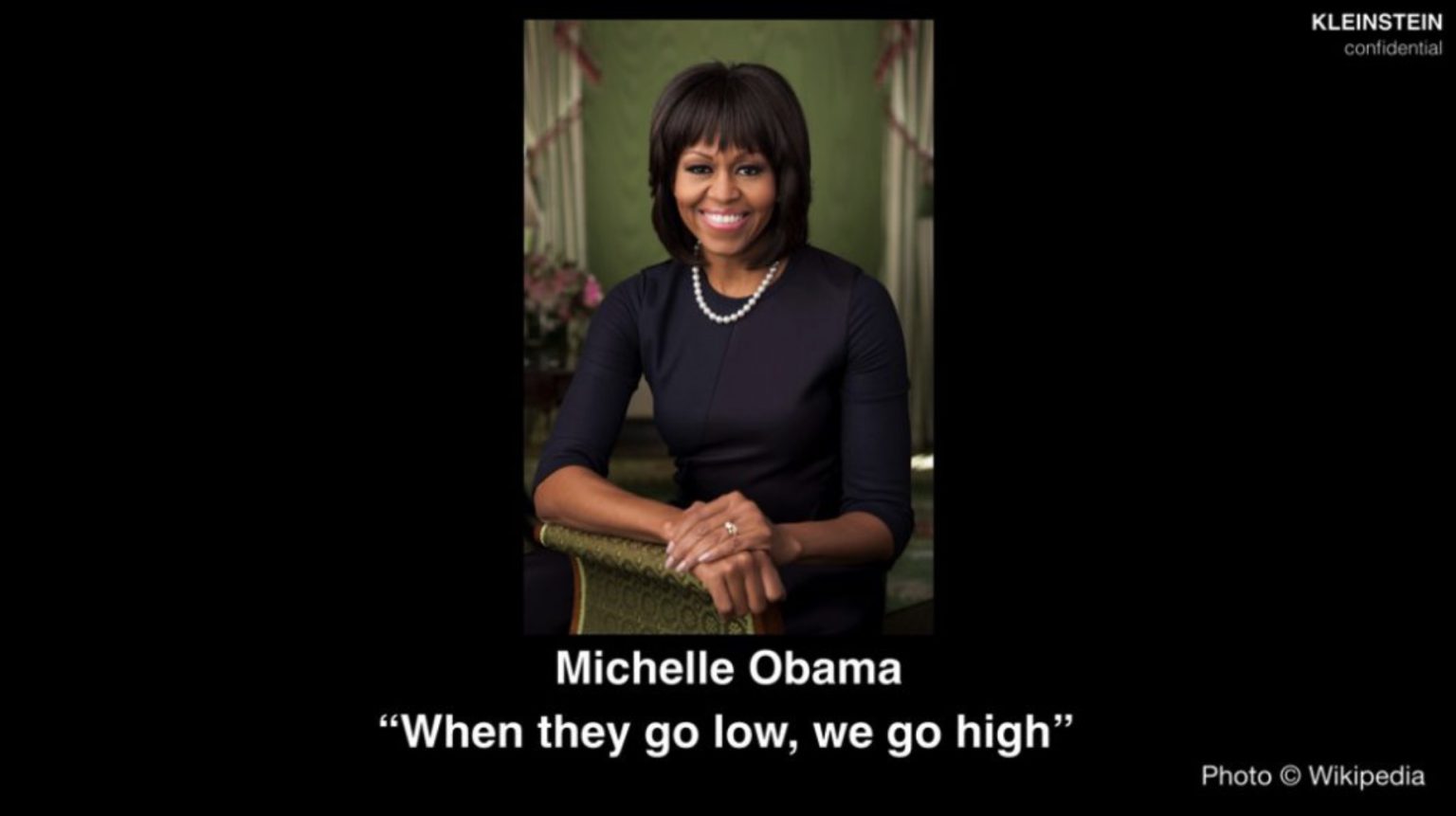
This is the same logic as investment: buy low, sell high. Invest in what is currently cheap, raise its value, and sell it high. Fashion purifies what is now considered low, creates a powerful community around it, and has it admitted into the high. In doing so, fashion creates a place for new human beings.
In relation to making uniforms for new people, Virgil Abloh’s OFF-WHITE c/o VIRGIL ABLOH™ is a useful example. The brand describes itself as “defining the grey area between black and white as the color OFF-WHITE™.” Considering that Abloh was African American, one can imagine the layers of meaning in that phrase. It establishes a place in the in-between and makes that place into a message. As a brand with critical force, it was extremely well constructed.
As with RUN-DMC, fashion hacks existing class structures. At the same time, newly emerging classes can be absorbed. Those who make the rules are protected, yet by digging beneath the hierarchy one may paradoxically return to the top. In old video games, if you dig underground or drive the wrong way around the course, you sometimes warp back to the highest level. Society has many such bugs. Fashion designers plant something like a computer virus inside those bugs, creating new models of life and new movements. That, I think, is one historical connection between fashion and street culture.

The Future of Street Culture
Egaitsu: Thank you, Koishi. From here, let us think together about the future of street culture. Do you think criticality like Virgil Abloh’s is essential if street culture is to survive?
Koishi: Hip-hop culture itself basically comes out of something like social criticism. Fans gather around that criticality, communities form there, and more people come together. That structure seems important.
Egaitsu: So criticality becomes a driving force for fashion?
Koishi: Yes. And one could also say that Virgil Abloh’s appointment as creative director of menswear at Louis Vuitton became possible precisely because it was the era of the Trump administration, an era in which social division was constantly being discussed. Of course, one can say he was a popular designer and the appointment made sense. But Louis Vuitton’s decision to choose him also carried a message about diversity. The timing was excellent. Some part of the clothing’s appeal surely came from sympathy with that message.
Borrowing Russia to Protest the West
Egaitsu: Fashion expresses the modality of society, as you said. At the beginning you described fashion as the search for a still-dark back street. Since that dark back street keeps changing, are there any areas you are paying attention to now?
Koishi: Personally, I am interested in the internet. For example, do you know the dark web? I heard recently about a junior-high-school student who was arrested for selling stimulants there, using cryptocurrency for the transactions. I am not interested in the crime itself, but the activities of teenagers that once took place in the back streets of the 1970s have now completely seeped into the internet. I am interested in the cultural scenes that emerge between online space and physical reality.
In recent years, Russia and the former Soviet sphere have attracted attention in fashion. Fashion has often been used historically as a form of resistance. Perhaps the West had trouble finding an easily legible otherness within its own streets, so attention moved eastward.
I recently spoke with Takashi Matsushita, a scholar of Russian literature who has translated Vladimir Sorokin. He pointed out that what is interesting about Russian street brands is that they are linked not only to anti-establishment feeling but also to nationalism. Young Russians are developing stronger patriotism, and sweatshirts or hoodies printed with Cyrillic lettering, the Russian flag, or direct messages like “Russia is the best” have appeared. In Japan, if someone shouted “Japan is the best!” they would immediately be called right-wing or worse. The United States may be in a similar situation now. Precisely because of that, perhaps Western observers can use Russian street fashion to give the middle finger to the status quo. And that status quo, in the end, is a society centered on America.
Egaitsu: So Russia is used as a way to protest mainstream culture centered on America.
Koishi: Yes. It may become fashionable because it functions as a message of dissatisfaction toward the Western system. The paradox is that it is Russian fashion with a nationalist sensibility. British punk mocked the monarchy and the flag. This is almost the reverse.
Egaitsu: I think Japanese street fashion became popular among overseas hip-hop artists partly because it allowed them to mark distance from American mainstream culture.
Koishi: I agree. Wearing a Japanese street-brand T-shirt can create distance from American fashion and show that one is alternative. Supporting another culture can be a way to take distance from the culture one is already inside.
Imagined Communities
Egaitsu: The key is to make an “imagined community,” isn’t it? Identity exists in order to distinguish this side from that side. What does Japan need if it wants to use the mechanisms of fashion successfully?
Koishi: I think it depends on how much of an imagined community can be created. A community forms, capital flows into it, and culture is produced. Ryoma Sakamoto said that the tide of the times moves according to profit. On a macro level, I think large trends are made in that way.
Egaitsu: The fact that hip-hop could be monetized was also a major reason it spread globally.
Koishi: Yes. In the end it is the logic of buy low, sell high. How much can you hold that may one day be sold high, and how much can you cultivate it? That may be the thickness of a culture. Egaitsu, are there signs in street culture that you are sensing now?
Egaitsu: Hip-hop culture has become something that belongs to everyone, including the new wealthy. As you said, when street fashion becomes popular, music often comes first. Many rappers became popular during the Obama administration. The structure of music changed. Live experience became important. People gather there, and merchandise becomes a major source of revenue. Hip-hop concerts in the United States are not cheap. From Japan, going to a large festival can easily cost a great deal. At the same time, subscription services allow audiences around the world to listen to huge amounts of music at low cost. That also seeds the next generation.
M.C.BOO: Looking back on today’s discussion through my own experience, I found many points that overlap with what both of you said. In Japanese hip-hop culture, too, people tribalized their crews and created original fashion in order to win. Thank you very much.
Source: amana INSIGHTS, “Why is the world so crazy about street culture?” Talk session with Hiroshi Egaitsu and Yusuke Koishi. Original Japanese article: https://insights.amana.jp/event/report/23093/