Interview
Interview with Dragan Espenschied (Rhizome): Internet Art Preservation, Part 2
This column asks Dragan Espenschied, preservation director at Rhizome, about the preservation of internet art. Following Part 1, which traced the path that led him to work at Rhizome and introduced examples of projects he has advanced there, Part 2 presents Dragan’s views on the distinctive qualities of internet art and on new developments such as NFTs.
The Distinctive Qualities of Internet Art
Exhibitions of internet art are no longer limited to museums specializing in media art; they are introduced in exhibitions at many kinds of museums, and can also be encountered in public space. Internet art is no longer a “rare” presence. At the same time, as if to emphasize its specific character, the word “internet” is still often placed before “art,” and the term “internet art” continues to be used as a distinct designation. How does Dragan Espenschied, both as a conservator and as a net artist himself, understand those distinctive qualities?
I strongly believe that digital art and internet art need their own vocabulary. They may sometimes be regarded as among the most popular forms of art, but unless their materiality and specificity are understood, artistic expression and artistic excellence will be impaired.
What, then, are the forms of materiality and specificity that belong to digital art and internet art, and that other forms of art do not possess?
In networks, “power” lies in transparency (11The term “transparency” derives from technology and engineering. Dragan believes that, in order to respond to this kind of environment, digital art and internet art need to perform work that other forms of art cannot.). Because “details that are not supposed to matter to the user are invisible,” networks, and by extension their users, can be divided, exploited, and put to use. It is no exaggeration to say that this is a political topic for me. (22The line of critique Dragan supports is most fully explained in Jay David Bolter and Diane Gromala’s Windows and Mirrors (MIT Press, 2005) and in Olia Lialina’s Turing Complete User (arthistoricum.net, 2021).)
What exactly does it mean for “details that are not supposed to matter” to be invisible? I asked him for an example.
To put it simply, Instagram, for example, makes “things that are not supposed to matter to the user” invisible: converting images and videos into different formats, distributing them to users other than oneself, or designing the layout from scratch. The user does not have to do any of that. It provides a service in which the user can concentrate only on “what really matters,” namely “creating content.” But this type of service or product makes the mechanisms of the platform “transparent.” It is designed so that users pass through them without noticing. In such an environment, it is extremely difficult for artists to achieve genuine artistic autonomy.
New Movements Such as NFT Art and the “Places” Where Artists Publish Work
I asked him for his view of the emergence of NFT art (33NFT stands for non-fungible token. NFT art refers to the movement of selling, reselling, and purchasing art converted into digital data through blockchain technology. It is possible to trace transaction histories and ownership information. It is also called crypto art.), which did not previously exist, and of artists’ participation in it.
For example, the artist Rafaël Rozendaal is one of the artists who had been selling websites as artworks even before the NFT art movement (44In the following text, Dragan’s partner Olia writes that “already in 1996 the world’s first net art gallery for sales, Art.Teleportacia, was opened.” Sachiko Shikata, “Art on the Internet: Toward a New Economy,” InterCommunication No. 30, 1999, pp. 74-89. https://www.ntticc.or.jp/pub/ic_mag/ic030/pdf/074-089.pdf). He now sells NFT art as well. At the same time, many NFT artworks are made by people who are not artists. That is one of the characteristics of NFT art. How does Dragan think about this?
Indeed, Rafaël Rozendaal incorporated ideas about the ownership of digital objects into his work early on, and the shift to the NFT model looked like a small next step. But the ownership aspect never dominated his art. People value its very strong artistic quality.
Whenever artists are used as a means of bringing something supposedly new into the world, for instance mobile data networks, ubiquitous computing and location-based services, the internet, or virtual reality, as has happened in the past, it is structurally very difficult for them to remain autonomous as artists.
Even if artists appear to be “doing pioneering work” and “leading a new movement,” there is a very high possibility that the very thing they are supposed to promote will, in turn, dominate them. And various industries are beginning to learn how to build systems that are resistant to introspection from within and to internal critique from the technology industry itself.
For example, if an artist chooses YouTube as the place to publish a work, it becomes very difficult to operate without supporting YouTube. Every time a video is uploaded, viewers are gathered on YouTube, and the corporation can make use of that. Even if the video is critical of YouTube, it is analyzed, categorized, mixed with other videos, and recommended to someone. Even if the video makes a formalist reference to YouTube itself, YouTube changes little by little, so the period in which an artistic intervention can operate is very short.
In that sense, the NFT space may be the most advanced structure I have seen so far: a resilient structure that has become stronger by largely excluding the possibility of artistic autonomy. I do not think there is much that artists can do there.
What are examples of works that use YouTube? I asked him to look back.
For example, the artist Constant Dullaart made a series of video works in 2008 about YouTube that referred to the way YouTube functioned at that moment. The videos show elements of YouTube’s user interface, making it difficult to distinguish and understand “what is a real user interface element” and “what is merely a graphic appearing in the video.” However, the design of YouTube’s interface and the service itself have changed greatly over time. As a result, the artistic intention of that series no longer operates for us today.
As another example, Petra Cortright made vvebcam, a work specific to YouTube, in 2007. Because YouTube now has different functions, and because artists can no longer access earlier versions of its interface and processes, the work now looks only like an ordinary video piece. Supplementary explanation is needed for viewers to understand what was special about it in 2007. That is precisely why, for the Net Art Anthology project (55The exhibition NET ART ANTHOLOGY, organized jointly by the New Museum of Contemporary Art and Rhizome’s preservation department, looked back on the history of net art from the 1980s through the 2010s, including well-known works that are often no longer accessible today. One hundred landmark works were selected, preserved, and presented online. The project began in 2016 and was completed in June 2019. Part of the project was also shown in The Art Happens Here, an exhibition held at the New Museum of Contemporary Art in winter 2019.), we partially reconstructed YouTube.
I do not intend to criticize these works; I think both of them form wonderful relationships with the platform YouTube. But they show the imbalance of power and the structural challenges faced by the preservation of net art.
Related problems, he says, can also be seen in museum exhibitions. Around 2011, Dragan was living near ZKM | Center for Art and Media Karlsruhe, a media art museum in Germany. It is an institution with an excellent collection and a strong commitment to the preservation of art. There he saw an exhibition called the “ZKM AppArtAward,” which gave prizes for the most outstanding artistic developments in the field of applications for smartphones and tablet devices.
For Dragan, however, the app works on display looked old-fashioned, like CD-ROM art with high-resolution graphics. No matter how much the technology of the iPad was emphasized, the works themselves did not seem to add anything artistically new, nor did they appear to contribute much to the development of art. What stood out were simply the technical features of Apple’s iPad: high-resolution graphics and a touchscreen.
At the same time, he deeply understood that younger generations of artists had no easy way to access CD-ROM works from that earlier period, nor any way to learn what kinds of works had been produced. At a certain point, Apple computers no longer came with CD or DVD drives.
He says he realized that, unless he became a conservator of digital art, he would spend his entire life merely seeing “the same thing” in higher resolution.
I do not think artists should follow a linear technological story or “emphasize the features of new products and platforms.” Yet at the same time, it is structurally becoming increasingly difficult for artists to avoid doing so. In that respect as well, unless digital art is preserved in meaningful ways, it will become impossible to refer to past contexts. And artists will be increasingly at risk of doing nothing more than producing technological demonstrations for hardware and software companies. I think this becomes very clear if you look at the enormous wave of virtual reality works that began around 2014.

What Matters in Preserving Internet Art
What does he consider important in the preservation of internet art? Is it possible to preserve even the “texture” of a work? I asked for his view.
The preservation of internet art is special. The software with which users interact, software connected through networks, and other remaining resources of the internet may all play roles within a single artwork. In that sense, it is extremely important to conceptualize the boundaries of the object and to choose the perspective from which one approaches the work.
For example, it is impossible to capture and preserve an Instagram performance on the network “completely” over an extended period. That would be possible only if you made a copy of Instagram itself. But from a limited perspective, it is possible to capture it. Much of the texture of internet art is produced by the software used by the user and by the context of the network. Emulation helps preserve the former, and web archiving supports the preservation of the latter.
One can also think of the boundaries of the object as “blurry”; the farther the user moves away from the work, the lower the precision of preservation may become. Suppose, for example, that you preserve a web server running code written by the artist and provide an emulator equipped with a legacy browser. The core performance of the work is taking place on the web server and is rendered as intended in the emulated browser. But the artwork may link to other places on the web, relate to sites outside the artist’s control, or use materials from them. These can be handled as web archives. A web archive cannot reproduce everything that a running web server can do. On a website accessed as a web archive, you cannot create a new account or leave comments.
A web archive can provide the broader landscape that supports the texture of the core artwork. But when there is “distance” from the core of the work, that landscape may gradually appear roughened and broken. Not everything that was possible when the work was active will necessarily remain active. Yet within a fluid mixture of complete performance and documentation, it gives users possibilities for interaction.
Current Conditions and Problems at Other Institutions
When I interviewed him in 2015, he spoke about what museums might need to become in order to advance the preservation of media art and internet art. At the time, Dragan said that it might be important for many institutions to transform from purely art institutions into something more like research institutions that also conduct various forms of research and development. I asked how he thinks about this today.
Most museums and archival institutions approach the preservation of digital art and internet art through metaphors drawn from art forms with which they are already familiar. For example, they foreground “code” as a continuation of conceptual art, migrate works to “new data formats” as in time-based media art, or treat them as “ephemeral” like performance art. In my view, “details” should really emerge only when one looks at the work from the perspective of software maintenance in computer science and networked environments.
In addition, institutions will need to enlarge and expand their collections in order to represent correctly how internet art has been created and by whom. Some of the world’s leading museums hold only a handful of internet artworks, and the situation does not fairly recognize either the astonishing diversity of artistic practices or the presence of artists. Rather than spending years investigating and preserving individual works, we need to build and maintain infrastructures and networks. In other words, we need thinking and action at a more systematic level. Projects such as Emulation as a Service (EaaS) and Webrecorder need broad support from the field.
I also believe that the preservation of digital art justifies its own approach in education, and that the preservation of internet art should be handled in an independent department rather than continuing to remain under the umbrella of time-based media art.
The Work That Has Left the Strongest Impression
Of the many archival projects and preservation activities Dragan has been involved with, which work has left the strongest impression on him?
I am most interested, above all, in infrastructure and maintenance rather than in focusing on a single achievement or artwork. That said, it is not that there are no moments that have left a strong impression. One was my partner Olia’s exhibition My Boyfriend Came Back From The War (MBCBFTW) at HEK (Haus der Elektronischen Künste) in 2016. In that exhibition, using a setup developed with Klaus Rechert, the project leader of EaaS mentioned earlier, EaaS and Webrecorder web archives were used for the first time in a physical exhibition space. We have continued to use that setup in exhibitions such as Net Art Anthology.
Comparing Germany and the United States
Dragan moved to New York in 2014, when he began working at Rhizome. Partly because of COVID-19, he now continues his work while moving back and forth between the United States and his native Germany. What differences does he see between the two countries when doing the specialized work of preserving internet art?
I have never received formal education in archival science or art conservation. I have approached these themes as an artist and designer. In Germany, because I do not have an academic background related to archives, I probably would not have been able to obtain a reasonably good position in this field.
In the United States, by 2014 I was already attending the Library of Congress’s annual digital preservation conference and giving the closing keynote. I remember that Trevor Owens pushed me into that opportunity.
I feel that contemporary art plays a larger role in the United States than it does in Europe. There are many people interested in art, and I learned that one can approach the field of archives from the side of artists. The United States also feels more open to people with different professional backgrounds.
In Japan, although the number of museums and related institutions hiring archivists and conservators is gradually increasing, there are still not many institutions employing engineers who work at the level of infrastructure with a framework like Dragan’s in mind. In the future, if such engineers are actively hired and if engineers, archivists, and conservators collaborate, it should be possible to develop preservation activities in this field for the world, as Rhizome has done (66In the “Problems and Challenges” section of my column “Digital Preservation and Media Conservation Toward the Future: New York’s Small Data Industries, Founded by Ben Fino-Radin (Part 2),” Ben points out the brain drain of people working on the technical side of nonprofit institutions such as museums. Recently, treatment of museum-related workers has also become an issue in Japan, and early measures for improvement are desirable in order to prevent the outflow of excellent personnel.).
At that point, it will become even more important to create a community base in Japan connected to overseas communities, and that should become a path toward realizing strong digital archive preservation and conservation at individual facilities and institutions. Especially as the Rhizome case shows, by taking part in the development of open source projects and becoming one of the developers, it becomes possible to connect to networks that cross national borders and to gain access to the latest examples and knowledge. If advanced services and tools can emerge from Japan in the future, they will attract greater attention from people involved in the field around the world.
Finally, when Dragan appeared on Ben Fino-Radin’s podcast Art and Obsolescence, he made a remark that conveys both his thinking and his character. I would like to introduce it here.
If we think of this entire field as a community in which different people concentrate on different things and deepen their respective areas of expertise, then you are friends with one another, exchanging information, helping one another, and building projects together. I think that benefits the whole field.
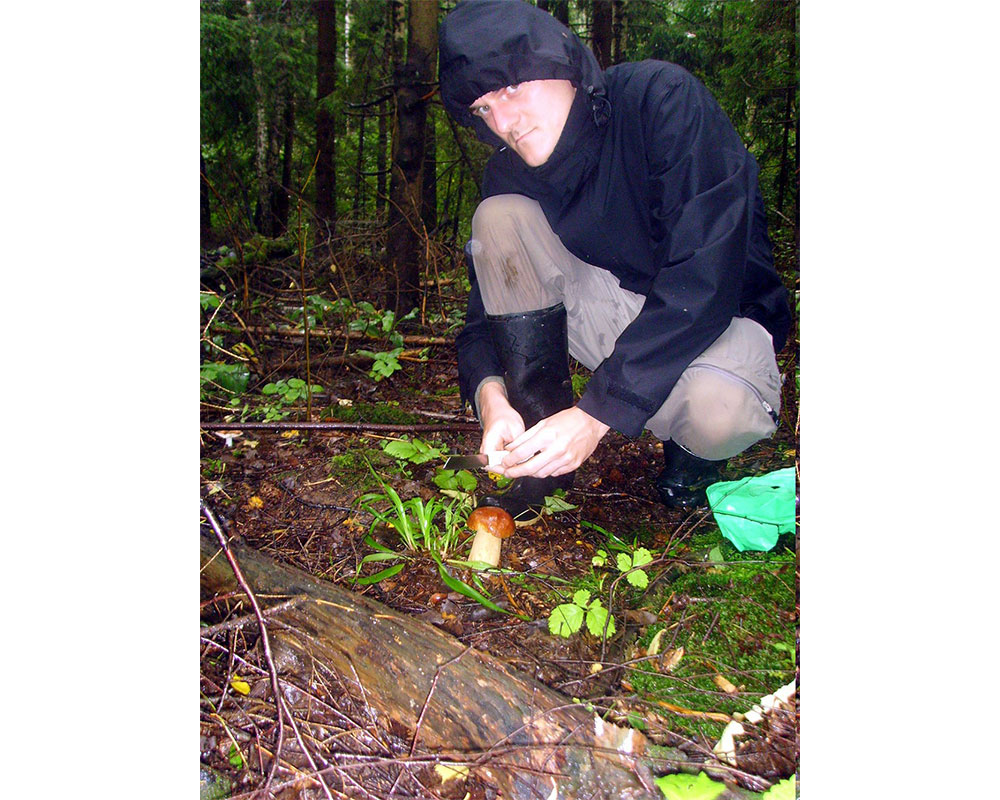
Dragan Espenschied is preservation director at Rhizome. After studying art and design and working as a musician, net artist, and researcher, he began working at Rhizome in 2014. He has no formal education in archives and is entirely self-taught. He has a strong interest in building and improving frameworks for the preservation of digital art, including internet art. https://rhizome.org https://rhizome.org/profile/despens/
URLs were last checked on September 15, 2022.