Magazine
Essay Series “Walking Now” MISHIMAGAZINE #8 – Tokyo: A Friend from Hanoi Arrives, Gears Echoing Through a Long December
The original text was written in Japanese for MISHIMAGAZINE in February 2017. This post is an English translation and republication of the original article.
Photography by KLEINSTEIN
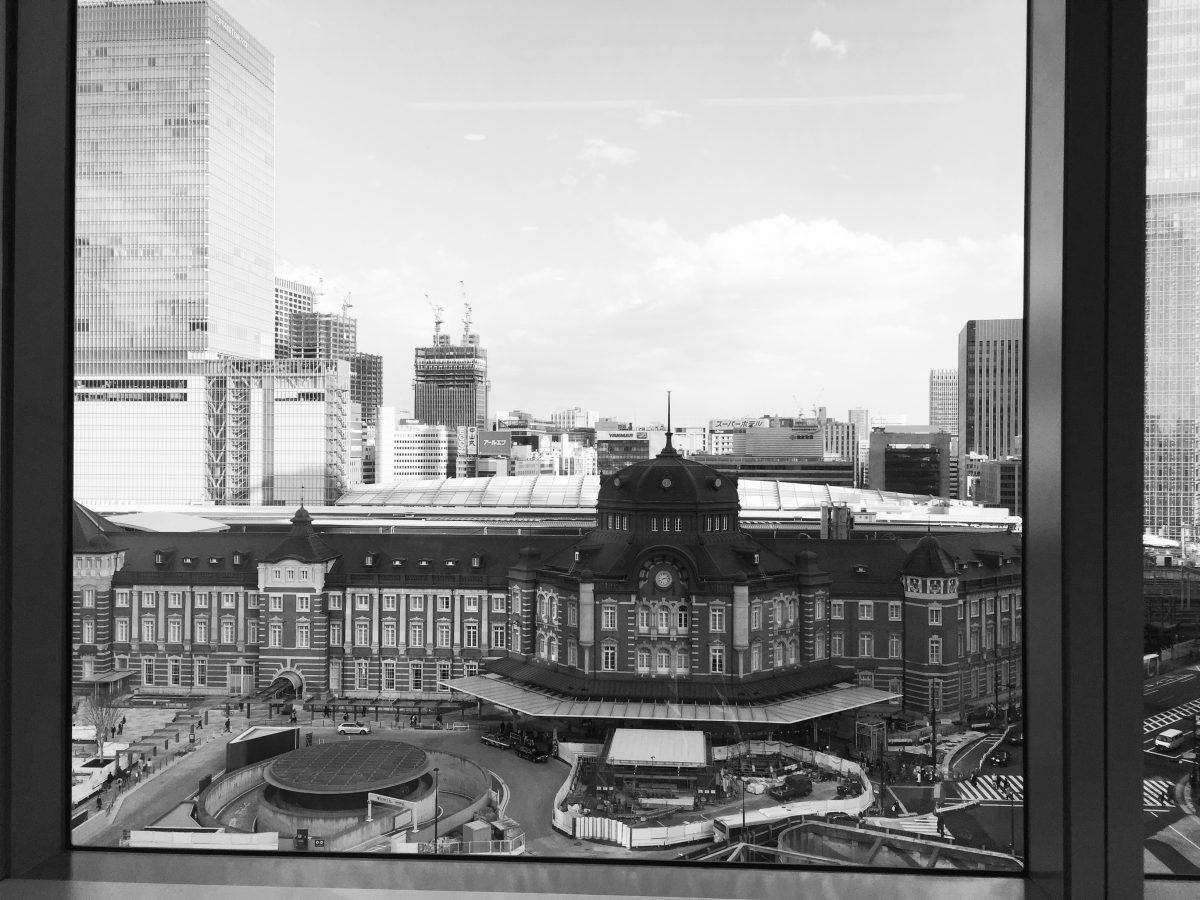
Shiwase means December. There seem to be several theories about the origin of the word. One says it is the month when monks run east and west to recite sutras. Another says it is simply a phonetic borrowing, the sort of linguistic shrug that later generations mistake for profundity. If we take it to mean running east and west, then modern people, who travel by airplane, are quite literally running in every direction.
In the fashion world, which at first glance appears to have little relation to Buddhism, the schedule from December through the end of March is violently busy. Masters and disciples alike run here and there, as if the sutras have been replaced by sample racks, invitations, and invoices.
In January, the autumn-winter season begins in Milan with Pitti Uomo, the menswear trade fair. Immediately after the Milan collections, Paris Fashion Week begins toward the end of the month, followed by presentations and exhibitions. From early to mid-February, some domestic brand exhibitions take place in Tokyo, but before those have even finished, New York Fashion Week for autumn-winter womenswear starts in parallel. London and Milan follow in quick succession with more exhibitions and presentations, and from early March Paris begins again. Once the Paris exhibitions end, Tokyo exhibitions begin once more toward the end of March. Because the results of these exhibitions determine the economic condition of the next half year, or even eight months, everyone is more or less desperate.
New Year’s holidays are usually holidays, but overseas, the year-end break that began before Christmas is over by January 2. Regardless of the Japanese calendar, the engine begins running at full throttle. If one’s work is aimed at Milan or Paris, there is little time to sigh with relief on New Year’s Eve and call it the end of the working year. Many people are preparing so they can respond as soon as overseas work begins. Makers have to produce samples and bring them to exhibitions; media people and those around them are planning projects in line with the collection season. Sometimes, while everyone else is in Paris or Milan, someone deliberately slips the timing and holds a major meeting for six months later. The storm that begins in December finally leaves around April Fool’s Day. Shiwase is a long run.
At the beginning of December, when that long run had already begun, the writer Nguyen Qui Duc, whom I wrote about in the sixth installment of this series, came to Tokyo from Hanoi with his partner, the product designer Nguyen Mai Phuong. The trip had no particular purpose. It seemed to be an abstract writerly journey: he wanted to walk the streets of Tokyo with Phuong, who was visiting Japan for the first time, and enjoy a vacation. Tokyo had begun to take on the tense, hurried atmosphere of the end of the year, and in the morning the cold air stung the skin. They had come to Tokyo on holiday to escape the busyness of Hanoi. Duc had spent a long period in Tokyo years ago, when he worked for a radio station in San Francisco, and at the time he lived in Kagurazaka. His vivid memories of Tokyo are the night scenery around Iidabashi and Sotobori-dori, and the quietness and light of Akasaka and Aoyama.
“I got tired of looking at streets filled with motorcycles,” Duc said, with a shy, wry smile.
Watching him sit down in a Japanese restaurant in Akasaka, dressed in Yohji Yamamoto, I began to imagine the swarm of motorcycles cutting through the hot, damp air of Hanoi. The explosive noise, the voices ringing through the street. To an outsider, such a strange scene looks fresh and stimulates all five senses. But perhaps, if one looks at it every day, even that becomes tiresome.
Speaking of fresh scenery, “the quietness of Tokyo” is also strange. The phrase “the quietness of the metropolis Tokyo” may sound a little odd. I myself came from the provinces, and when I first arrived in Tokyo I felt that the city was noisy. Yet after walking through large cities around the world, I do think Tokyo is remarkably quiet for a megalopolis of more than ten million people.
At Shibuya Crossing, huge numbers of people are always passing through, but what reaches the ear is less the sound of human voices than the noise produced by advertising. Above all, the city is clean. The trash that falls on the street has usually been cleared away by someone by early morning.
In overseas cities, one feels noise and heat. On the streets of New York or London someone is always speaking loudly, and in Paris, sold to the world as a beautiful cityscape, dog droppings often appear on the street. In cities, alongside exhaust fumes, the smell of bodies and garbage tends to drift from somewhere. Tokyo is comparatively clean.
In Japan people often speak of “the coldness of city people.” The plastic-like silence created by that coldness apparently feels fresh to outsiders. I think that may be true. For better or worse, this place is quiet. Its energy is hidden deep inside.
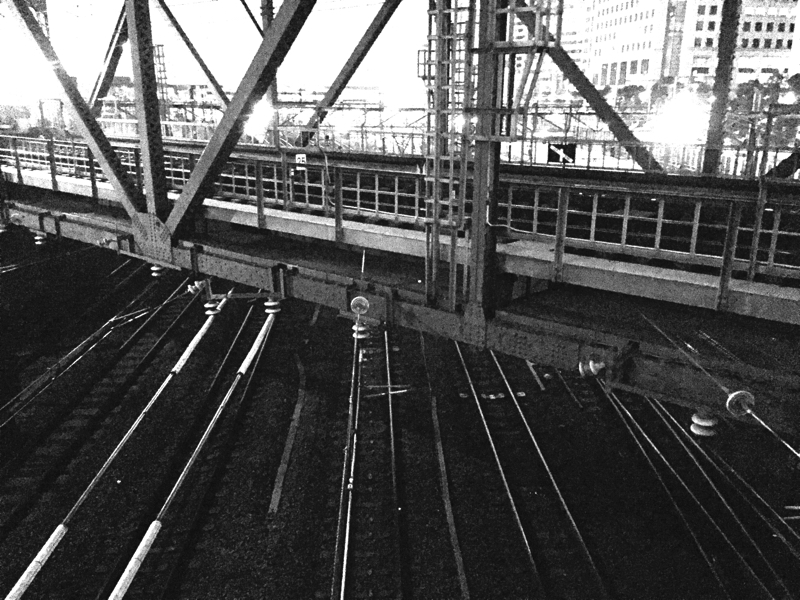
To change the subject a little: on the Left Bank in Paris, in France, which once colonized Vietnam, Cafe Les Deux Magots and Cafe de Flore face each other, and it is said that figures from Picasso, Sartre, Camus, and Chanel to Zhou Enlai gathered there. The two people from Hanoi slurping soba in front of my wife and me are doing something similar. They are making an umbilicus in the city, quietly moving its contemporary culture. They have turned one block of a colonial quarter lined with yellow French-style buildings into a crucible where cultural people gather naturally, and the interactions born there support the cultural soil of this present moment. Perhaps the future masters are gathering there now. Watching them create such a place, one cannot help believing in the possibility that one human being can move the phenomenon before one’s eyes.
When speaking of human possibility, I remember once having an argument-like conversation with researchers of complex systems. The subject was whether the phenomena of the world are determined by structure, or whether structure itself can be determined by an individual. When history says a particular person caused a phenomenon, was that phenomenon produced by the context of the world that embraced that person, or did it occur because of the individual’s will? It was a small chicken-and-egg problem, though the chicken and the egg had both been given tenure.
I have forgotten the name, but a monk who had attained enlightenment once explained that his own existence was part of the phenomena of the world. I understand it in my head, but by temperament I cannot receive the words of great figures of the past too obediently. Whoever the person may be, if I think of them as the same human beings as us, I begin to suspect whether the person who left those words truly lived with conviction and acted according to them. From my position, seeing the movement of the world from a structuralist standpoint feels rather dry. The world, I think, moves in a more human way.
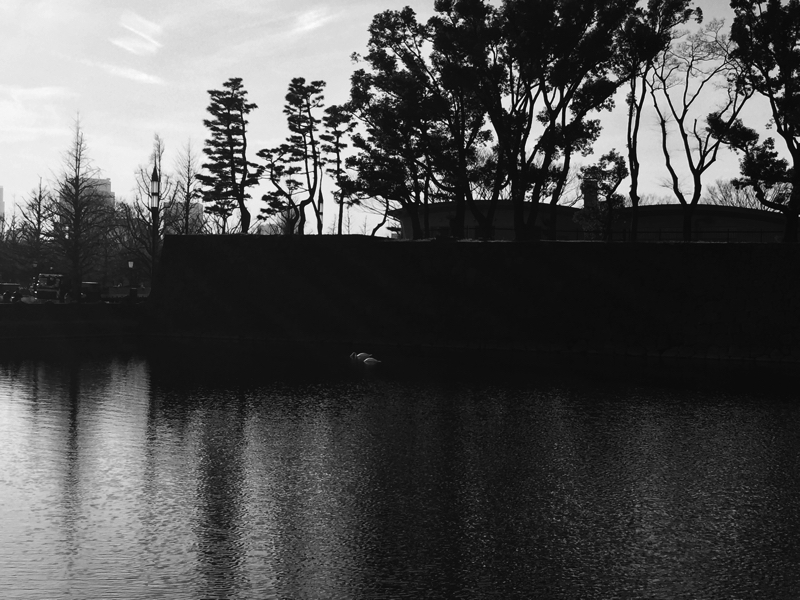
Duc, whom we parted from in Akasaka, bought many bottles of his favorite Japanese whisky at a liquor store, packed them into his suitcase, and returned to Vietnam. The year has turned, February is already ending, and the long run of shiwase is approaching its final stage. Walking through Tokyo in the first spring wind, I remember his back as he walked through Akasaka.
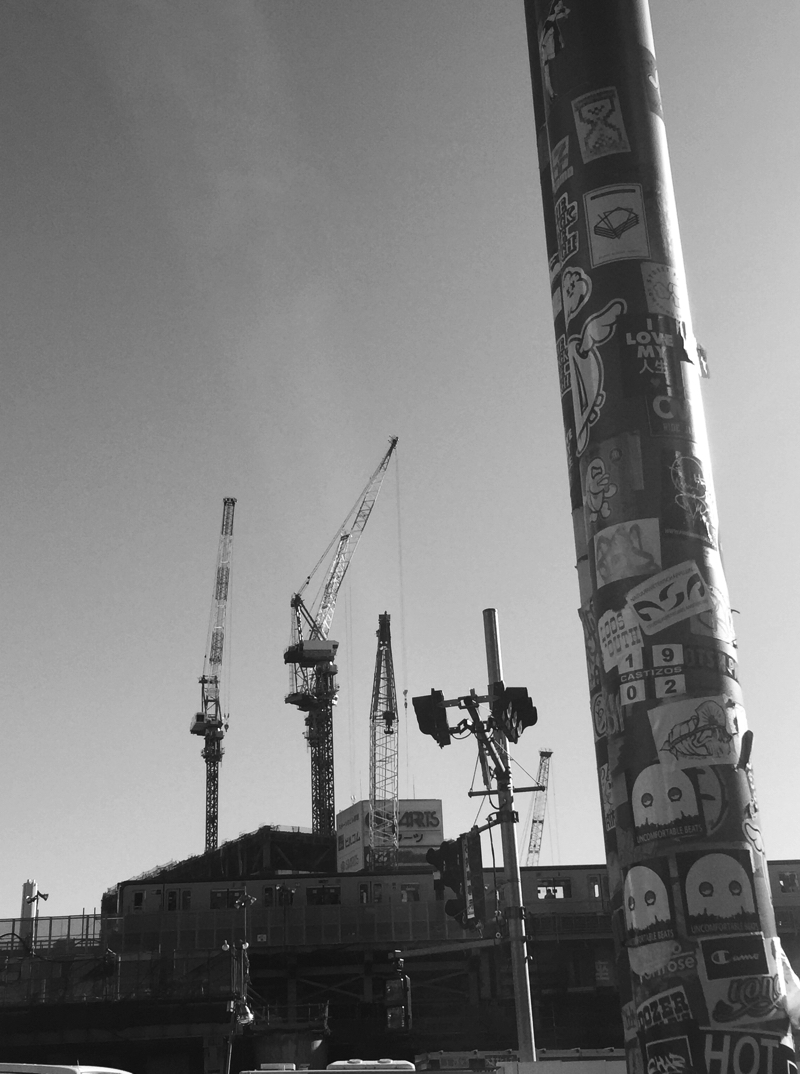
Once again, I think the world is made by human beings. We are each one human being who moves the phenomenon before us. If that person had not been in that place at that time and had not done that thing, this present moment would not exist. The world, and perhaps even one’s own life, moves by such accidents. Even now, somewhere, I feel I can hear the gears of the phenomenon called the world. A small clicking sound. Touching it may injure the hand. The world is full of contingency.
NGUYEN QUI DUC
tadioto.com
Based in Hanoi. TADIOTO, his bar in Hanoi, introduced in the fifth installment, is the navel of the city. He directs not only the shop itself, but the surrounding block as well.
NGUYEN MAI PHUONG
Her AN STORE appears to be popular with both locals and tourists. It is a lifestyle shop located in the area around TADIOTO. On Facebook, each post receives many likes: a charismatic lifestyle shop, if one may say such a thing without immediately wanting to wash one’s hands.