Magazine
FREE MAGAZINE ISSUE#8 “Local, Global, In-Between”
Originally published by FREE MAGAZINE. English translation prepared for the KLEINSTEIN TEXTS archive.
Local, global, in-between.
Three years ago in spring, there was a period when I spent a while looking at Street View images of unfamiliar cities around the world on Google Maps. Even when I visited overseas cities for work, I had become somewhat tired of the familiar logos, signs, objects, buzzwords, and patterns of “culture” that appeared in their scenery. I suddenly wanted to visit a city I did not know.
The city I imagined wanting to visit was a place with the everyday atmosphere particular to a large city, and with a kind of chaos I would not normally experience in Tokyo. I wanted somewhere where European and American culture and language did not easily pass through; a city where old and new were mixed together, and where human energy overflowed. Once I filtered the world this way, there did not seem to be many choices. I guessed South America, Africa, the Middle East, or perhaps Southeast Asia. Looking at the map and choosing a city with a direct flight from Tokyo, I decided to visit Hanoi, the capital of Vietnam. The fact that this city had not been featured much in fashion contexts was what made me choose it. On the taxi ride from the airport into the city, hearing the noise of motorbikes filling the roads and seeing unfamiliar buildings, I remember feeling relief somewhere deep in my heart.
The center of Hanoi is divided largely north and south around Hoan Kiem Lake at its center. To the north is the Old Quarter, where tourists seeking a nostalgic Asian landscape and local people living through street markets mingle together. The streets, scented with a mixture of street food and exhaust, are lined with all kinds of shops selling sundries, food, tools, and electrical goods, but the clothing shops probably catch the eye most. Alongside counterfeit goods are diverted products made in Vietnam that were presumably meant to be exported as branded goods, bearing familiar names such as Nike, Adidas, Calvin Klein, and Lacoste. There is even a shop selling Chanel menswear, though of course it was not designed by Karl Lagerfeld.
To the south, French-style buildings from the colonial period still remain. Many of them seem to continue to be used as luxury residences or government offices. At night, walking while looking at orange streetlights illuminating ivory walls, I am reminded a little of nighttime in the Marais district of Paris. At the entrances to government buildings stand young police officers with expressions that mix languor and severity. The way the night streetlights fall on their khaki-green uniforms is difficult to put into words. When it becomes cold, I always miss the motorbike noise echoing through this city, the chaotic streetscape, and the sight of humid nights.
Every month, magazines around the world feature the “culture” of some country or another. The capitalist system on which we ride is always pursuing “new culture” that has not yet been consumed. Fashion is the same: it constantly grows by feeding on new “culture.” The “culture” discussed here is a set of things unconsciously evaluated and narrated according to their distance from systems born in Europe, and sometimes America, over the last two or three hundred years. It is a familiar story that cultural objects first gain authority and spread only after acquiring a new name within a Western system. Even Banksy’s graffiti, born in the street far from authority, began to be recognized and valued by many people only after it was spoken of in the context of the art market and named “street art.”
Tokyo, Hong Kong, Singapore. The “moderate otherness” of Asian metropolises has been collected by someone, inside or outside those places, re-edited into a form understandable in a global context, and sent toward sites of consumption. Perhaps we call “culture” the process by which these strange sensations dissolve into the world and become ordinary. People describe the strength of culture by comparing it to temperature, but what is hot may be our society itself. Perhaps we simply call the process by which something melts inside society “culture.”
In late Edo Japan, digesting Western culture and incorporating it into everyday life and customs was considered progressive. That style was once called wakon yosai, Japanese spirit and Western technique. Before Europe seized global hegemony, however, people used the phrase wakon kansai, Japanese spirit and Chinese technique, in relation to Chinese culture. Because such expressions remain, some people evaluate Japan as historically extremely import-loving, but if we look back through human history, importedness seems less a Japanese trait than a human one.
In fact, although textbooks mention it only slightly, it is not widely known that many things believed to have originated in Europe were transmitted to Europe from the Islamic world. Baghdad, the capital of Iraq, which was thoroughly destroyed in the Iraq War, was around a thousand years ago a crucible of global economy and culture comparable to present-day New York. Seeing Baghdad occasionally appear on CNN or BBC now, it is difficult to imagine that former glory. It feels strange to think that at the time, “culture” from all over the world may have been evaluated according to the standards of that desert city. People from around the world gathered in Baghdad as immigrants and lived there. It was a center where new things from across the world acquired new names and spread. Imagining those immigrants translating Arabic into their own languages with difficulty and introducing it as “culture” to various parts of the world overlaps slightly with the way people who have moved to today’s metropolises transmit values they call global and diverse.
Bar Tadioto, with its sign reading “FOR THINKERS AND DRINKERS,” is near the opera house built during the colonial period. The owner, Nguyen Qui Duc, usually works there with a languid air, drinking whisky, dressed in a distinctive style combining Moroccan-looking vintage clothing that Yohji Yamamoto might use for inspiration. On the surface he is a businessman who runs a bar, a ramen shop, and a vintage clothing store, but his main profession is writer. During the Vietnam War, in 1969, he fled to the American West Coast as a refugee, and he moved to Hanoi in 2006, about ten years ago. He chose Hanoi, rather than his hometown, because he felt the city’s energy when he visited. In this country, where Communist Party censorship makes publishing books difficult, diverse people naturally gather every night at the shop of a man who writes: foreigners staying at the Metropole Hanoi, where Donald Trump and Vladimir Putin also stay; people from the art world; business owners; architects; filmmakers; photographers and editors; young university students stretching themselves a little; Vietnamese people returning from overseas where they work as “cultural figures”; and people whose identities are hard to grasp. In addition to Vietnamese, English and French fly through the room. The place is a dim in-between where chaotic Hanoi and the world connect. It is like a living theater in which one can watch unglobalized local “something” melt into culture. Looking at the people around Duc, who says, “If I could, I would have liked to hang around Golden Gai in the 1970s instead of going through war,” I imagine that perhaps Tokyo in the 1970s might once have been something like this.
During the humid summer season, when I visited the city again after a year, the street-level shop of RUNWAY, a luxury boutique carrying brands such as Maison Margiela and Saint Laurent Paris, had left the street I always passed and moved into a commercial building. In Ho Chi Minh City, formerly Saigon, in southern Vietnam, this shop is apparently an authority of sorts, so the fact that it was also on the southern side of Hanoi in northern Vietnam felt somehow historically ironic. Under the strong sunlight, two men with sunburned, darkened faces sat on the steps at the entrance of the building where the boutique had once been. One was a motorbike taxi driver smoking with a severe expression; the other seemed to be a construction worker looking up at the sky. Female students crossed in front of them along the stone pavement. In that scene beside steps dirtied by dust, there was still an energy that fashion had not yet been able to put into words.
“Recently, it has become fashionable to praise the style of the French colonial period,” Duc says. “It gets featured around the world under the phrase ‘colonial taste.’ I doubt all the memories are good ones, but as a way to attract young people and foreigners, it seems effective. I think perhaps someone must really invent something new. Something that does not yet have a name.”
The interiors of French-style buildings from the colonial period had been renovated, and new shops and restaurants were beginning to appear inside them. Is it another kind of irony that familiar logos are slowly appearing in old buildings in a city that resisted being a colony, and that young people and foreigners are gathering there as a trend?
“I want to be something that cannot be easily named.”
The sun rises and sets again over the city, and people and things flow through it. The way not only objects but people and thoughts are turned into signs and consumed is part of the nature of society. We are living now in the wilderness called the world. The scene we seek is born from the nature of the city, from the place between local and global.
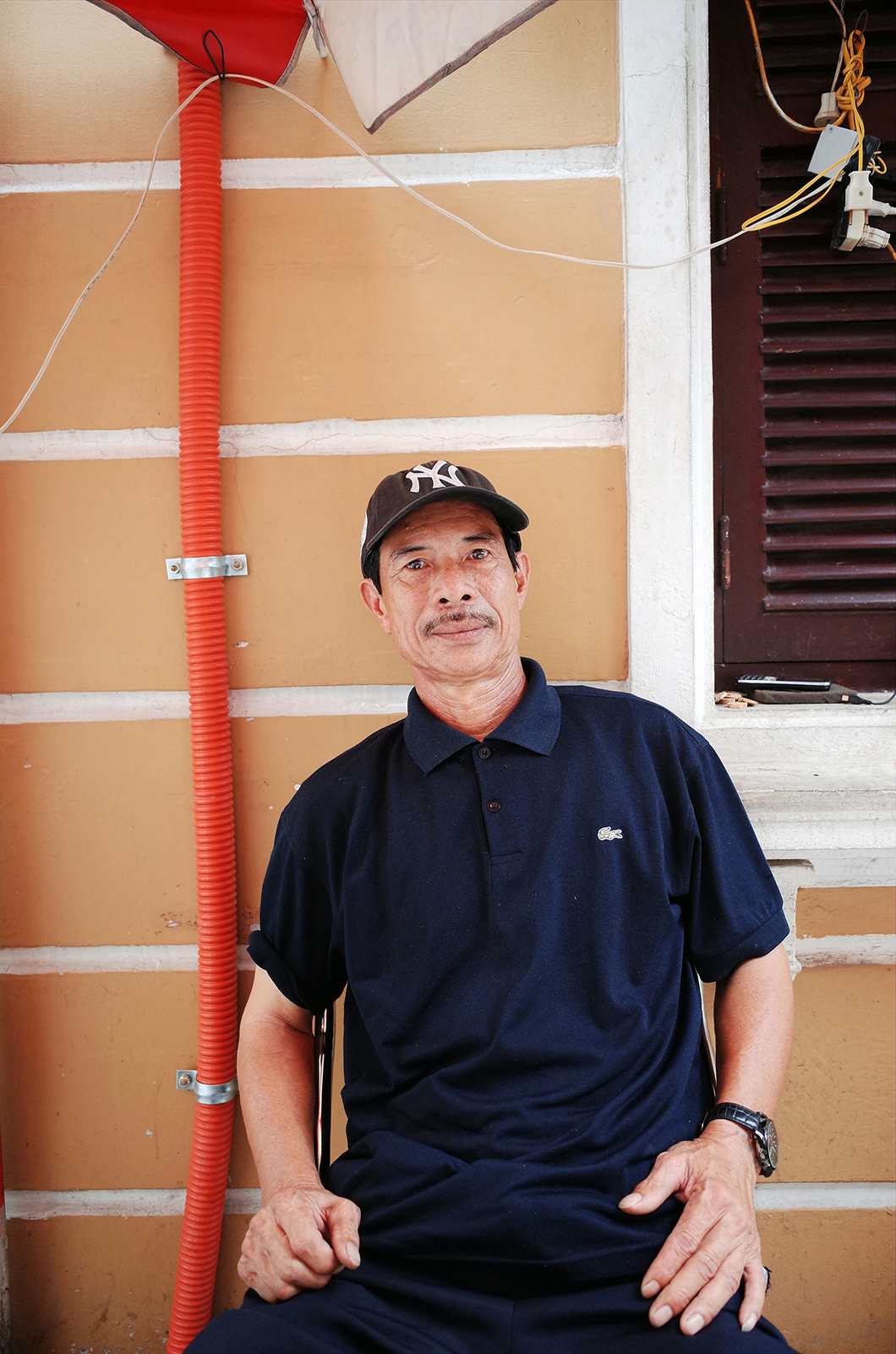
A MAN WITH YANKEES CAP
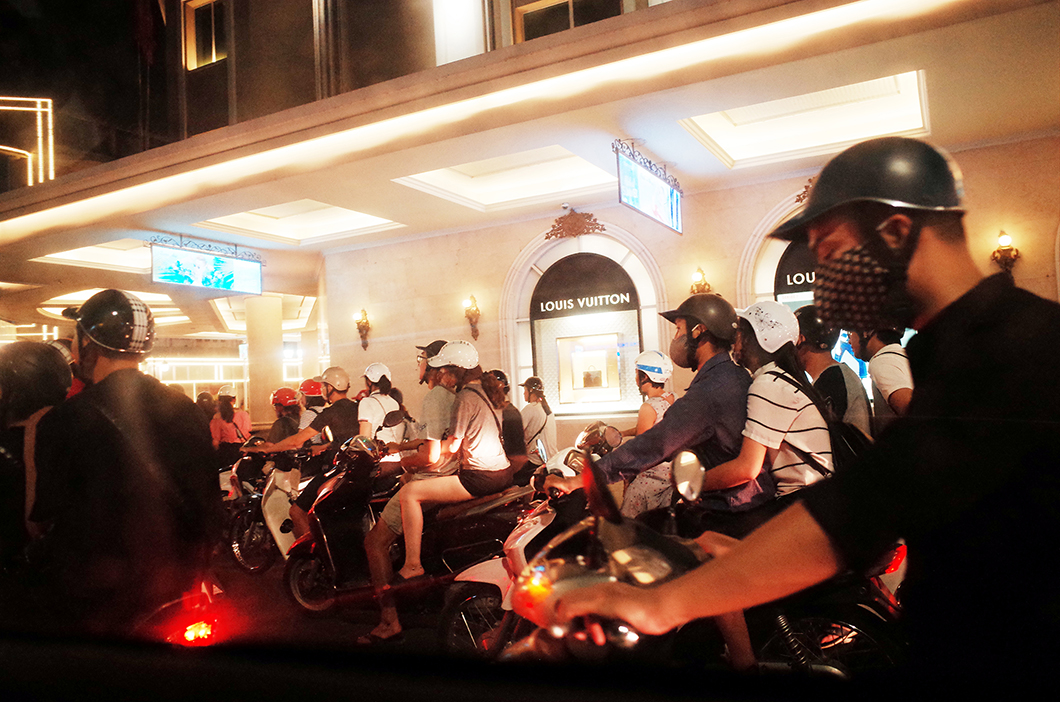
LOUIS VUITTON AND BIKES
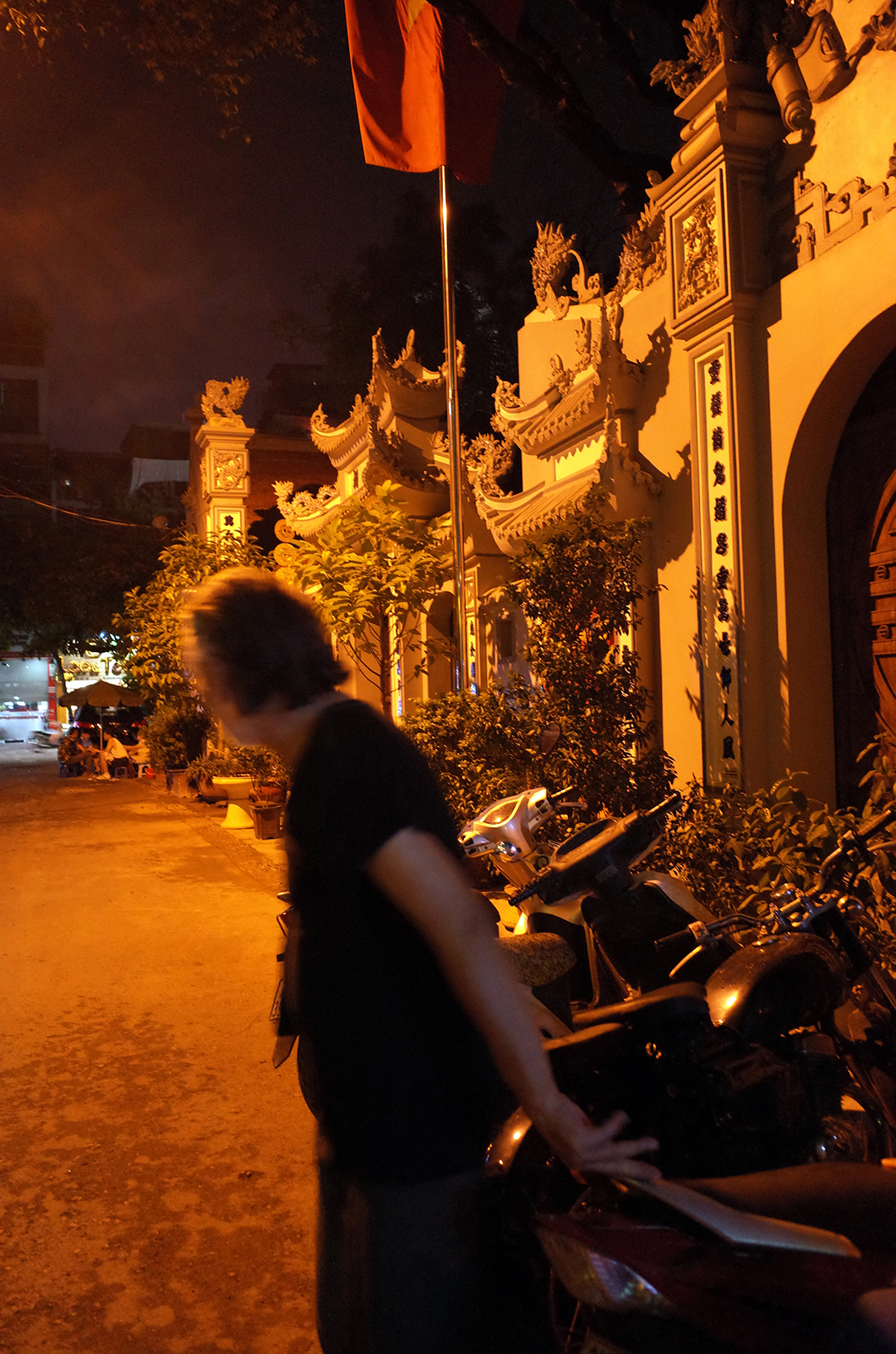
NGUYEN QUI DUC
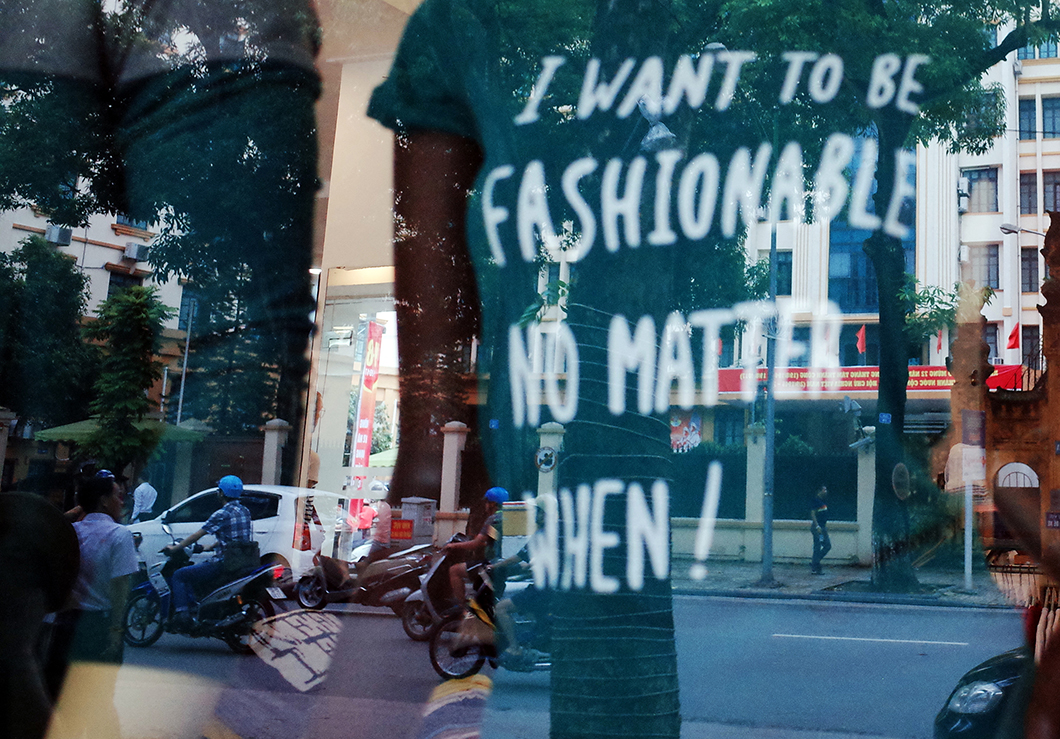
I WANT TO BE FASHIONABLE NO MATTER WHEN
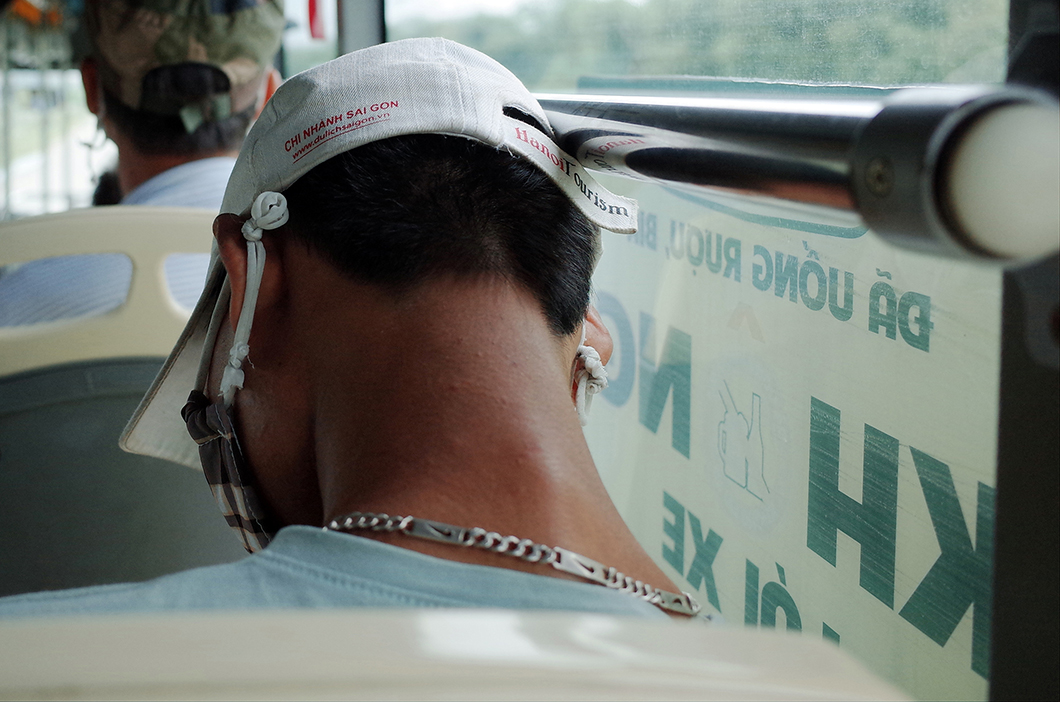
A BOY WITH NIKE CHAIN
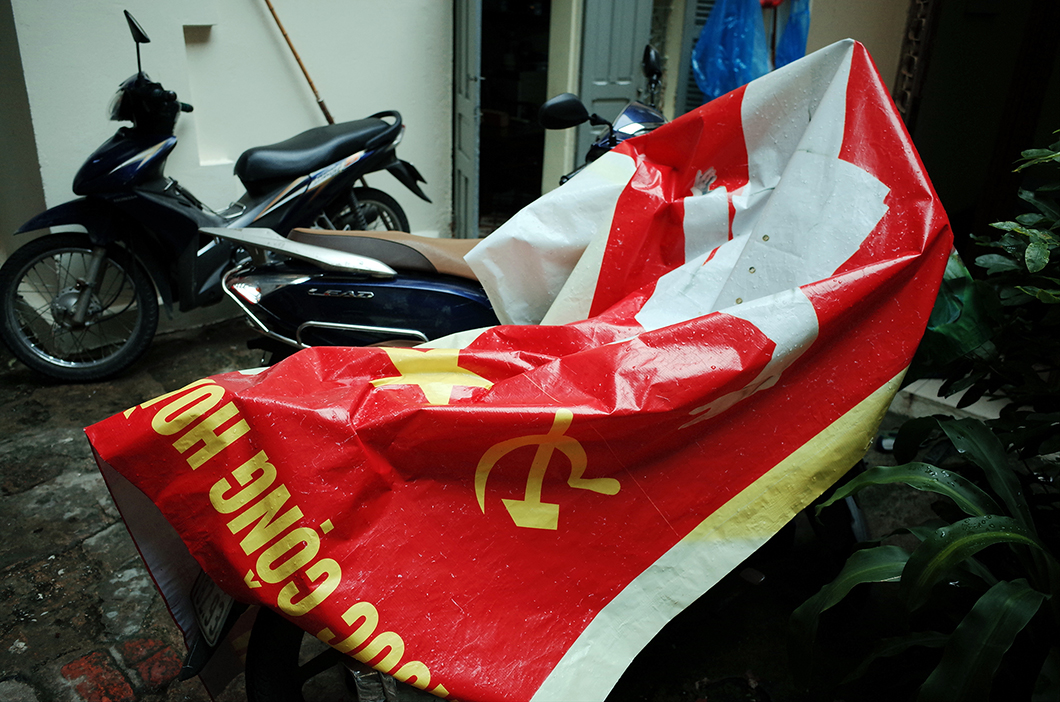
A BIKE COVERED BY COMMUNISM