Interview
Interview with Dragan Espenschied (Rhizome): Internet Art Preservation, Part 1
I interviewed Dragan Espenschied, preservation director at Rhizome, an art organization devoted to the preservation of internet art. In Part 1, I asked him in detail about the path that led him to work at Rhizome, ArtBase, the digital art archive developed by Rhizome, the internet art preservation work the organization has pursued, and the changes and current conditions that have emerged since 2015.
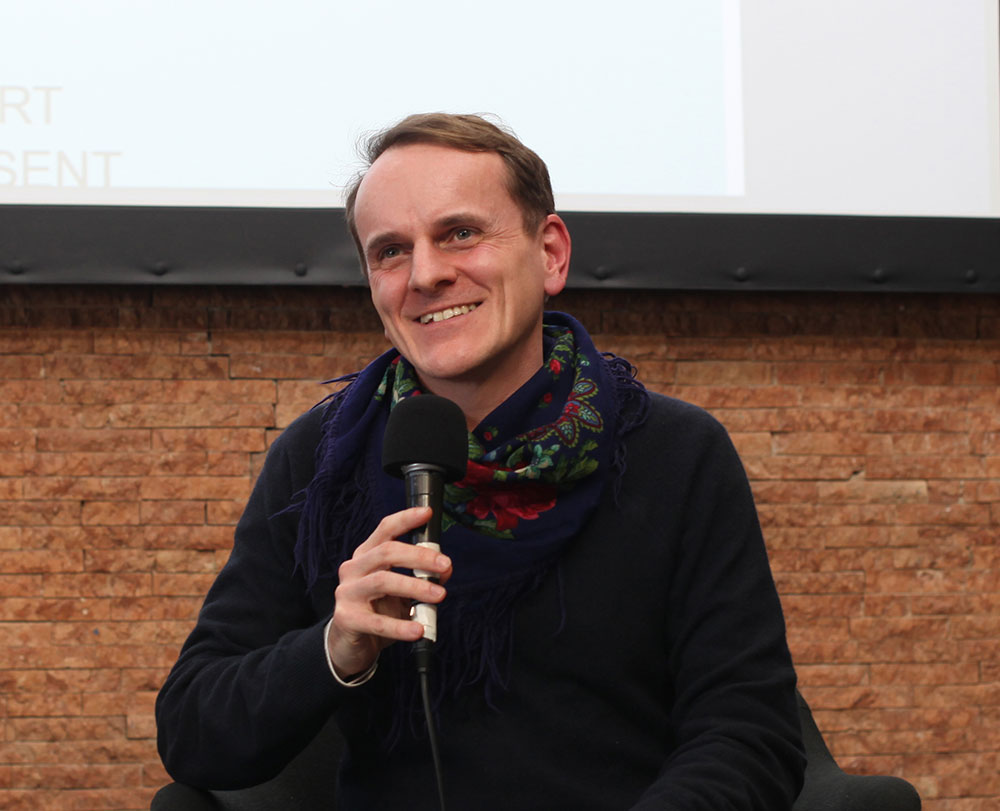
As I mentioned in an earlier column, after working for many years as an archivist at NTT InterCommunication Center [ICC], I used the Agency for Cultural Affairs’ Program of Overseas Study for Upcoming Artists in 2015 to conduct research at museums and related institutions in New York that had been pioneering the preservation of media art and artistic records.
During that research, I also interviewed Dragan Espenschied, preservation director at Rhizome, about the preservation of internet art. Roughly seven years have passed since then. What kinds of changes and developments have taken place during that time?
As hardware, operating systems, and browser versions are updated one after another, more and more works of internet art (11Internet art is also referred to as net art.) become inaccessible over time. At the same time, newer works are often located on social media platforms or video-sharing sites that cannot be crawled programmatically. Works that use those services may suddenly be taken offline for reasons determined by the service provider, or may be lost when the service itself shuts down. The key question, therefore, is how close to real time an archive can be made.
About Rhizome
Rhizome is an internationally respected art organization specializing in digital art, including internet art. Since its founding in 1996, it has focused on the preservation of internet art. While remaining attentive to both the future and the past of digital culture, it has continued a wide range of activities, including support for new artistic practices and exhibitions.
In 2003, Rhizome began collaborating with the New Museum of Contemporary Art, a contemporary art museum on the Lower East Side of Manhattan in New York City, and it is now based in the same location. As an anchor tenant of NEW INC, the first incubator established by the New Museum in 2014 to support cross-disciplinary innovation and entrepreneurship in art, design, technology, and related fields, Rhizome has also played a major role in the history and dissemination of art based on network technologies. Since 2015, it has been developing web-archiving services using open source tools in order to address the challenges faced by the preservation of internet art.
Rhizome holds a large-scale digital archive. Rather than responding to each work individually, it places emphasis on developing and operating systematic preservation methods that can benefit many works at once.
At present Rhizome does not operate in Asia, but it appears to remain interested in new partnerships.
How He Came to Work as Rhizome’s Preservation Director
Dragan Espenschied grew up in southern Germany. Because his father had worked for many years at the German electrical manufacturer Siemens, he was exposed to computers from an early age. After retiring, his father became a freelance software engineer and placed a Unix terminal in Dragan’s room. Dragan began using it to play games and write short programs in C, and gradually became absorbed in computers and programming. His mother, who was from Yugoslavia, played an electronic organ at home. Influenced by her, he also began to enjoy musical instruments.
Later, after obtaining an Atari model that had become more mainstream, he began composing music, released albums (22Dragan’s band Bodenständig 2000 released its debut album Maxi German Rave Blast Hits 3 in 1999 on the British label Rephlex Records, run by Aphex Twin and Grant Wilson-Claridge. Most of the tracks on the album were produced using Atari computers that were already obsolete at the time, together with software they had written themselves. According to Dragan, this experience clearly has aspects that connect to the digital art preservation work he is doing today. Through Rephlex Records, he also seems to have encountered a wide range of artists, musicians, and internet activists.), and founded a company with a friend to make screensavers. Even then, one of his concerns was that computers were discarded as soon as new models appeared. They were thrown away before their artistic possibilities had been fully explored. This concern is closely connected to the preservation work he now carries out at Rhizome.
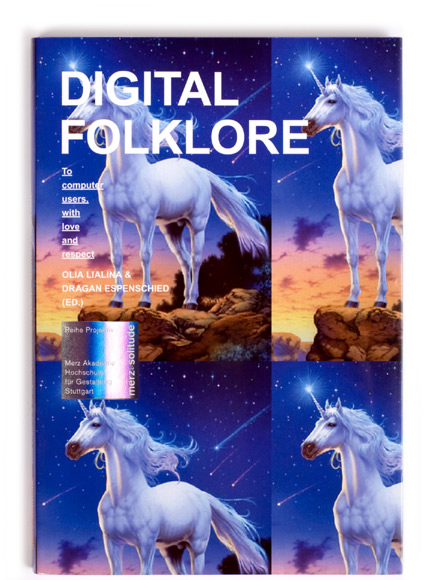
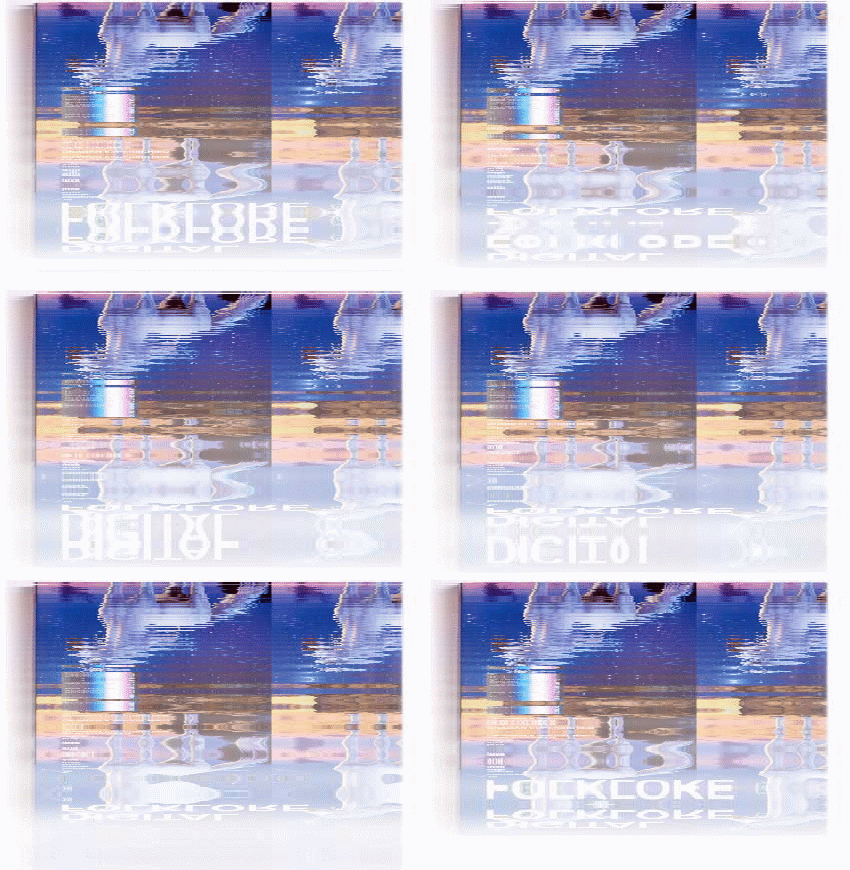
In 1999, he met the pioneering net artist Olia Lialina in Germany, who would become his partner both privately and professionally, and they began making works together. Around that time, the two became interested in the folkloric culture of the web. Between 2002 and 2003, they produced and presented Zombie and Mummy (33Zombie and Mummy, commissioned by Dia Art Foundation, is an online comic work with the appearance of a website made around 1995. Every Monday it introduced the adventures of mummies and zombies; when each GIF was selected, a new web page opened, allowing visitors to enjoy MIDI theme music and illustrations drawn on Palm PDA devices. It can still be accessed today, but it can no longer be experienced in the same way as it was at the time. For example, some system fonts are not displayed correctly, MIDI music cannot be heard, and scrollbars do not appear. In addition, Dia Art Foundation has configured HTTPS, the encrypted version of HTTP, so older browsers cannot decrypt the site.), commissioned by Dia Art Foundation. The work addressed past digital culture and artifacts, expressing mourning for the loss of digital folklore (44In the book Digital Folklore, co-authored by Olia and Dragan and published in 2009, digital folklore is described as encompassing “the customs, traditions, and elements of visual, textual, and sound culture that emerged through users’ engagement with personal computer applications during the last decade of the twentieth century and the first decade of the twenty-first century.”) and for the industrialization of the web. The concept of digital folklore was proposed in Digital Folklore (55A PDF edition of Digital Folklore was released in 2019, but it can no longer be downloaded because Beaker Browser, the P2P web browser used for distribution, has ceased development.), the book he published with Olia in 2009. The book introduces various aspects of digital folklore through projects and essays.
In 2010, he produced One Terabyte of Kilobyte Age (66A project for the preservation and restoration of GeoCities, which was founded in 1994. GeoCities was a web service that allowed all users to create and publish websites for free, and it can be regarded as an extremely important presence in the early web. Yahoo! acquired it in 1999, but it closed in 2009 and most of its data was nearly lost. However, Archive Team, a group of archivists led by Jason Scott, succeeded in rescuing nearly one terabyte of GeoCities pages before the closure.), a project for the preservation and restoration of the GeoCities websites founded in 1994. As part of a reconsideration of the cultural value of digital folklore, he began addressing little-known amateur practices on the web that were important to internet culture. He designed a system for producing screenshots and video captures of the GeoCities archive in actual legacy software environments, and the project is still ongoing (77After producing One Terabyte of Kilobyte Age in 2010, he launched a Tumblr page in 2013 that automatically posted screenshots of rescued GeoCities homepages. The aim was to keep the user culture of GeoCities from being forgotten. Interestingly, Tumblr was later acquired by Yahoo! as well, but it is still operating today. https://oneterabyteofkilobyteage.tumblr.com/).
In 2011, he produced Once Upon, a work that recreated “three important contemporary websites” using the technology and spirit of late 1997. For people who used computers in the 1990s, Sony CRT monitors and the Netscape browser may feel familiar. For generations born in a later era, the work may instead feel fresh.
Around the same time, in 2011, he became involved in archive research projects in Karlsruhe, Germany, and Bern, Switzerland. There he met Klaus Rechert (88Klaus Rechert is a computer scientist specializing in emulation and digital forensics. He has supported the implementation of emulation solutions for libraries, museums, universities, and other institutions. He currently serves on the steering committee of the International Conference on Digital Preservation and leads the development of EaaSI (Emulation as a Service Infrastructure) with the OpenSLX team in Freiburg.), who would have a major influence on him. Rechert was conducting research and development at the University of Freiburg on the open source tool Emulation as a Service, or EaaS (99EaaS is an open source web-based platform that allows users to access multiple emulators, or multiple versions of a single emulator, through a single browser interface. Its defining feature is that it greatly simplifies the complicated setup work required to run emulators. https://www.softwarepreservationnetwork.org/emulation-as-a-service-infrastructure/), for the preservation of and access to digital content. Dragan became involved with Rechert’s research group in a large-scale CD-ROM art research project centered on the transmediale archive (1010transmediale is an annual festival in Berlin focused on art and digital culture. From a post-digital perspective, it critically examines cultural transformation. In addition to exhibitions, symposia, talks, screenings, performances, workshops, and artist residencies, it conducts various research projects and related events throughout the year. The CD-ROM art research project in which Dragan participated from 2011 to 2013 was part of the bwFLA (Baden-Wuerttemberg Functional Longterm Archiving and Access) project at the University of Freiburg, and was a predecessor of the EaaS mentioned above. Its main theme was the provision of a mass curation framework for “functional” digital archives. Using a collection of CD-ROM artworks provided by the transmediale archive, many of them produced between 1995 and 2005, the project researched workflows and tools for the preservation and presentation of digital art based on emulation. The CD-ROM art collection was used for the research because structured emulation was still at a fairly early stage, and what was needed at the time was a collection of software items that were different enough to be compared, yet similar enough not to trigger an overly broad technical research project. According to Dragan, the connection between transmediale and bwFLA was made by Tabea Lurk and Jürgen Enge, researchers at FHNW (University of Applied Sciences and Arts Northwestern). Details of the project are summarized in “Large-Scale Curation and Presentation of CD-ROM Art.” https://purl.pt/24107/1/iPres2013_PDF/Large-Scale%20Curation%20and%20Presentation%20of%20CD-ROM%20Art.pdf). Around that time, he learned that Rhizome was seeking a preservation specialist, and being hired for that position led him to begin working at Rhizome in 2014. When he saw the job posting, he strongly felt that it might be his only chance to take a job that was not freelance work. Although he had studied art and design and had a career as a musician, net artist, and researcher, he had no formal education in art preservation; everything he knew was self-taught.
Ben Fino-Radin, whom I discussed in the previous column, was also working at Rhizome at the time as its first digital conservator. Dragan had long been paying attention to Ben’s work at Rhizome, and he became convinced that Rhizome was the only place where he could find a job suited to his skills. They continue to exchange ideas across institutional boundaries today (1111In May 2022, Dragan appeared on Ben’s podcast Art and Obsolescence. https://www.artandobsolescence.com/episodes/039-dragan-espenschied).
Rhizome’s ArtBase
ArtBase (1212Comprehensive documentation by Lozana Rossenova recording the history of ArtBase, its database structure, and its redesign process is available here: https://sites.rhizome.org/artbase-re-design/), developed by Rhizome in 1999, is an archive of born-digital art. It contains more than 2,200 works by artists, including internet art, software, websites, code, video games, electronic literature, and moving-image works. After a redesign of its back end, it has been made publicly accessible. Works can also be browsed by year of production and artist name.
ArtBase was a community-based archive with minimal curation. It began as a future-oriented archive intended to establish a full-scale archive for digital art, and before the rise of social media it also functioned as a social media tool for artists. However, the period when ArtBase grew most was before 2010; once Facebook, Instagram, and other social media platforms began to dominate, its growth slowed and eventually stopped. The reasons for that halt were as follows.
First, for net artists, social media became increasingly attractive as a way to reach larger audiences, build new types of community, and make use of those communities in their internet-based activities.
Second, instead of managing the technical foundations of their projects themselves, artists increasingly came to depend on more complex services and functions by using commercial web services and social media. As a result, it became impossible to hand works directly over to archival institutions such as Rhizome. For example, even if an artist performs on Instagram, the entire process is provided by Facebook / Meta, and therefore a copy of that performance work cannot be made.
Third, the extremely laissez-faire approach to curation favored artists who already had many supporters, while in reality artists have diverse backgrounds in terms of methods and scale of activity, country of origin, race, education, and career. In order to support a wider range of artists, Rhizome shifted to a curator-led model.
I asked him to explain this third point in more detail.
There are open archives such as Wikipedia, OpenStreetMap, and Flickr that are intended as contributions to public goods or communities, but they cannot be called fair and equal archives. Usually they call for “anyone” to participate. In reality, however, only people with particular backgrounds and sufficient resources can participate, devote time, and benefit from the content. The projects are “open” in the sense that they do not try to impose additional barriers to participation, but structurally they are dominated by the participation of privileged users. For others, that is, outsiders who are not already part of that circle, participation becomes difficult. In the case of digital art in the Western world, most activity has been centered on wealthy, highly educated men, white people, and people from Northern Europe and North America. When ArtBase was open accession, Rhizome had precisely this kind of structure, and in order to overcome the resulting inequity, it became necessary to redesign submission and registration to the archive more carefully.
Today, Rhizome appears to be enriching its archive mainly through regular targeted open calls that take diversity, equity, and inclusion into consideration (1313For example, in its April 2022 open call, applicants were asked to submit works using the blogging service Tumblr. Rhizome may move forward with archiving Tumblr in the future. For details, see: https://rhizome.org/editorial/2022/apr/01/artbase-open-call-tumblr/).
Webrecorder and EaaS, Released by Rhizome in 2015
The year 2014, when Dragan began working at Rhizome, coincided with the end of the long-term dominance of software tools such as Internet Explorer, Java, RealMedia, and Flash. Because many internet artworks had been made using these tools, situations frequently arose in which works became difficult to use, even though all their data had previously been available locally. As the number of works in the collection increased, another technical problem also emerged: there was no tool that would allow users to ingest data from the web and view works, instead of creating complete copies of entire systems. What he focused on was finding an appropriate abstraction layer for infrastructure that could benefit many artworks at once.
As a response to these problems, he tried to build infrastructure that could address them, and in 2015 he led the Webrecorder project and released it publicly. Webrecorder is a tool that allows users to record and replay websites as they browse them, making it possible to preserve dynamic web content on the network. EaaS, released around the same time, is a tool for preserving works that run on old operating systems, browsers, CD-ROMs, and related environments, and it makes it possible to experience works online within legacy software environments.
Today, in addition to these two tools, Wikibase, also introduced in 2015, plays an important role in managing works. Dragan saw potential in Wikibase, open source software from the Wikimedia Foundation, known for operating Wikipedia, and introduced it in 2014. As technology changes, the descriptions and interpretations of internet art and media art also change from work to work. But completely changing the collection management system or redesigning the database each time would be difficult, so he was looking for another sustainable method. Wikibase has a basic schema and is flexible for describing objects that may continually change, such as internet artworks.
Changes Since 2015 and the New Release of Conifer in 2020
About seven years have passed since I first interviewed Dragan. What kinds of changes and developments have taken place during that time?
I am very pleased that systematic approaches to the preservation of digital art have become more accepted and more common. Both Webrecorder and EaaS have added many new functions and gained more users. Through these two projects, Rhizome has proven itself to be an important foundation for development and growth in the preservation of digital art. After EaaS, Webrecorder also became an independent open source project over the years, which was another major development. (1414The Webrecorder project aims to develop new tools while maintaining existing open source tools. https://webrecorder.net/)
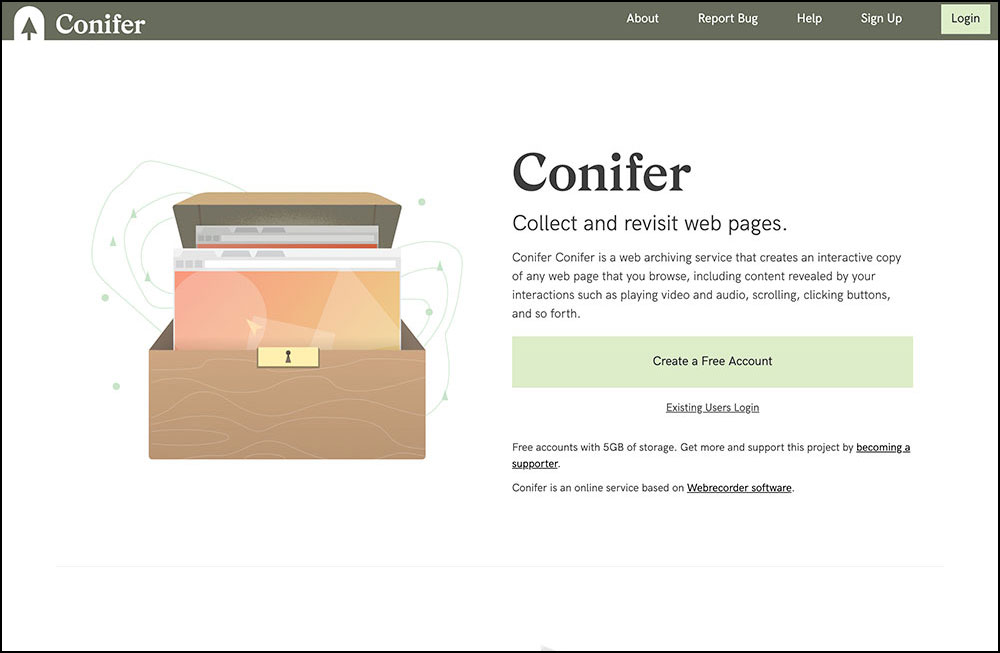
After hosting the Webrecorder project it had released in 2015 for about five years, Rhizome changed the service name to Conifer in 2020 and rebranded it. Open source components developed during the period when Rhizome hosted the project became the foundation of Conifer. The name Conifer refers to an evergreen tree, and it seems to express the hope that once a web archive collection is ingested, it can be used regardless of season and dynamically revived when placed in an appropriate environment.
Conifer, which began with Webrecorder, allows users to create, save, and publish recorded web archives by browsing the websites they wish to capture. HTML, images, scripts, stylesheets, video, audio, and other elements that constitute a web page or web app can be preserved together in a single file. It is also possible to use Flash and Java applets through emulators. It is used mainly by professional archivists, artists, and members of the general public. At Rhizome, Conifer is used when publishing internet artworks in the ArtBase mentioned earlier.
In addition, besides oldweb.today, which lets users browse and explore the old web in their own browsers, there are now many projects and services that use Webrecorder technology. (1515Projects and services that have emerged from Webrecorder are wide-ranging and include the following: The Portuguese Web Archive: https://arquivo.pt/ The UK Web Archive: https://www.webarchive.org.uk/ Saving Ukrainian Cultural Heritage Online: https://www.sucho.org/ Browsertrix Cloud: https://browsertrix.cloud/)
Functions He Wants to Realize and Tools Now in Development
In the 2015 interview, Dragan said that he wanted to archive not only internet art itself, but also phenomena around it, such as comments written on works presented on YouTube. With this in mind, I asked him again about future development and the functions he would like to realize.
There are still many unresolved problems at the deeper level of “blurry objects.” For example, it is possible to capture network traffic, but the captured data cannot always be used for preservation at a later point. Semantically structured network protocols such as HTTP are easier to manage in that respect than completely free-form ad hoc streams that contain no semantic information.
Also, in order to protect against external attacks, software and mobile apps in particular have come to use advanced cryptographic techniques so that they do not accept old network traffic. I hope a solution to this problem can be found soon.
Dragan’s work is carried out mainly at the infrastructure level, and he has a strong interest in building and improving frameworks for the preservation of internet art.
At present, preservation work for internet art is handled by Dragan and software curator Lyndsey Jane Moulds, while Conifer, mentioned above, is supported by senior software developer Mark Beasley.
Right now we are preparing for the release of a new EaaS and experimenting with increasingly complex setups that combine containerized servers, web archives, and emulation. In the future, I hope to make such projects easier to realize.
Since beginning his work at Rhizome in 2014, he has devoted himself to the preservation of internet art through the redesign of ArtBase and the construction of new services. Today, Rhizome is an important foundation and hub in this field. His skills, born from his background, especially his outstanding perspective on infrastructure and his human network, have made a major contribution. At the same time, without the sense of concern he developed when he was young, this work might not have been realized. It may not be a case study that can simply be followed in a completely reproducible way.
Nevertheless, it will be a useful reference not only for museums that collect digital art, including internet art, but also for other museums and institutions that want to preserve archives they have accumulated over many years by themselves. It is also a case that artists who make internet art can draw on when considering the preservation of their own works.
In Japan today, the word “archive” itself has spread widely through society and is frequently taken up as a theme in artistic and cultural activities. Yet conceptual discussions such as “What is an archive?” remain common, while there are still few opportunities for archivists and engineers who actually handle media and equipment in practice to share knowledge and problems with one another. If individual facilities and institutions can form organic networks and communities, and if practitioners can collaborate across national borders, major developments may emerge in the field of digital art preservation, including the preservation of internet art.
Dragan Espenschied is preservation director at Rhizome. After studying art and design and working as a musician, net artist, and researcher, he began working at Rhizome in 2014. He has no formal education in archives and is entirely self-taught. He has a strong interest in building and improving frameworks for the preservation of digital art, including internet art. https://rhizome.org https://rhizome.org/profile/despens/
URLs were last checked on September 15, 2022.