Magazine
Essay Series “Walking Now” MISHIMAGAZINE #6 – Hanoi: The Navel of the City and Its Keeper – Nguyen Qui Duc
The original text was written in Japanese for MISHIMAGAZINE in August 2016. This post is an English translation and republication of the original article.
Photography by KLEINSTEIN
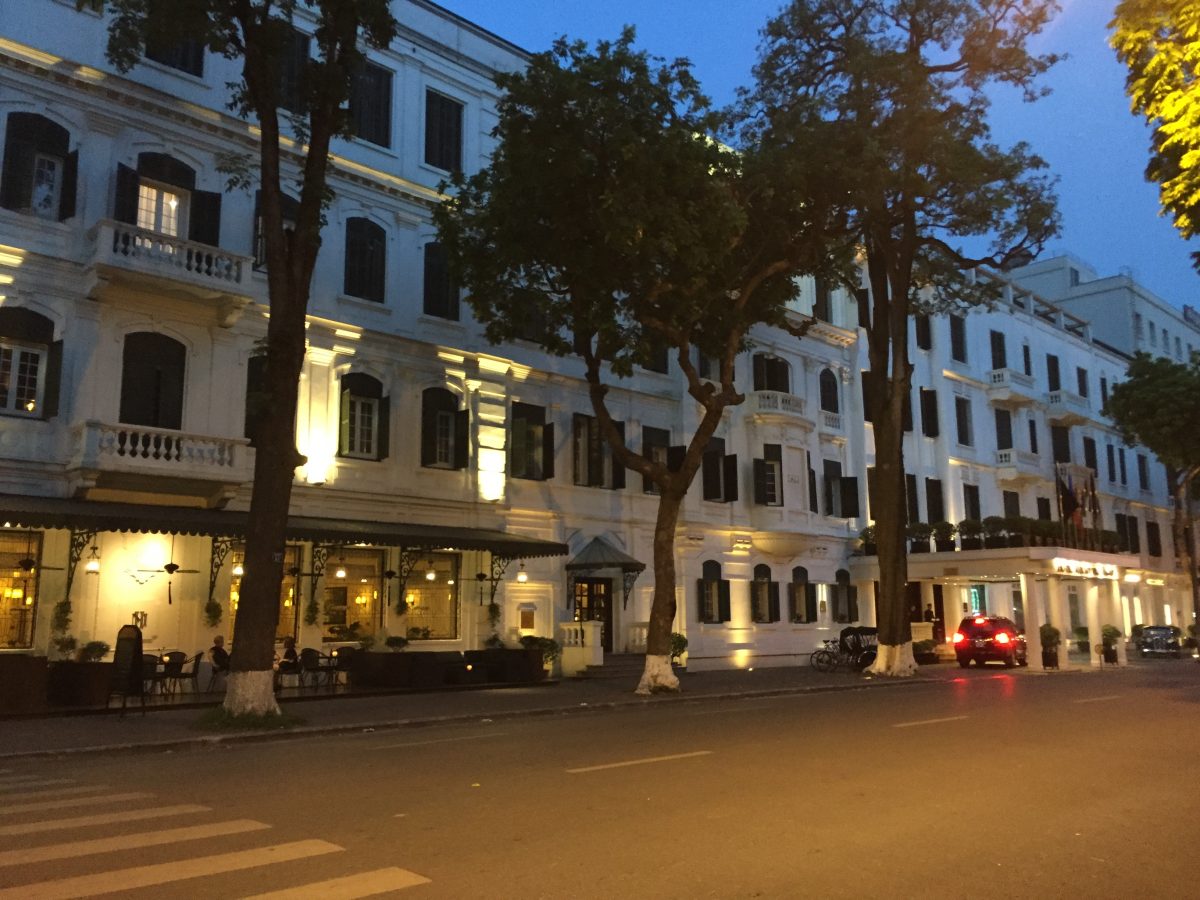
I arrived in Hanoi. Sitting in the back seat of a taxi from Noi Bai International Airport to the city, I watched utility poles, bridges, and signs appear here and there along the main road. Objects whose shapes differed from the standards I was used to seeing in Japan passed before my eyes at high speed. The sense of strangeness produced by that scenery gradually changed into freshness as we moved away from the airport, and somewhere in my body I began to feel a slow, mysterious elation. At times I think I may travel abroad precisely to see this kind of landscape.
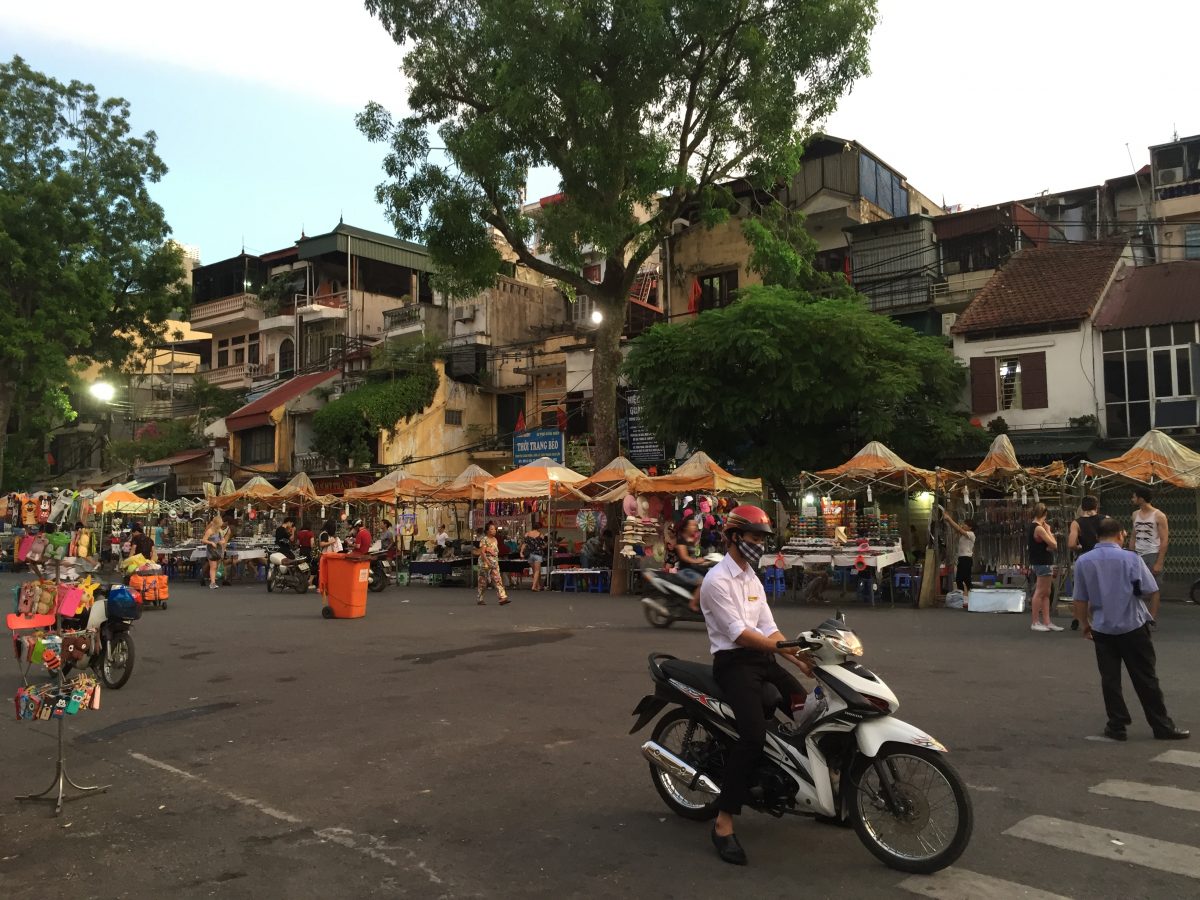
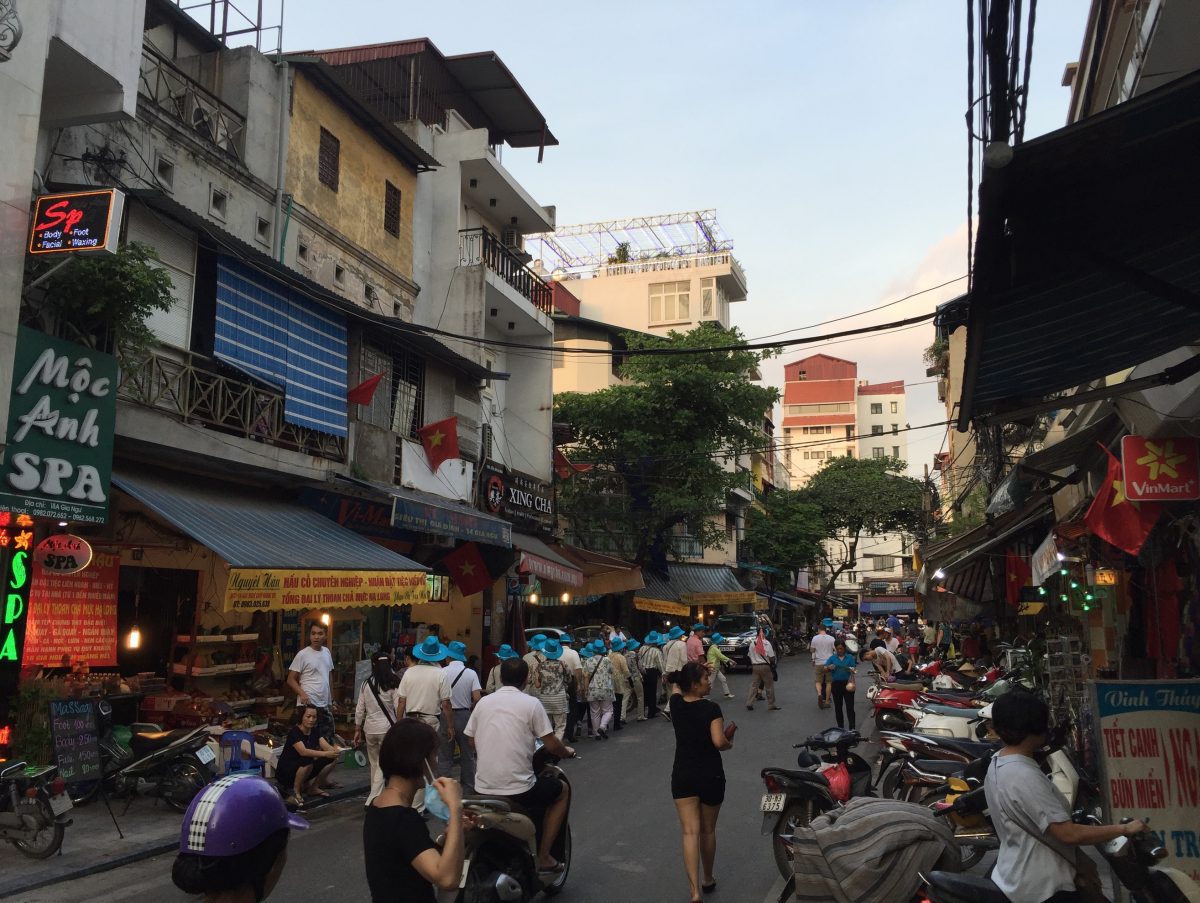
After reaching the Old Quarter and leaving the hotel, the fierce sound of motorcycles echoed everywhere. A city of eight million people, continuing its rapid economic growth, still has no subway. The smell of street food mixed with exhaust hung in the air, and on both sides of the road open-air stalls selling clothes and shoes were packed tightly together. Calvin Klein, Ralph Lauren, DIESEL, Dior, CHANEL. Brand-name T-shirts and bags seemed to be sold alongside counterfeits, but the tourists did not appear especially bothered by such distinctions. Perhaps authenticity is easiest to ignore when the humidity is doing the thinking for you.
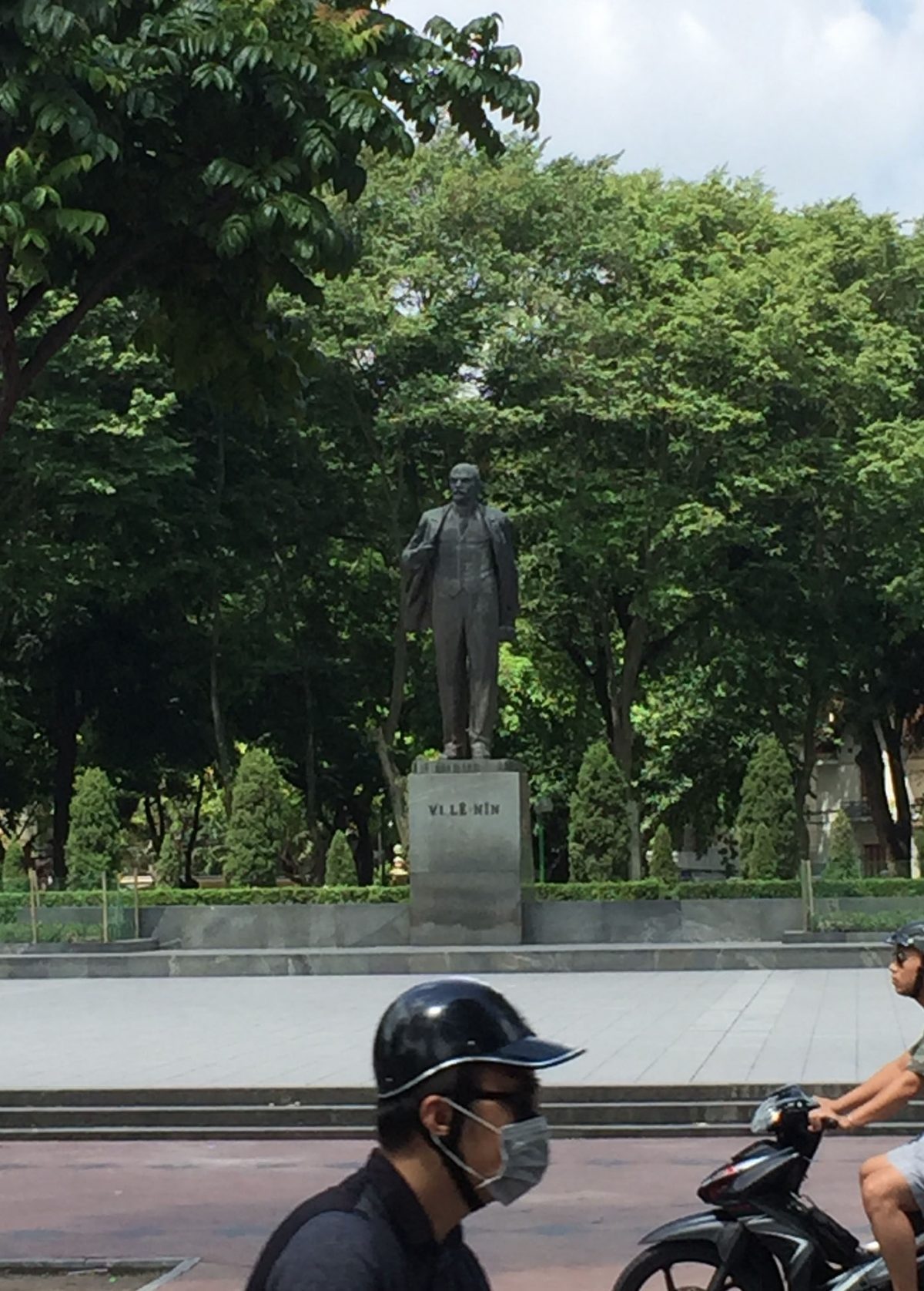
When I asked at the hotel reception, I was told that this area was apparently a “touristy place” for local people. The chaotic scenery of the Old Quarter remains, not so much because locals desire it, but because it is preserved in a stereotyped form for tourists who want to see it. That seems to be how local people understand it. Looking at the Western tourists passing on the street, most of them wore expressions of bewilderment before the sauna-like heat and the mass of motorcycles. They seemed stunned by a chaotic landscape whose overwhelming density of information far exceeded the exotic image they had imagined from travel brochures and websites. Along Dien Bien Phu Street, in front of the Military History Museum, a statue of Lenin stood in a park. In the brutal heat and motorcycle noise, it seemed almost like air. The authority that must once have existed there, together with his stern expression, had been blurred by the city’s heat.
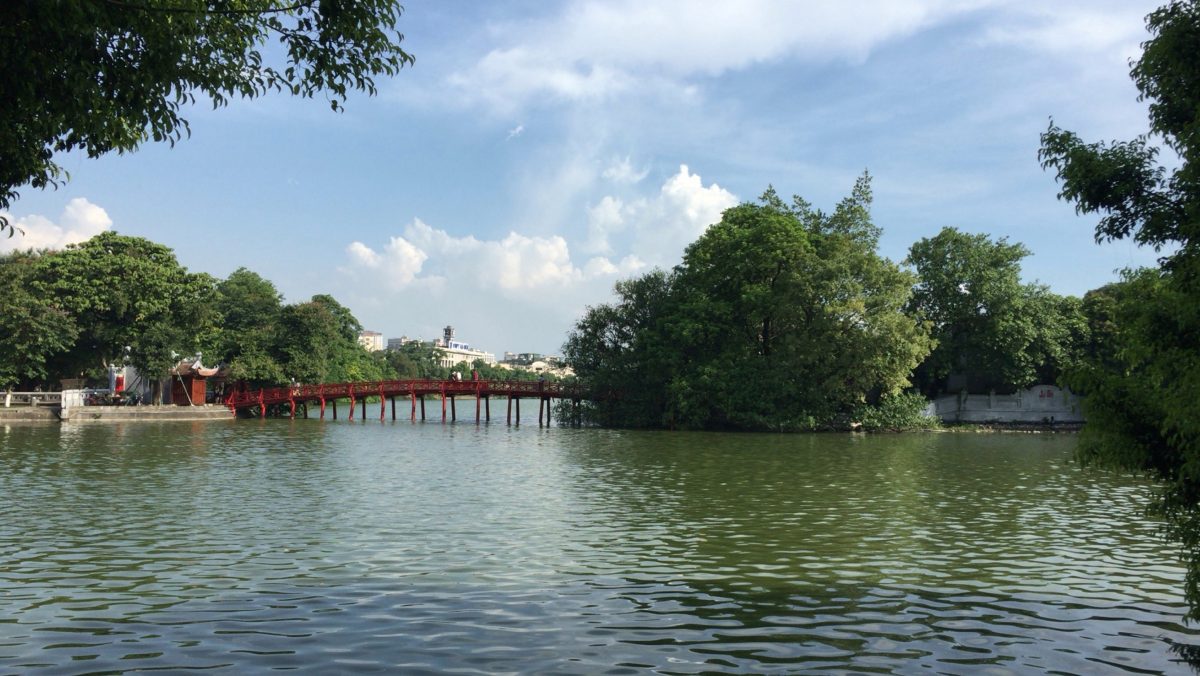
Walking south from the Old Quarter, Hoan Kiem Lake opens before you. At the side of the lake, a commercial building with Dunkin’ Donuts and Burger King at its entrance sucks up tired tourists like a vacuum cleaner. The fast-food chains one must have entered too many times in one’s own country may look, in this city, like an oasis.
I visited Hanoi for a mixture of research and vacation. A major reason I chose to come was that two friends from university, Q and G, had each opened architecture offices in the city. Both are from northern Vietnam. They had studied in Japan on government scholarships, earned their degrees, and returned home around five years earlier. Before I knew it, ten years had passed since we first met at university, and now all of us had left companies and become independent.
At night, in front of the bia hoi designated as our meeting place, I found the two of them completely blended into the Vietnamese scenery. It was called an izakaya, but it was a simple place with plastic chairs like those in a public bath and camping tables lined up. It happened to be a weekend night, the customers overflowed outside, and aside from my wife and me there seemed to be no foreigners at the other tables.
To graduate from the University of Tokyo across the sea and work as architects in their native Vietnam. Family. Negotiations with Communist Party officials. The Vietnam War. Ho Chi Minh. Memories of Tokyo. After many subjects had made their round, Q and G murmured:
“Now we are just residents.”
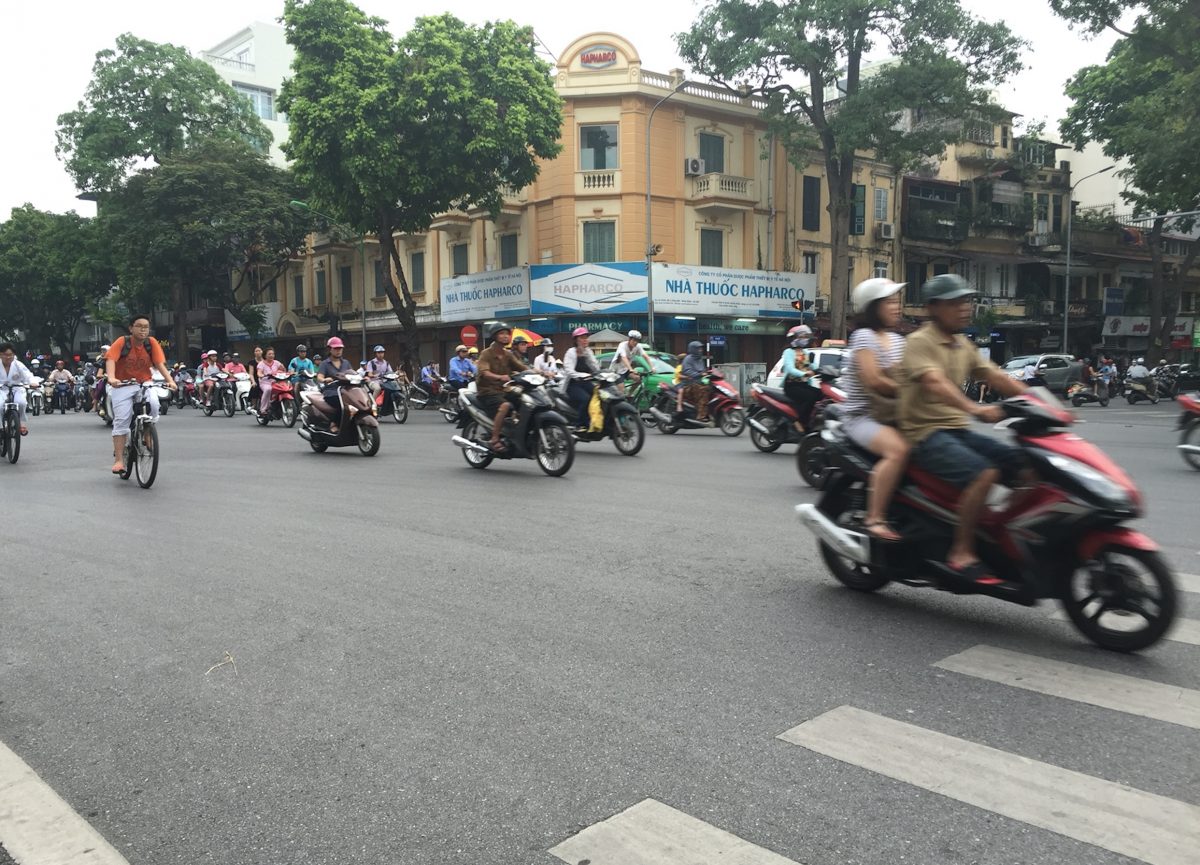
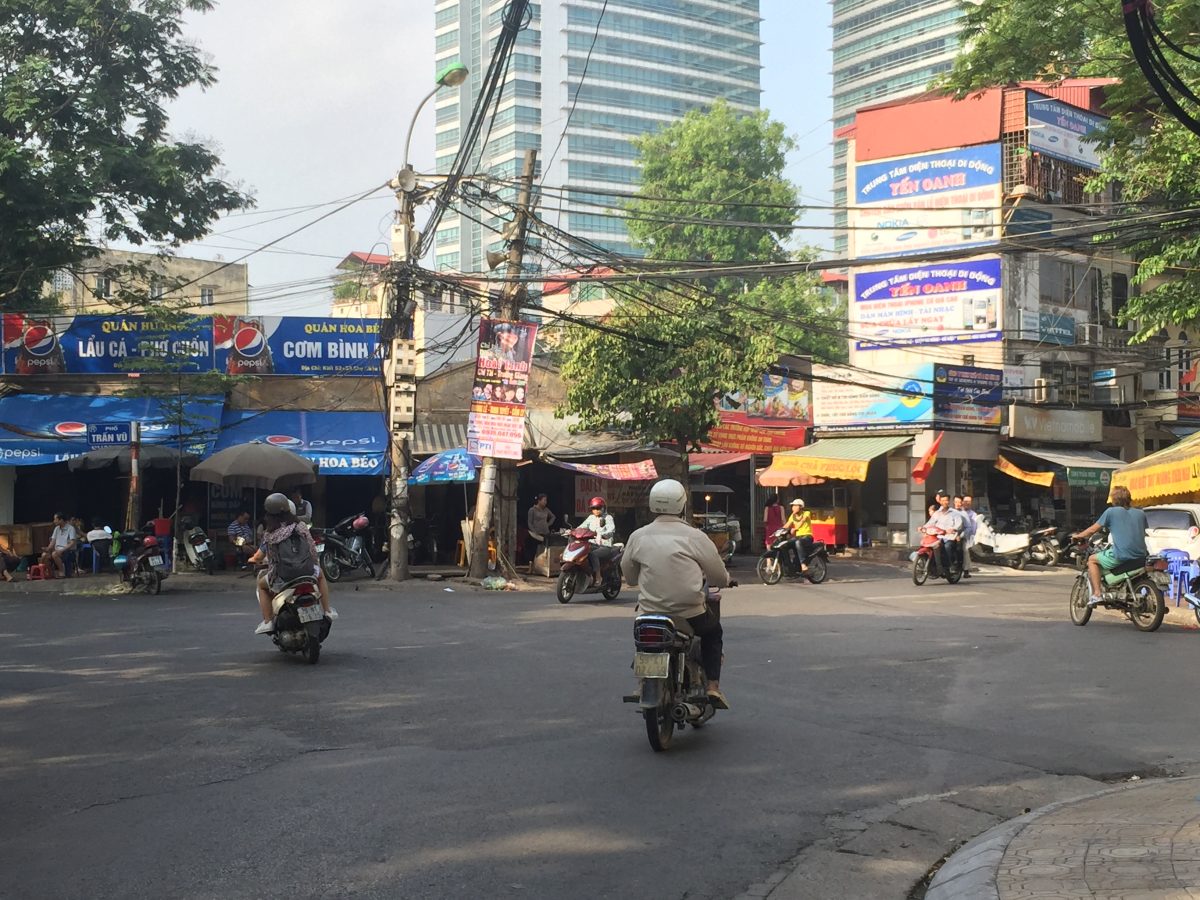
To get to a meeting with a local artist, we walked south through the Old Quarter under the intense sun, along the east side of Hoan Kiem. Crossing streets by cutting through swarms of motorcycles and walking block by block, the market-like chaos of the Old Quarter gradually transformed. A view appeared of beige public buildings that seemed born from a hybrid of French colonial traces and postwar modernist thought, while the back streets carried an atmosphere not unlike Manhattan’s East Village. In front of shops along the road, young soldiers in uniform unfolded camping chairs, drank Coca-Cola, and rested.
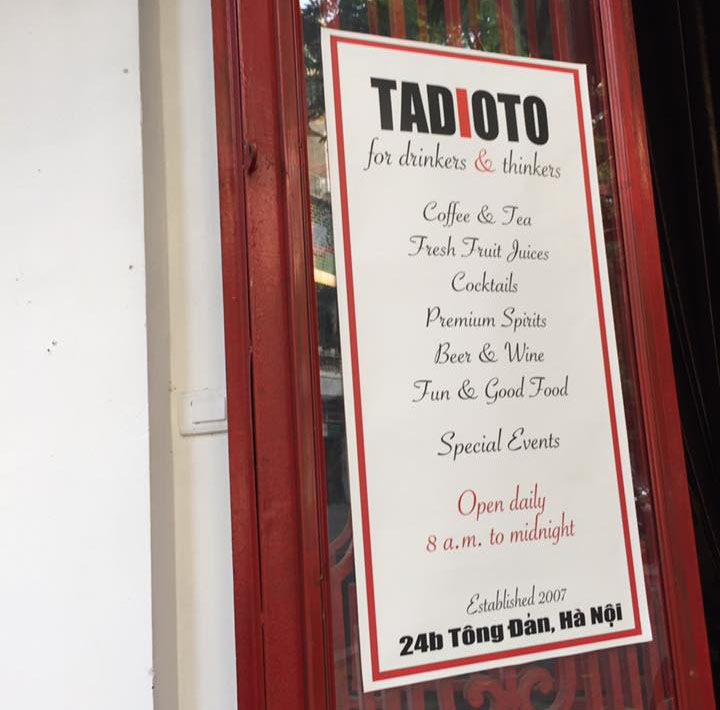
The cafe called Tadioto, our meeting place, was the regular spot of the artist T, whom I was there to meet. The sign at the entrance read “FOR DRINKER & THINKERS.”
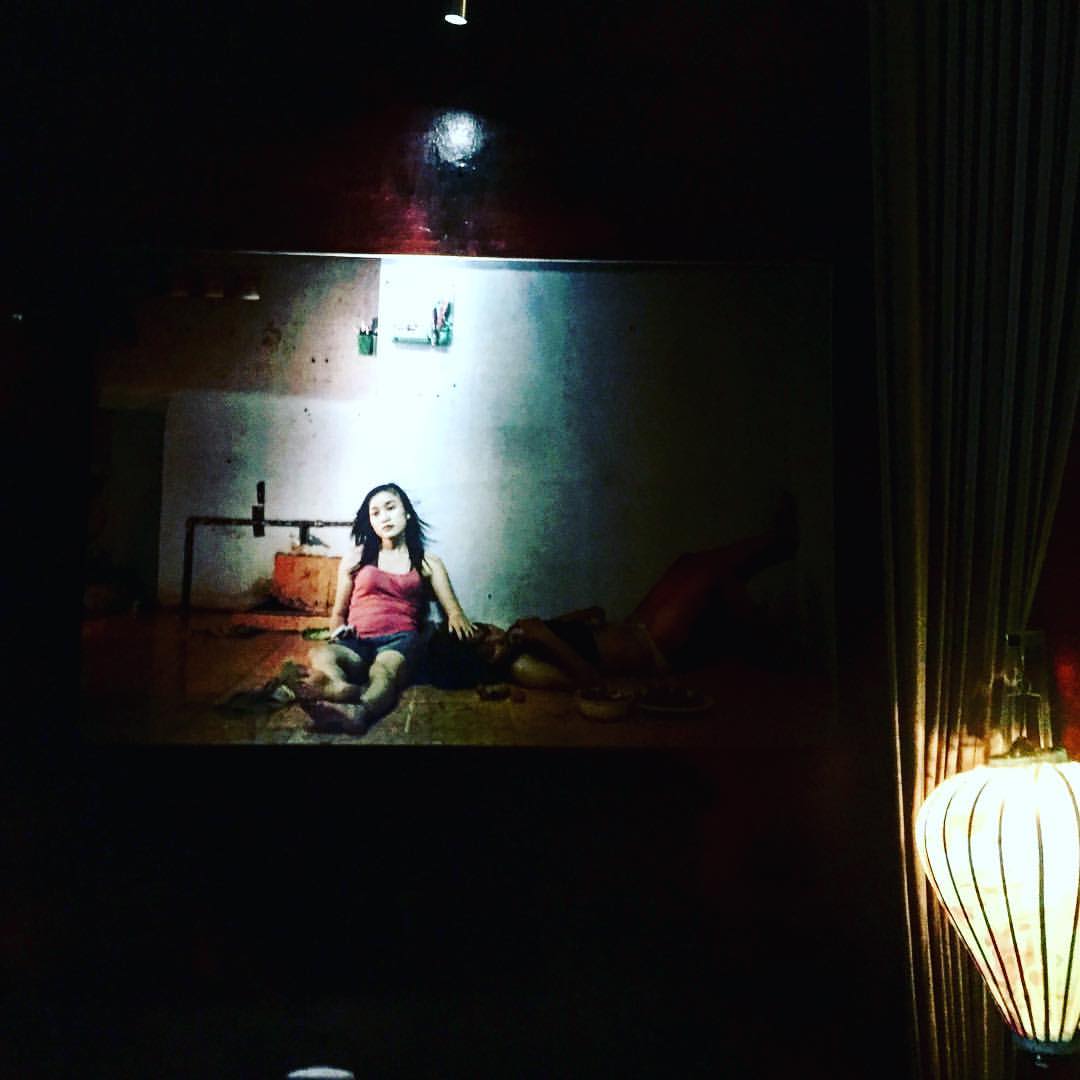
Beside the entrance stood a revolving door made by sandwiching the metal springs of a double-bed mattress between two sheets of glass. Passing through it into the bar room, one entered a space where science fiction, vintage, and the ethnic seemed to have fused. The counter and tables were made of corrugated metal with just the right amount of rust. Cushions that looked like African folk objects sat on the chairs. On the dark gray walls were photographs and paintings apparently selected to fit the image of the place, and the background music dissolved so naturally into the room that one did not notice it until one consciously listened. It had an air of statelessness I had never felt in New York, London, Paris, Berlin, Tokyo, or any other city I had visited.

During the meeting, a man with a strange atmosphere sat by the window the entire time. Long gray hair. A worn white cotton shirt. Glasses that seemed to be Oliver Peoples, though less fashion items than parts of his body. Smoking while occasionally looking outside and reading an English novel, he had a presence unlike anyone I had met before. When I asked T, she said he was the owner of the place, a man named Nguyen Qui Duc.
“He is quite a famous novelist in Vietnam. He designed this place too,” T said. He smiled shyly, as if to say please stop, and simply thanked me for coming all the way from Tokyo to the shop. Then he continued reading his novel at his table while smoking.
…
For several days after that, I spent time in various parts of Hanoi, but I could not forget the strong impression he had left. The day before I returned to Japan, I managed to contact him, and we were able to meet that night.
The conversation began with the Moroccan-style black garment he was wearing, then moved into fashion. From there it continued without pause: the art gallery he had run that had been shut down by the government, the Hanoi scene, and much else. As we talked, I learned that he had lived in Tokyo about twenty years earlier, and that his fluent English, fluent enough to write books, was the result of the effort he had made after moving to San Francisco as a teenager fleeing the war.
“From the middle of the war, I was away from Vietnam for a while. I was reunited with my family much later. At the time, I did not think the city of Hanoi was good, but as I grew older and visited several times, I gradually began to find it interesting. So I decided to move. It has energy, and there are young people with thoughts. I do not get bored.”
As the night deepened, young Vietnamese creators and foreign guests began to gather in the bar. When they noticed him, they greeted him happily. This shop, and he himself, were the navel of the city called Hanoi.
“Tonight is on me. When I come to Tokyo next time, maybe you can treat me to sushi.”
It was time to leave. At parting, he smiled and said, “Let us meet again, without fail.”
Outside the navel, Sunday night was still as hot as a sauna. On the way back, along the sidewalk by Hoan Kiem Lake, young people drank beer and played badminton under streetlights while a mass of motorcycles passed beside them. Watching the scene, I suddenly wondered whether Monday would really arrive tomorrow.
When I reached the airport, summer had not yet begun in Tokyo.
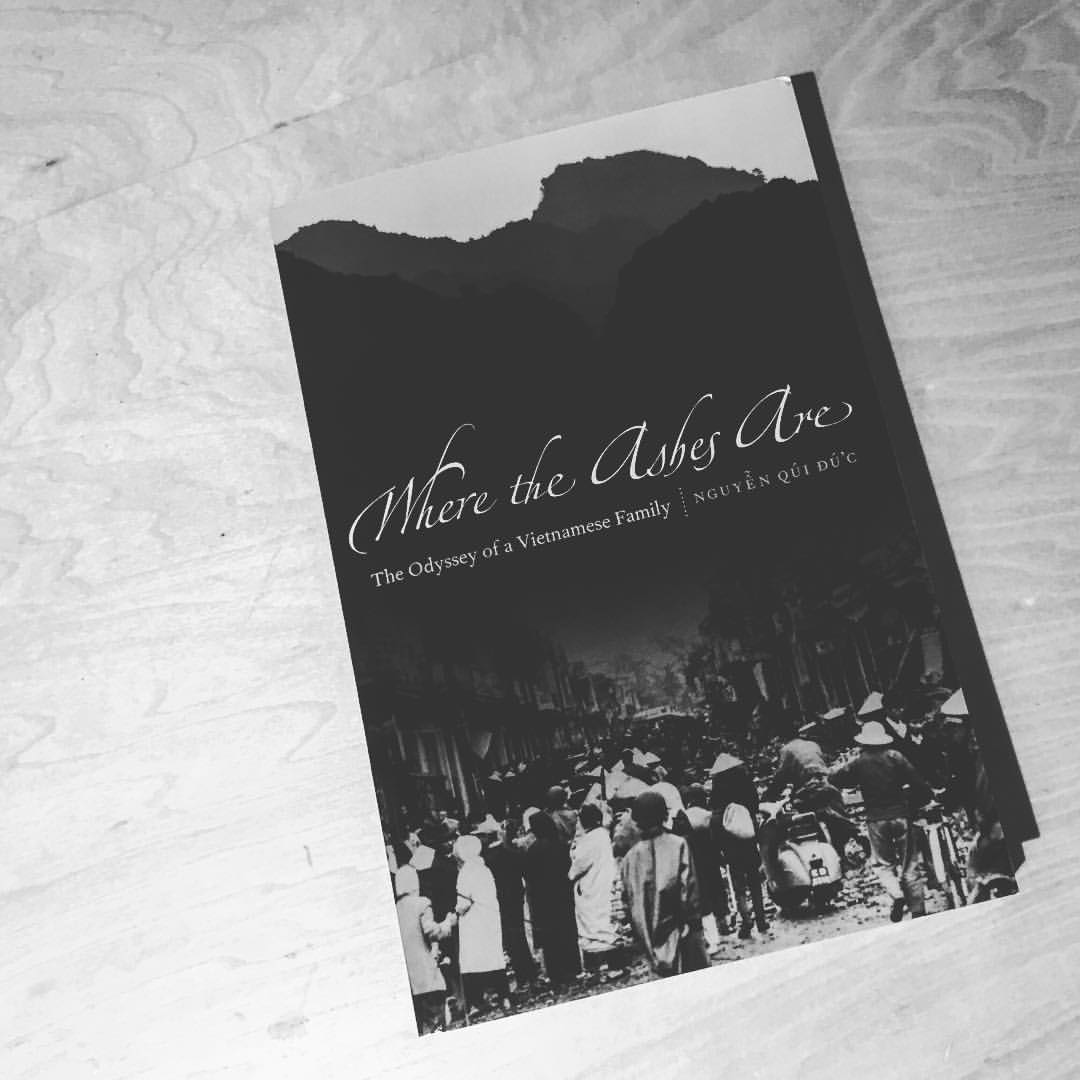
I now open his book and read the traces of the life he has lived.
Even now, when night falls, I feel like wandering back into Tadioto, where he is.