Magazine
Essay Series “Walking Now” MISHIMAGAZINE #7 – Bangkok with the Generation of Future Masters – Saran Yen Panya and Noon Passama
The original text was written in Japanese for MISHIMAGAZINE in December 2016. This post is an English translation and republication of the original article.
Photography by KLEINSTEIN
It was shortly before the death of King Bhumibol of Thailand when I visited Bangkok again in October. The signs of autumn that had already arrived in Tokyo were nowhere to be found in the city. Or perhaps Bangkok is simply not the kind of place where such signs arrive. As in spring, the airport was filled with a dense humidity. Seeing the sturdy security guards in short sleeves, I was reminded that I had come from somewhere cold.
I remembered that the late Tadao Umesao had written something similar in Tadao Umesao‘s An Ecological View of History (1957). Umesao had traveled the opposite route from mine. After a long journey from the Middle East into Southeast Asia, he landed at the airport in Tokyo and felt the chill in the air around Japan. Japan is a cold country.
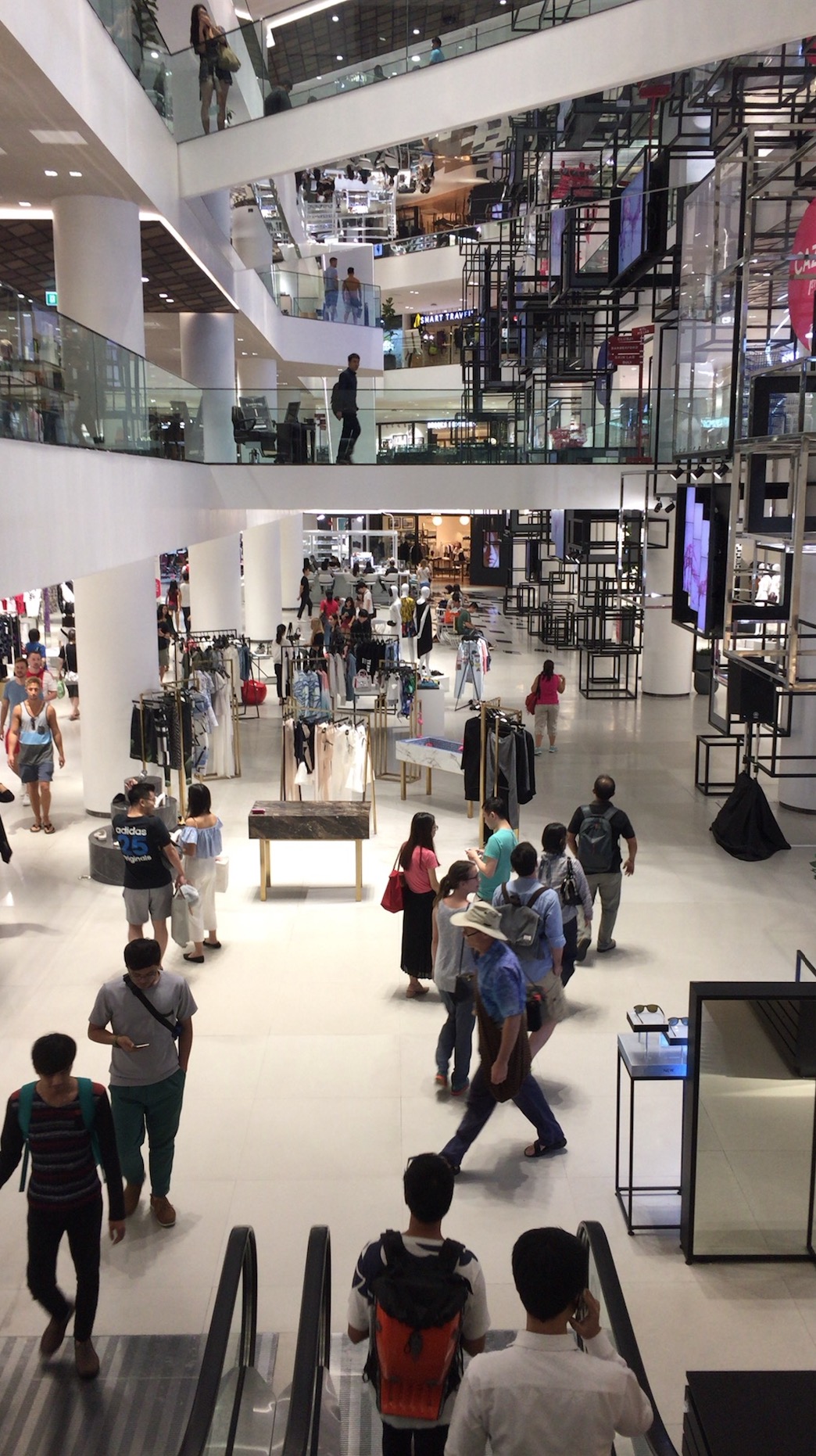
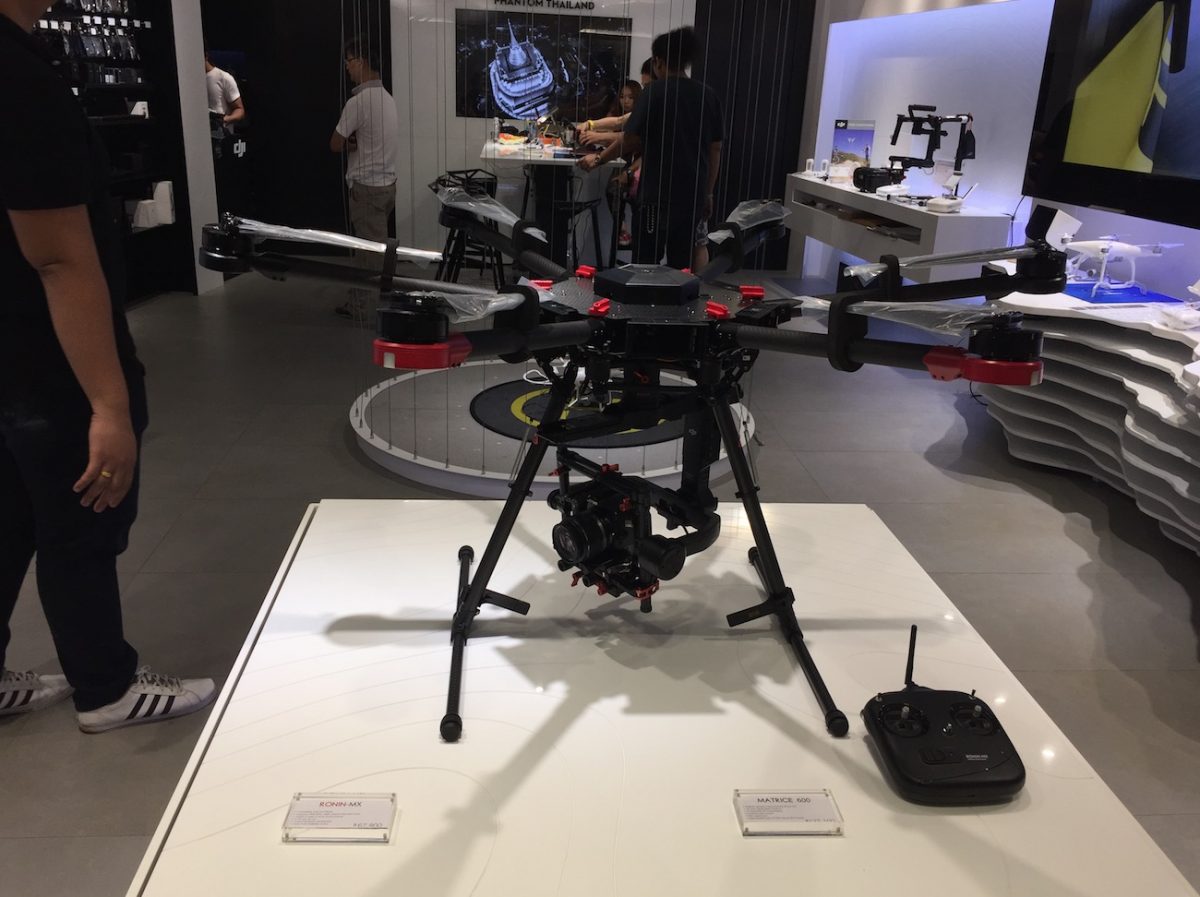
Between appointments, I went to see the interior of a department store in Bangkok, a project that a friend of mine had worked on. Siam Discovery had become a topic in Japan because the architecture was supervised by Nendo’s Japanese designer Naoki Sato. I had heard that my Thai friend Saran Yen Panya was responsible for the store’s VMD, or visual merchandising, and I had been looking forward to visiting it.

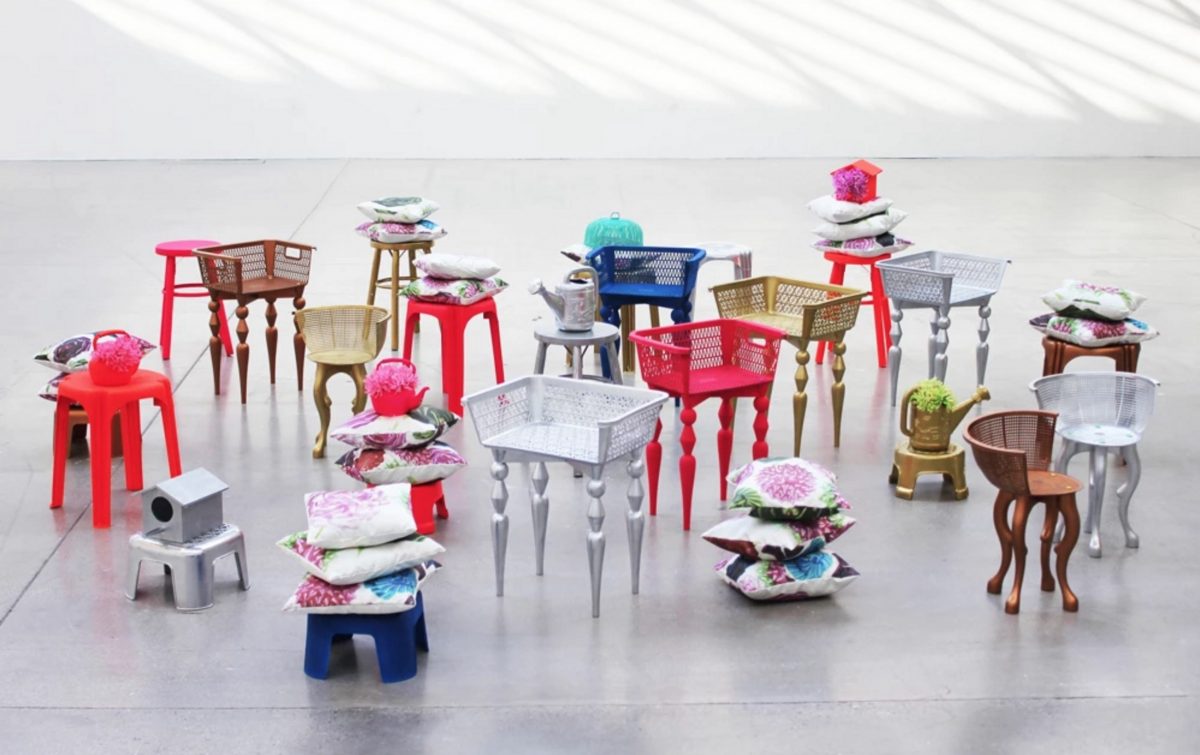
I first contacted Saran in the winter of 2011. I was researching interesting artists for a work project when an artwork he had made using a chair as a motif caught my eye, and I reached out to him by email. Once we began talking, I learned that we were the same age and that we had mutual acquaintances through other Thai designer friends. Gradually, apart from work, we began exchanging information. We actually met when his work was shown at 21_21 DESIGN SIGHT in Roppongi, in the exhibition The Fab Mind (2014). It must have been toward the end of summer. His sense of style was hip-hop-inflected, but his way of speaking was so calm that it disarmed me. As we talked, I learned that in Thailand he was known less as an artist than as the operator of a design studio. His business card read: “Art & Creative Director, Bartender.” Apparently, he also runs a bar with friends and often stands behind the counter.
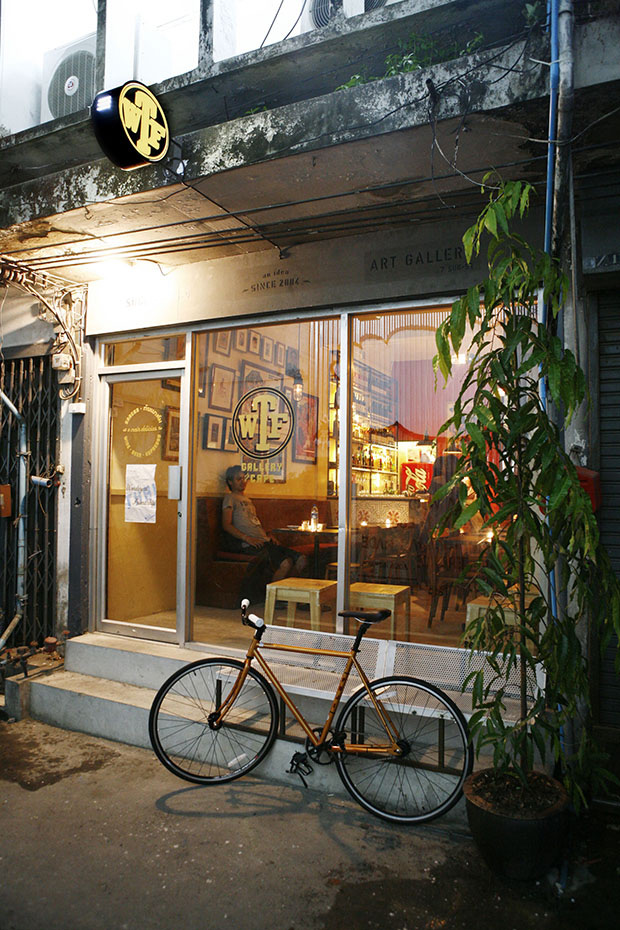
As I listened to him in a cafe in Minami-Aoyama, it seemed that the new culture of Thailand, one of the major forces of Southeast Asia, was being cultivated by people around my own generation, those in their thirties. The established path seemed to be: study in Europe, America, or Japan; work abroad; build an overseas network; then return home and open a studio. That generation forms organic lateral networks, collaborates with industry, academia, and government, and pulls culture forward. Saran was a graduate of Konstfack, one of Sweden’s leading art universities.
Talking with him, though he was the same age as me, I felt as though I had slipped through time and was speaking with someone from a generation earlier. His situation resembled that of artists and businesspeople who worked abroad during periods of high economic growth, then returned home and became international windows between two countries, generating currents in contemporary culture. Many of them are now white-haired masters. They served as filters, breathing in the air outside while exhaling the air inside to the world. They were translators of culture, exchanging national and urban identity for external signs. In a period when the domestic market had not yet matured, they went abroad to learn and then returned to build the market at home. They were a generation that became the foundation of culture.
As a generation almost native to the internet, walking through its own era of high economic growth, their movement seems cleverer and more updated than that of the masters who stood in a similar position fifty years ago. They leverage price differences between Europe, America, Tokyo, Shanghai, and other Asian metropolises, together with human networks, producing locally and distributing globally through the internet at metropolitan prices. The economic margin born from that circulation then turns toward new cultural and experimental activities conceived by each individual. They live in a world without established masters or grandees. In advanced countries, avant-garde activity often has the strange condition of being detached from economic activity. In their world, however, they are the cutting edge, they stand on the stage of economic activity, and they are critics of the age.
Walking through the freely laid-out department store, I could glimpse the work of young people of my own generation, including Saran, while also being forced to think again about the geopolitical situation in which I myself stood. Watching them constantly send information out in English and build international networks one after another, I realized that the West, which should feel close to us, is closer to them both geographically and psychologically.
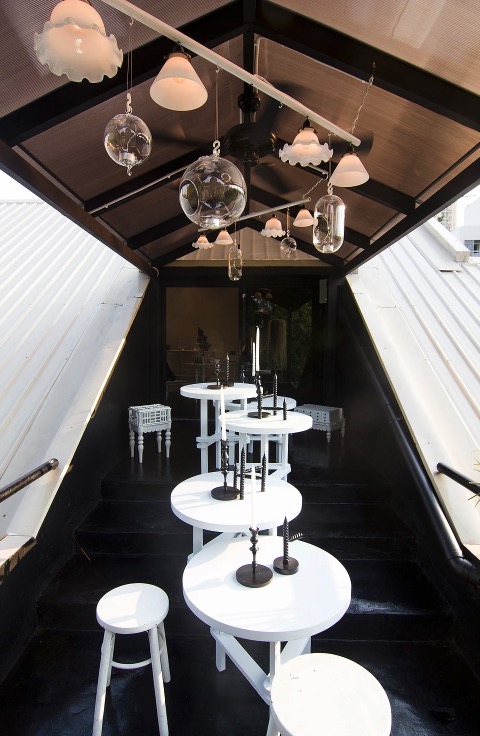
These days, side jobs for artists are ordinary in any large city. Artists who live solely by selling artworks are successful exceptions, and even among those represented by well-known agents, side work is common. Thinking about it, Shuji Terayama, who came from the same region as I did and once said, “My profession is Shuji Terayama,” was not only making plays and poems; he was also involved in a parade of side activities, from television production to horse-racing predictions. Or perhaps the framework of main job and side job was wrong from the start. By creating multiple contexts for activity, he may have been describing his own human condition more accurately.
An artist who makes objects for the white cube. A title that says bartender. Come to think of it, Haruki Murakami was also a bartender. Thinking about such things, the phrase “this world is a provisional world” comes to mind. I often see modern people cite that ancient phrase, born from much hardship, as an excuse for laziness, but there is no time for that. I suddenly remembered that Shusaku Arakawa had criticized this phrase head-on.
Bangkok, dyed black by the death of the king, will surely become a bright city again. And when I think that this will be done by people of my own generation, I feel that I cannot afford to take my time either. December begins to feel even busier.
The next time I visit Bangkok, I would like to drink one of Saran’s cocktails and talk with him about the creation of a new present.


Noon Passama
noonpassama.com
56thStudio Private Gallery by Saran Yen Panya
56thstudio.com