Magazine
Essay Series “Walking Now” MISHIMAGAZINE #2 – Akira Takayama: A Story Hidden in Reality
The original text was written in Japanese for MISHIMAGAZINE in February 2016. This post is an English translation and republication of the original article.
There is a saying that truth is stranger than fiction. The phrase seems to assume that reality is ordinarily far from the magic and contingency that occur in fiction. So when something unexpected actually happens, people say that reality is “stranger than fiction,” as if reality had been caught trespassing on literature’s property.
When I think about this, I remember the novels of Paul Auster and Truman Capote. Their stories often begin when the protagonist is pulled into something strange.
A strange person visits late at night, or a wrong number comes in. A small event that would not normally occur causes the gears to slip little by little, and soon one feels that something invisible to others has somehow become visible. The world moves seamlessly from “this side” to “the other side,” and the story spreads like a forest.
When I met the theater-maker Akira Takayama last year, I remember having a conversation along these lines about “story.”
I first encountered Takayama at the Ginza Hermès gallery. In the space along Harumi-dori designed by Renzo Piano, the colorful lights of Ginza seeped through the glass walls that evening. Several LCD monitors were placed on the floor. On the screens, cows at Fukushima’s Farm of Hope continued eating grass. Looking closely, there were many kinds of cows: some seemed anxious, perhaps aware of their situation, some continued eating as if nothing had happened, and some pushed the others aside to get to the grass first. Looking into the eyes of those cows through the screen, it felt strange to remember that Hermès has made its living since the nineteenth century from leather goods.
On the way home from the reception, while looking at the lights of the night city, a thought I often have returned. Who had done what in the place where I now stood? What kinds of stories had been born there? Who was the person I just passed, or the person sitting across from me on the subway? Such thoughts cross the mind for an instant and disappear.
Of course, when walking through the city, I almost never actually stop strangers or question neighbors to investigate whatever has caught my attention. In times like these, one would simply be treated as suspicious, and even the things that caught my attention are usually forgotten after two or three days. Yet if one takes a step into a place one normally passes by and looks inside, one discovers that a world thought to be fiction exists there. We become both spectators and actors in that novel-like reality, like the protagonist of an Auster novel.
Shuji Terayama was one person who stepped into that place beyond the first step.
Some years ago, I learned of a television program Terayama helped produce with Haruhiko Hagimoto and Yoshihiko Muraki, founders of TV Man Union. The program, titled Anata wa, was surreal: the creators approached people on station platforms and streets, asked questions, and observed their reactions. Adults bewildered by sudden questions, children responding with eerie calm. The reactions of people abruptly spoken to in the city are endlessly watchable.
Watching the people in that footage, I noticed how I usually recognize others through probabilistic categories: children, passersby, adults, salarymen, drunks. And I realized that television, now so accustomed to heavy editing, was alive in black-and-white footage shot in 1960, filled with the tension of not knowing what would happen.
“Who are you?”
To be asked such a question suddenly by a stranger may seem like a scene that could occur only in a novel. Yet fiction-like reality can actually happen, and can be made to happen. Perhaps we tend to forget that fact.
About twenty years after Terayama’s death, Takayama had stepped even further. In Tokyo Heterotopia, which focuses on minorities grouped under the single word “foreigners,” he visits places one might normally pass without stopping: an old Chinese restaurant in Jimbocho, a mosque in Tokyo, monuments in parks. He excavates the stories of individuals who once existed there. When one starts the smartphone app made for the work at each location, one can listen to readings of those stories. Standing in ordinary places one rarely has reason to visit, listening to the readings in a city transformed into a stage, one passes through the wall into the other side.
When one learns in this way that what seemed fictional in reality can become nonfiction, the act of living itself begins to look, without our noticing, like part of a story. Our present is part of the past and part of the future.

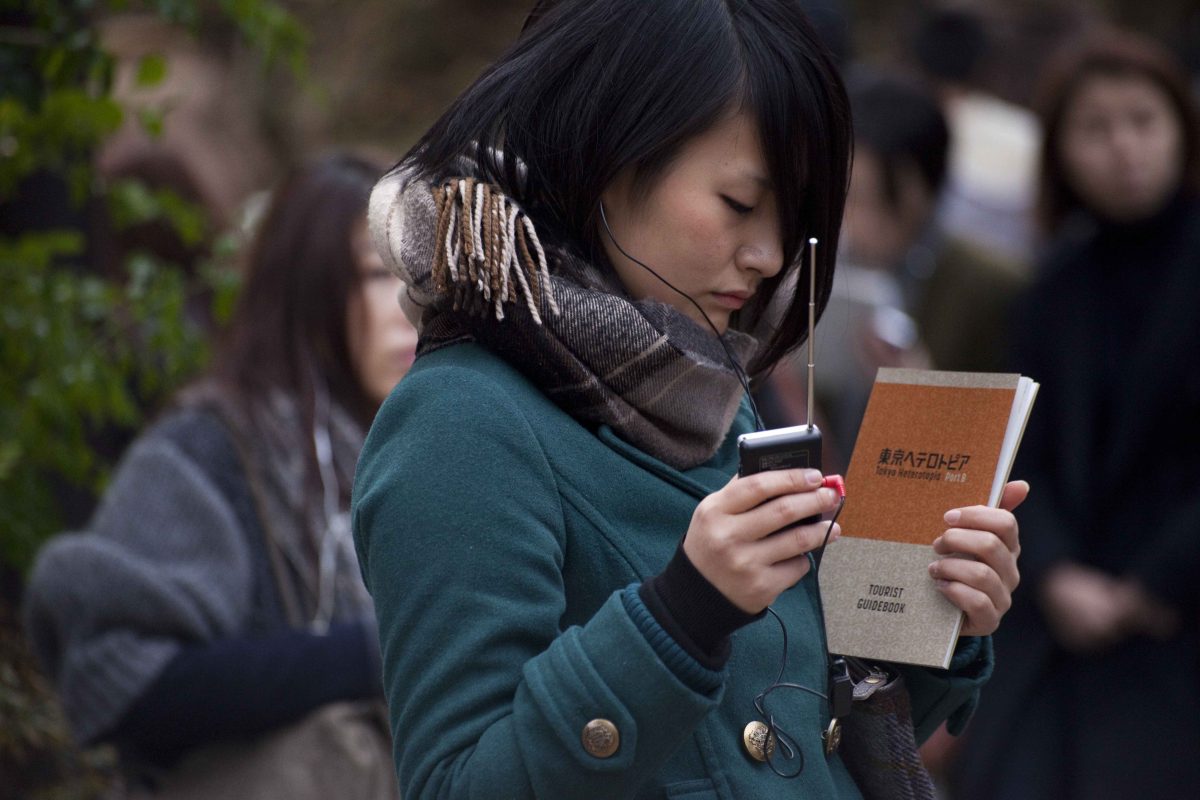
Tokyo Heterotopia is participatory theater in which viewers actually visit places marked on a map and listen to stories. At first it used actual radios rather than an app. When one visits the sites, one may encounter other viewers, and this too functions as part of the staging of the city.

Complete Manual of Evacuation: Frankfurt Version, released in 2014.
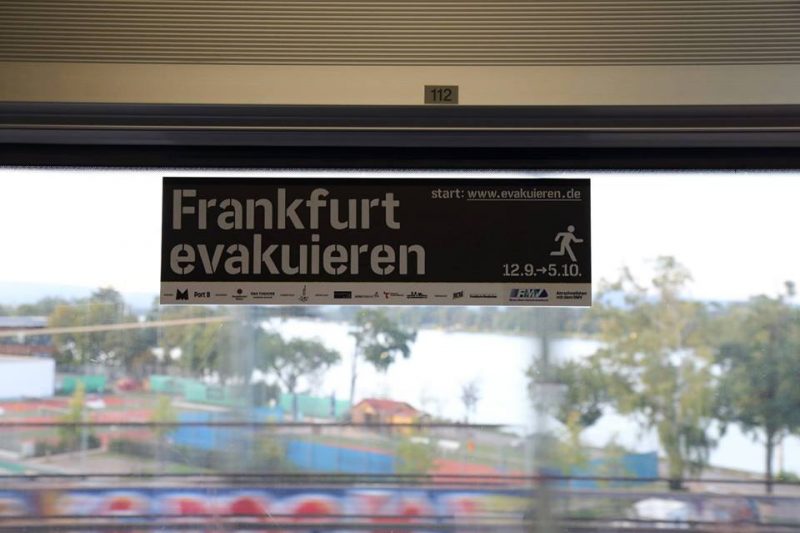


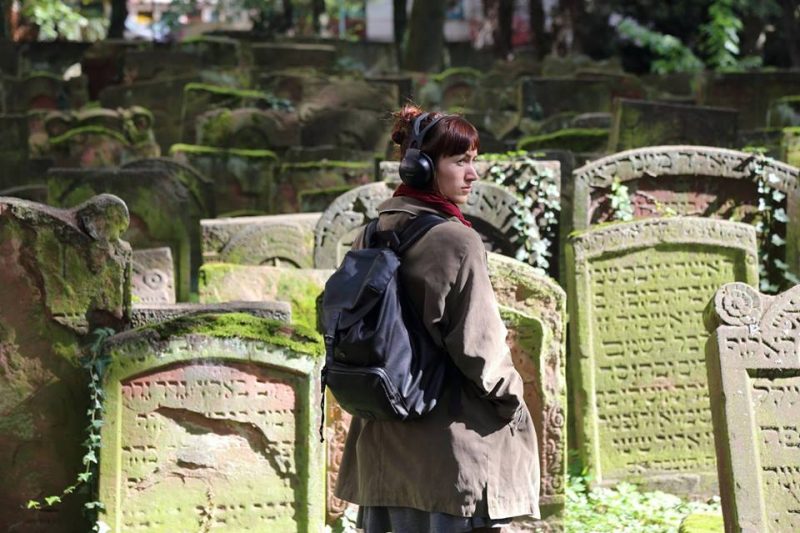
Complete Manual of Evacuation: Tokyo Version
Complete Manual of Evacuation: Frankfurt Version
Tokyo Heterotopia app page