Magazine
Essay Series “Walking Now” MISHIMAGAZINE #3 – Ben Lerner: Reality Becoming Narrative
The original text was written in Japanese for MISHIMAGAZINE in March 2016. This post is an English translation and republication of the original article.
WALKING NOW #3: Ben Lerner
Ben Lerner: Reality Becoming Narrative
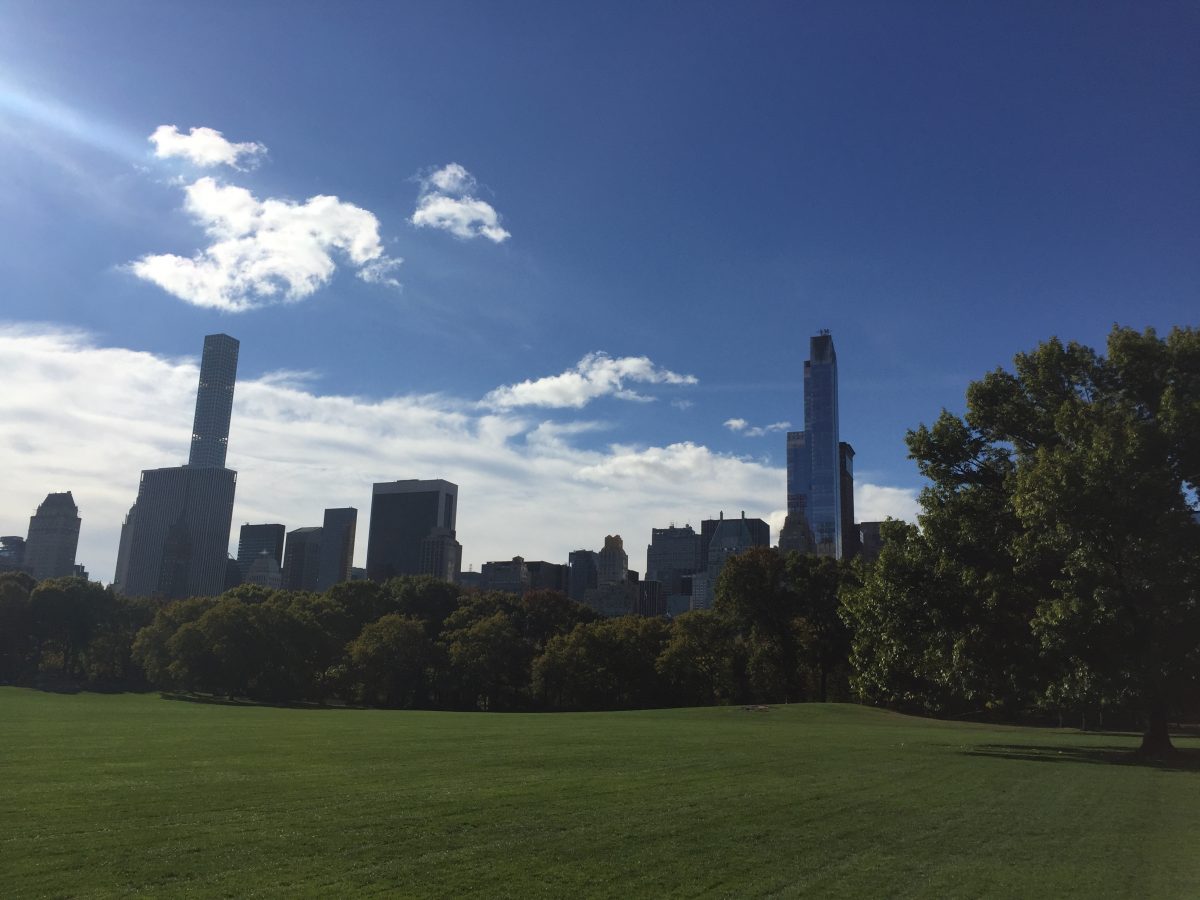
In October of last year, I had a chance to visit New York and stayed in the city for about three weeks.
A week after arriving, once my body had begun to understand the rhythm of the streets, I suddenly wanted to read a novel. I went into McNally Jackson Books, the well-known bookstore in SoHo, on the southern side of Manhattan. Whenever I travel abroad, I make a point of stopping at a bookstore and looking at the new fiction laid out on the tables. In novels, fragments of the present appear with the sensibility of the present. A city leaves traces in many places, but in a bookstore those traces are still warm.
That evening the store was crowded. It seemed there would be a reading for a new book later that night. I went, as usual, to the table marked FICTION and began looking through the stacks. I opened the books whose covers caught my attention, one by one, and read the first page. If the words and the style gave off a certain air, if I felt called by them, I bought the book and carried it back with me.
On the table were Hanya Yanagihara’s A Little Life, which had apparently been shortlisted for the Booker Prize; Amanda July’s The First Bad Man; and many other novels whose covers drew the eye. Most of the titles were unknown to me. Seeing all those books by contemporary writers, already visible in the English-speaking world yet not translated or even introduced in Japan, made me unexpectedly humble. I knew almost nothing about the books piled before me. And people in that city, I thought, must know almost nothing about the Japanese books lying on the tables of bookstores in Tokyo.
After several dozen minutes, the book I finally picked up was 10:04 (Picador, 2014). Its cover showed an aerial photograph of Manhattan at night, with the time “10:04” printed across it in a strangely meaningful way. The author was Ben Lerner, a writer based in Brooklyn. It seemed to be his second novel. When I read the first sentence, I felt called into the world beyond it. It became one of the pleasures of the trip.

The opening of the novel begins with the narrator, a writer, walking with his literary agent on the High Line, the elevated park on the west side of Manhattan. He has made a modest start as a poet, published a novel, had a story appear in The New Yorker, and is now being treated as an emerging contemporary writer. At the age of thirty-three, he is offered an advance for his next novel. He eats a luxurious meal, feels a degree of confidence, and prepares to begin writing. Then an unexpected health problem appears. Soon after, a close friend from his college days asks him for an unusual favor.
Written in summary, it sounds as though a plot must be waiting somewhere. In fact, the novel contains almost no plot in the usual sense. Rather than a story built from dramatic structure, it is a quiet account of a man in his thirties living in contemporary New York, narrating the events that pass in front of him. It has, in some distant way, the atmosphere of Dostoevsky’s Notes from Underground, but without the familiar literary theme of friction between the self and society, without the old theater of ego and conflict. Reading it, I was reminded at times of the air one feels in a Jim Jarmusch film.
When I looked up responses to the book, I found that opinions were divided almost perfectly in two. Some readers wrote harsh reviews, saying nothing happened until the end, that it was a useless book, that the words merely accumulated while the story drifted on. At the same time, certain critics praised it extravagantly, suggesting that even if Lerner never wrote another book, this one would remain.
Reading those reactions, I remembered the old literary argument between Ryunosuke Akutagawa and Junichiro Tanizaki. Akutagawa wrote in Bungeiteki na, Amari ni Bungeiteki na (1927) that the interest of a plot does not necessarily strengthen the artistic value of a work. Tanizaki responded in Joseiroku (1927) that to exclude the interest of plot was to abandon one of the privileges of the novel as a form. The debate ended without resolution, interrupted by Akutagawa’s suicide. Yet nearly ninety years later, through Lerner’s experiment, the same question seemed to be returning across borders and across time. This time, however, it was not two writers carrying on the argument, but ordinary readers in their reviews. That, too, may be a sign of the present.
After reading the book, I contacted Ben Lerner personally and was able to interview him. I later contributed that interview, “Ben Lerner: The Story Called the Present”, to FREE MAGAZINE ISSUE #3, released on March 18, 2017.
For Lerner, who began his career as a poet, the novel seems to be an art form that can emerge by curating and rearranging the reality one has actually seen and felt. In the interview, he told me that with Proust, what interested him was not so much Proust’s statements about music as the descriptions of music that appear inside the fiction.
In Lerner’s work, actual works and events appear almost as if they had entered the author’s diary: Christian Marclay’s The Clock, Jeff Koons’s metallic sculptures, scenes at the Metropolitan Museum of Art, Occupy Wall Street, the hurricane that struck Manhattan in 2012, even Back to the Future. They enter the landscape of the narrative and dissolve there.
Reading Lerner reminded me of the possibility that reality and language still possess. If we choose a sequence from the reality in front of us, it begins to take on the quality of a story. What one feels now, in front of one’s own eyes. The air that rises when that feeling is given words. It is not that reality is stranger than fiction. It is that stories are born from reality.

Ben Lerner
Born in 1979. Based in Brooklyn, New York, Lerner is a poet and novelist who teaches at Brooklyn College, City University of New York. He is also deeply engaged with contemporary art and has written criticism for The New Yorker.
The Lichtenberg Figures. Port Townsend: Copper Canyon Press, 2004.
Angle of Yaw. Port Townsend: Copper Canyon Press, 2006.
Mean Free Path. Port Townsend: Copper Canyon Press, 2010.
Novels:
Leaving the Atocha Station, Coffee House Press, 2011.
10:04, Picador, 2014.
PICADOR USA
picador.com
McNally Jackson Books
52 Prince St, New York, NY 10012
www.mcnallyjackson.com
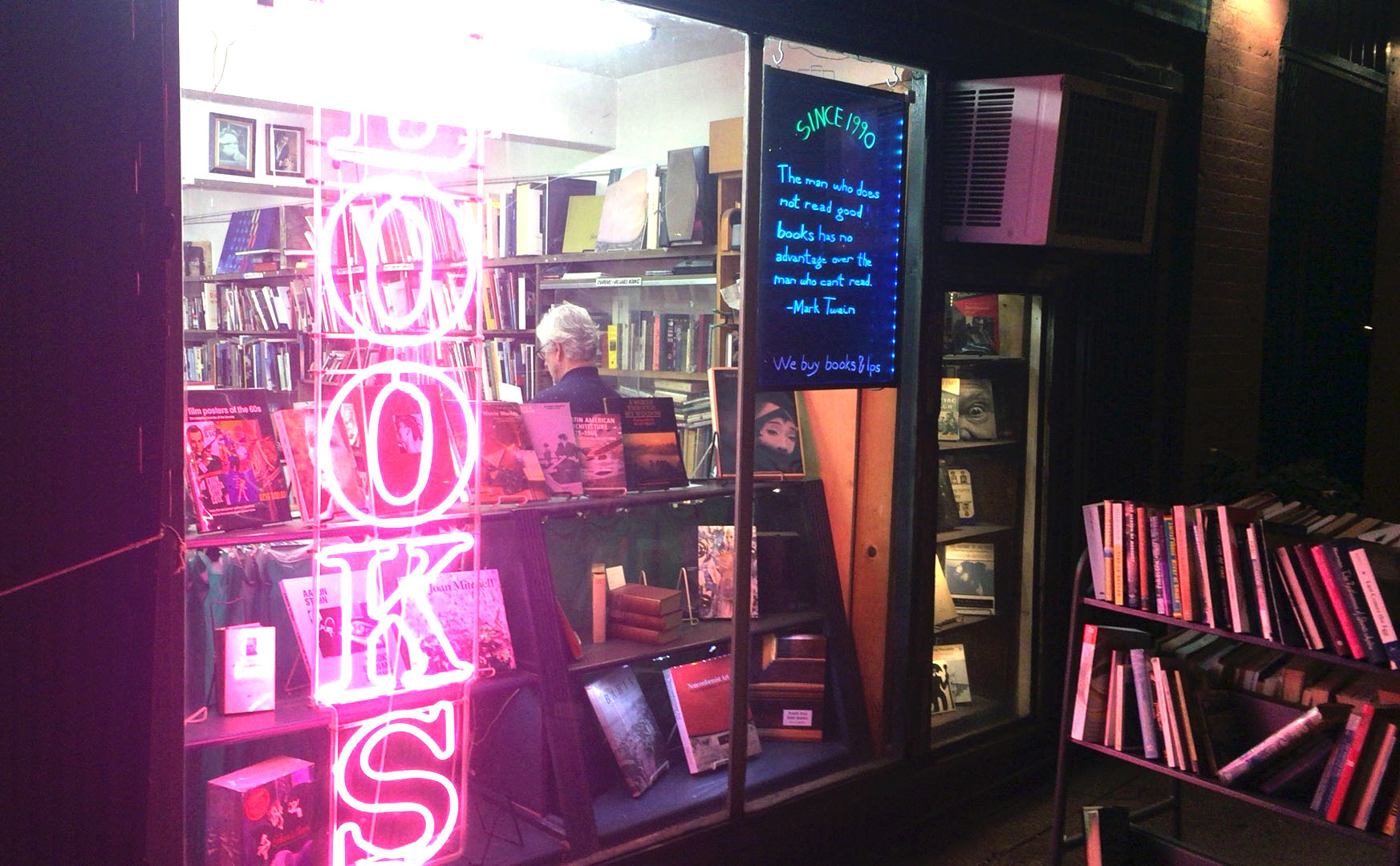
Mercer Street Books & Records
206 Mercer St, New York, NY 10012
www.mercerstreetbooks.com
Barnes & Noble
33 E 17th St, New York, NY 10003
www.barnesandnoble.com