Essay
STUDIO VOICE vol.414, “SELF-FASHIONING FROM ASIA” – Fashion and Music, or Mode and Street
STUDIO VOICE vol.414, “SELF-FASHIONING FROM ASIA” / Article 01. Originally published in Japanese as “Fashion and Music, or Mode and Street – Auxiliary Lines for Thinking About Japan, China, and Asia.” English translation and layout for KLEINSTEIN TEXTS. Text by Yohei Kawada / Photography by Yusuke Koishi.
Article 01
Fashion and Music, or Mode and Street
Auxiliary lines for thinking about Japan, China, and Asia.
Creative director Yusuke Koishi and writer/DJ Hiroshi Egaitsu consider fashion and music, mode and street culture, and the shifting position of Japan, China, and Asia within global cultural systems.
Entering the Field from Japan and Asia
Interviewer: In the conversation “Why Is the World So Crazy About Street Culture?” hosted by the media platform H by amana design,11 This refers to the amana design / H talk session “Why Is the World So Crazy About Street Culture?” with Hiroshi Egaitsu and Yusuke Koishi. The original Japanese report was published by amana INSIGHTS; an English TEXTS version is available on KLEINSTEIN as Why Is the World So Crazy About Street Culture?. the two of you discussed the Western-centered system of contemporary fashion and the historical position street culture has taken in relation to it. Today I would like to ask how Japan, and Asia more broadly, might now enter the contemporary field where two axes intersect: fashion and music, mode and street.
Yusuke Koishi: If we begin by looking back at Japan, there has long been a tendency to follow Western rules, or even to impose those rules on ourselves more strictly than the West does. Japanese brands and fashion media often interpret Western conventions in an over-accommodating way, then circulate an image inside Japan of how things “should” be. In Japan, admiration for whiteness has been especially strong. Admiration for Europe and America existed before the war, of course, but after the war it became stronger among younger people, and the media actively built systems that encouraged that longing.
The problem is that when rules based on Japan’s own imagined version of the West are taken to Paris or New York, the result often becomes a diminished reproduction. We think about how we will be seen through a virtual, almost propagandistic image of the West that we have produced ourselves. This is not limited to fashion. It appears in many fields.
By comparison, China is now a major economic and political power. In brand advertising and magazine visuals, Chinese and Asian models appear quite naturally; in Chinese-speaking Asia, even terms such as waishengren carry layered histories of postwar identity.22 Waishengren, literally “people from other provinces,” usually refers in Taiwan to people who moved from mainland China after 1945, when Taiwan was placed under the Republic of China after the end of Japanese colonial rule, and to their descendants. People who had settled in Taiwan before that point and their descendants are generally called benshengren; Indigenous peoples are sometimes included within that category, though identification with these terms varies. Looking at Chinese acquaintances from my position, I feel they see themselves very strongly. As the country opens outward economically and culturally, many people seem seriously to ask why their values do not yet communicate beyond China. Some of them are visibly troubled by that question.
Hiroshi Egaitsu: My field is mainly music, so I inevitably speak from that side, but South Korea, for example, also looks very strongly toward America. It does so more thoroughly than Japan, and it puts that orientation into practice. In the Japanese music industry there is a similar tendency toward over-accommodating interpretation, but another deep factor is that the domestic market somehow continued to function on its own, as in the case of CDs still selling. Fashion has a more global common ground than music, and that ground is constantly presented from the Western side.
Koishi: In fashion, if you want to succeed within a system created on the other side, a certain calibrated attitude toward following the Western system is necessary. The moment you become a “collection brand,” you have already stepped onto someone else’s field. If you want attention in the runway format, you have to speak the language used there. At the same time, an attitude that is too obviously ingratiating will not earn respect.
What interests me now is whether there are Asian brands or forms of making that achieve major success without riding that context – brands whose reasons for success may not be immediately clear, but which are intensely supported by particular communities of young people. How many such things exist, and can they create a mainstream?
Egaitsu: Five or six years ago, I did buying work for a Beijing apparel company, selecting Japanese fashion brands. They loved Japanese culture and knew far more about many Japanese brands than I did. But they ignored things like the size or prestige of the brand name and came at business in an extremely chaotic way. That impression has stayed with me.
Koishi: I once received a work inquiry through an acquaintance from people in China. They had heard my company did art exhibitions and projects, so I spoke with them about how it might be interesting if certain things could happen in China. What surprised me was that only a few days after our conversation, even though I had not agreed to take on the work and nothing concrete had been decided, they sent me a proposal for an event to be held in Shanghai six months later.
Somehow my company was already listed as involved in the planning, artists from inside and outside China were supposed to gather in Shanghai, and even the reception schedule and opening speeches had been decided. The proposal had the feeling that only minor adjustments remained. The plan was not very feasible at that stage, so I explained that things do not move forward on such a casual basis. But they had apparently already begun approaching people around them. Two days later they asked, very concretely, what had to be corrected for the project to happen: was the budget insufficient, was the schedule the problem, or was it something else?
At first I felt strong resistance to that forceful rhythm, but I also found it interesting. There are not many people who move at that speed. “Not impossible” does not immediately mean “possible,” but if there is a possibility, they move toward it with full force. I felt a real potential in that energy.
Continuing with China, Fosun International acquired Lanvin last year and attracted attention. More recently, the Italian football club Inter Milan has also been under Chinese capital. Not only in fashion, we will increasingly see Chinese companies acquiring Western brands whose popularity has begun to fade. Japan once had moments like Takihyo investing in Donna Karan and Onward supporting Jean Paul Gaultier. Those were periods when the country’s economic power was relatively high.
More recently, Stripe International was a major shareholder in Thom Browne, and Uniqlo has acquired large overseas brands. But I am not sure whether Japanese companies have been able to make strong deals that take controlling influence, raise value, and move the power structure of the industry. If China can not only acquire major brands but also substantially raise the power and value of historically important brand legacies, it may soon establish its own position on the imperial field of Western fashion business.
At the moment, the movement is driven more by financial strength and the scale of the domestic market than by finesse in following industry customs, contexts, and unwritten rules. Some people mock that as uncool, but it is also the logic of capitalism. Unlike some other Asian countries, China tries something, and if it does not work, it presents another method. It has the force to do that a hundred times. When I work with people in China, I sometimes feel as though I am working with an AI reinforcement-learning program. I am interested to see how far that force can function in this world, how it may change things that were thought to be established rules, and how it will negotiate with imperial customs.


Unwritten Standards and the Courage to Step In
Egaitsu: I basically agree with what you just said. But when that happens, doesn’t the standard of “completion” used to evaluate a brand also change? Popular music has many layers, but after hip-hop, standards of completion became increasingly rough or flexible. We are in Tokyo, or Paris, or Shanghai, and each place sees different landscapes and evaluates different things. Contemporary art still has very strict standards around completion. I wonder what happens in fashion.
Koishi: Returning to authenticity, contemporary artists have long been conscious of this. Takashi Murakami is one example. In the previous generation, Yoko Ono and Shusaku Arakawa were also reading the context and striking the punch the market atmosphere wanted. Many people say that Japanese people do not think about being Japanese, but even if that sounds true on the surface, if they truly are not conscious of it now, that is simply naive.
In fashion, the recent documentary We Margiela comes to mind. Maison Martin Margiela was evaluated partly because it hacked the industry’s unwritten standards of completion and common sense. It was not only about making clothes. The brand would hold a show simultaneously in two venues so that viewers could only see one side, or make entry first-come, first-served so that even famous people could not enter if the show was overbooked.
These were not acts explicitly forbidden by industry rules, but they went against the accumulated understanding inside the community of what people “normally do not do.” It was not a backward way of obeying rules. By stepping onto a slightly dangerous line, the brand questioned formal rules. Such actions can become messages for people angry at the industry or dissatisfied with the present. They can generate sympathy. If you evaluate something risky before others do, the people who evaluate it first gain reputation. The New York art scene of the 1960s had speculative elements – the question was how quickly one could identify something and push it. I imagine similar things happened in music.
Egaitsu: Earlier you talked about continuing to walk in with muddy shoes a hundred times. Are you saying that the flexibility of roughness, a kind of “let it go wherever it goes” spirit, is important?
Koishi: Unwritten rules emerge from the accumulated archive of common sense and custom. But if we become too sensitive to them, we shrink. The question is how to break through. It is necessary to read the context, but not to over-accommodate it – to step into it consciously, even with muddy shoes. Ryunosuke Akutagawa wrote in A Fool’s Life that dangerous thought is thought that tries to put common sense into action. Common sense exists, but almost no one follows it head-on. Everyone follows it vaguely, as if saying, “somewhere around here.”
Networks, Gatekeepers, and the Entrance to a Scene
Koishi: Another important factor in creating change is network formation. In Asia, the overseas Chinese network is famous, but Jewish and Kurdish communities also have powerful networks around the world. Working with such people, I have recently felt the strength of being connected globally. In a sense, it has the strength often described in conspiracy theories. I imagine a similar sense of fellowship exists strongly in hip-hop scenes. What do you think?
Egaitsu: I think it is extremely important. The word “family” used by Black people who lived through the history of slavery and the word “family” used by Japanese people have very different ranges. For example, street culture spread quickly to Britain, France, and Japan. One reason Britain was early is that recordings of old-school hip-hop from the South Bronx in New York were sent to relatives in Britain. It was a family network: “This is incredibly interesting right now, listen to it.” Black communities in Britain heard those tapes, and that led toward The Wild Bunch. In short, it was family.
Koishi: And from there came the flow of being caught up by Universal or Columbia. That would be the early 1980s. Rick Rubin’s Def Jam Recordings appears around that point, doesn’t it? The movement begins in a more independent form rather than belonging to a major label.
Egaitsu: Around that point, street culture’s tide began to change.
Koishi: This is only my imagination, but if the hip-hop scene at the time was difficult to see from the outside, that very opacity may have allowed someone like Rick Rubin to do work larger than the size of his company: spreading hip-hop into white society. There is first-mover advantage in being a gatekeeper.
Returning to Chinese fashion, the first names that come up in relation to the Chinese market are boutiques such as I.T, Lane Crawford, and JOYCE. From a global perspective, such shops function as entrances into the Chinese market and as gatekeepers. When Japan was more chaotic, select shops such as BEAMS and United Arrows may also have appeared to Western people as reassuring entrances into Japan and as a kind of standard. The more opaque and chaotic a scene is from the outside, the more important the visible entrance becomes. It can also move in an almost monopolistic way. From now on, the age will belong not only to players who introduce outside things inward, but to gatekeeper-like players who transmit outward.
Moderate Authenticity and Moderate Otherness
Egaitsu: One thing I found interesting as a landscape was that, when I went to Beijing or Shanghai a few years ago, knockoffs of global sports-casual brands were sold about ten minutes away from the official shops. I do not know if it is still like that.
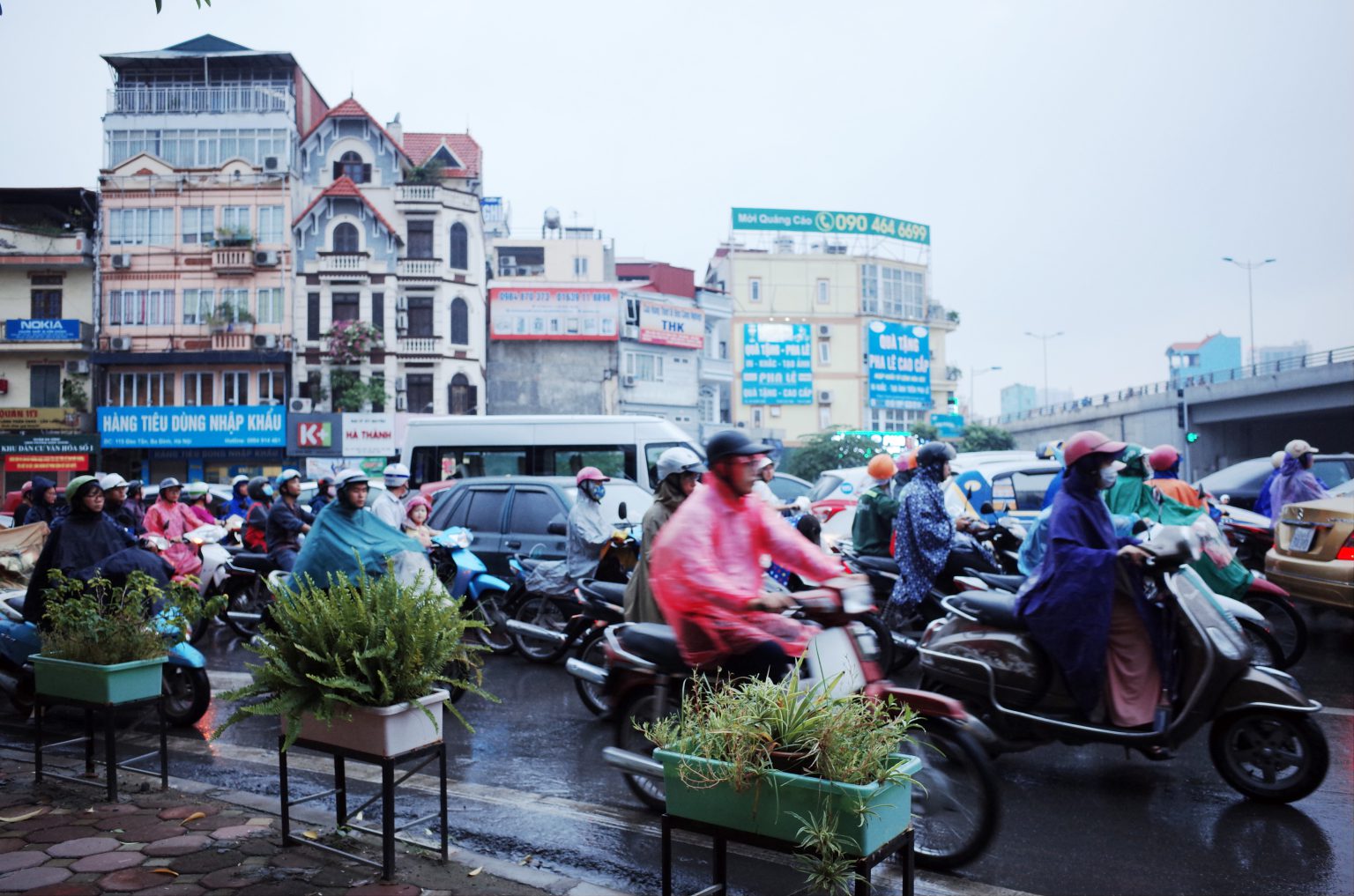
Koishi: Vietnam has many sneaker factories. Global-brand sneakers and fake versions imitating them can be made in the same factories, so exactly the same things are sold on the street. At that point they are no longer even fake. Some fakes are actually quite interesting. Last year I saw Chanel menswear in Hanoi and found it amusing.
Egaitsu: It makes you wonder where authenticity is supposed to be.
Koishi: We might call it “moderate authenticity.” The important thing is to incorporate that new moderation into the new standard of genuine creation. In a system where values are decided by Western markets, newness requires otherness. If you newly produce something that is already considered authentic, the frame may already be full. But if an ethnic background is too obvious, it gets contained in the category of ethnic.
Egaitsu: Because it is “spicy”?
Koishi: Six or seven years have passed since designers from the former Soviet sphere began to stand out. At the time, their otherness may have been just right. They shared the same religious values and customs as Europe and had the same skin color, but their cultural background was different, so there was a natural otherness. They were neither Asian nor Western European, yet there was something the body could understand. The Antwerp designers, beginning with Martin Margiela, were apparently first described as “Belgian expression.” At least from Paris, they were perceived as other. I want to see how a universal otherness – neither ethnic nor an easily legible Asia – might emerge from Asia in the future.
Egaitsu: This may sound sudden, but I think “moderate otherness” is related to a sense of humor, or to joke sense. How do you think about whether that sense is good or bad?
Koishi: I think that may be true. The question may be how large a place can be created: a place for people who understand the joke, people who do not understand it, and people who want to understand it.
Where Is the Dark Street Now?
Egaitsu: Changing the subject slightly, in “In the Ghetto,” Eric B. and Rakim rapped, “But they couldn’t cave me in ’cause I’m the Asian.” In the structure of West versus East, I think some Black people shared the idea that they were not on Europe’s side. That leads back to the Black Panther Party and to a current of reclaiming one’s own community against imperialism, with the civil rights movement as a foundation.
Koishi: Hearing that line quickly, it feels a little strange and therefore interesting. As resistance against imperial values, if you are going to lean in that direction, you might as well stand on the Asian side – is that the statement? Looking back, there are also many people who converted to Islam.
Egaitsu: “In the Ghetto” was released in 1990, and at that time I was living in New York. Skate shops were gradually appearing behind Lafayette Street. Black people, white people, and Asians such as Koreans gathered there. That scene remains vivid for me.
Koishi: 1990 was a threshold just before the end of the Cold War. It is interesting that skate shops functioned as hubs. In the 1990s, when Rakim was saying “I’m the Asian,” prejudice against Asians in that New York scene must still have been severe. Were there people active in the music scene from within that position?
Egaitsu: In the music industry, I do feel that has gradually changed. BTS reaching number one on the American charts would have been unimaginable twenty years earlier. Asians began to be treated as somewhat curious in America from around the mid-1990s, partly because Asian students increased at New York art schools. BUDDHA BRAND was a Japanese rap group formed in New York, but they were more like local people there. Whether they were hooked into the American system is another question.
Koishi: So there was still a hierarchy.
Egaitsu: If you ask whether the same hierarchy exists now, I think it clearly does not. White girls listening to Asian idol groups is something that had not happened in history before. That has definitely changed.
Koishi: Recently I watched Netflix’s Hip-Hop Evolution. It seems that the full breakthrough of a white community listening to Black music came around the moment Grandmaster Flash worked with Debbie Harry of Blondie. At a time when East Village white art-school punks were listening to punk, hip-hop from the South Bronx gradually spread into the East Village. For students searching for an underground darkness through punk, hip-hop must have had an even darker worldview. Thinking this way, I wonder whether Asia can become a “dimly lit place” for Europe in the world of fashion. Street, after all, basically means a dark back street.
Egaitsu: The idea of the dark street may be related to Enlightenment. There is a dialectic in which Western intelligence tries to illuminate the world. When we ask whether Asia is truly a dark place, the sense of humor you mentioned earlier is really tested. From the outside, the South Bronx was imagined as a very difficult place. But people there put two copies of the same record on turntables and spoke over the beat. To be able to call that music may itself have been humor. The amazing thing about hip-hop may be that people created social mobility with their own hands from there.
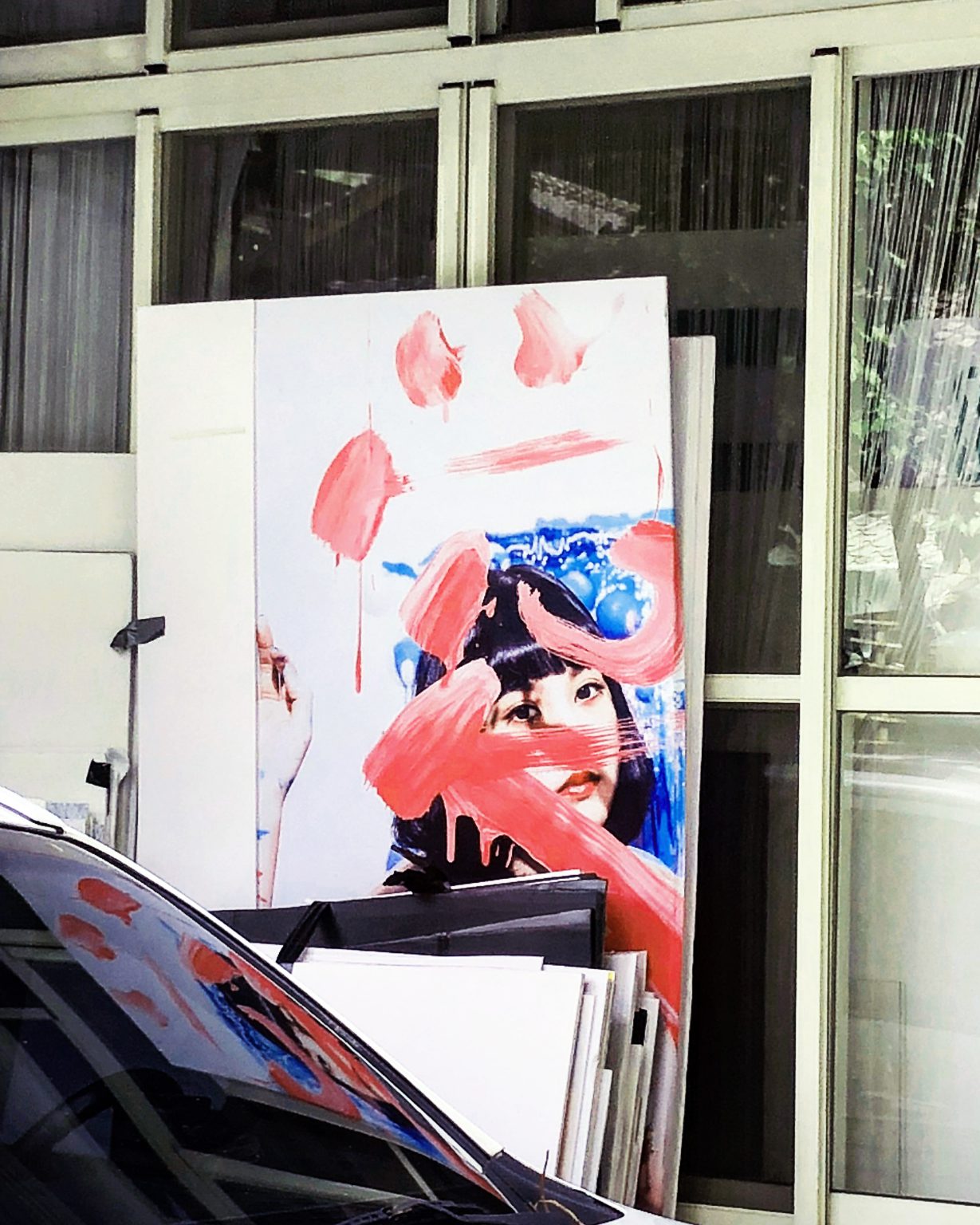
Photography by Yusuke Koishi
Asia, Local Realities, and the Risk of Souvenir-Making
Koishi: Recently I had a chance to see a runway show by a Southeast Asian designer. What I felt was that Japan and Southeast Asia now face the same problem when going outward. With the kind of “moderate otherness” that exists in Europe or North America, there is no necessity for Asian things to be accepted. When we pick up creators from Southeast Asia, we unconsciously expect some unusual angle. When I work with people overseas, I can feel that they are looking for a density of reality born from a particular climate or locality. I think we are at the moment of asking where and how that can resonate.
A friend of mine, Thao Vu, is a Vietnamese designer who studied at London College of Fashion. She seems to be popular not in Paris or London, but in Washington, DC. I think some people there use her clothes as a tool to show that they understand Oriental culture. It is a dangerous area, because half a step off and it becomes ethnic, souvenir-like making.
Egaitsu: Asian fashion often moves toward resort-like themes because of that context. But that does not necessarily break through.
Koishi: Exactly. To change the topic, what stimulates me when I speak with friends in Southeast Asia is that many are still in their twenties or thirties but already beginning large projects inside and outside their countries. In Japan, people born in the 1940s and 1950s who are called masters are still very active, and generations continue beneath them like layers of earth.
In Thailand I have friends such as the stylist Maan Jirawat and the designer Saran Yen Panya. In their case, they make cash domestically through work for royal families and conglomerates while energetically investing in overseas expansion. According to them, the creators doing the largest work now are in their thirties, people who studied abroad, returned, and built their footing. Because there is no older generation with strong external connections, they receive requests from inside and outside the country as representatives of the nation. The scale differs, but sensorially they are moving like Japanese people in their sixties or seventies. And the local people in their twenties are now pushing them upward.
It is not as strong as the overseas Chinese network, but they share a latent awareness that they need to form a loose fraternity and move as a scrum. If we look only at Japan as a whole, across industries, there is still a tendency for Japanese people to pull one another down. In that sense, the way the Ura-Harajuku community formed its scrum was powerful.
Egaitsu: Japanese people do not get along, do they? But compared with other Asian countries, Japan still has many parts that run on domestic demand. The negative effects of that appear very clearly in music.
Criticism as Advocacy
Koishi: In Japan, there are also many people who leave and never come back. Precisely because of this situation, I still think media has a role. The question is whether media can push something forcefully on its own terms. Sometimes people say that fashion has no criticism, but I do not think criticism exists only through words. A simple example is how many creators gained power through Kanye West’s advocacy. When an influential person sends the message “I think this is good” in every possible way, criticism begins to inhabit that act. At first there may be many opponents, but once that influence can no longer be ignored, everyone starts following. Anna Wintour’s influence still works this way.
In fields shaped by taste, media should do more than introduce things. It should make statements and push them. It would be interesting to see more willingness to take risks and advocate for things that have not yet been evaluated, without fear of disapproval, and to do so in English or Chinese. That would create more communication, and it would be more enjoyable.
Egaitsu: When Paris Hilton was popular on reality TV, I do not think anything good happened culturally. After Kanye appeared and started dating Kim Kardashian, more and more good things began to happen. But “criticism is forceful advocacy” is exactly right. Shigehiko Hasumi is a perfect example.
Koishi: Perhaps because of Hasumi, I have the image that Godard is watched mostly by Japanese people. Thinking of criticism that involves music and fashion, when American musicians wore NIGO’s A Bathing Ape, I imagine that was a kind of statement within the hip-hop music scene. What do you think?
Egaitsu: Another reason hip-hop became so large in America is that not only music but fashion and the surrounding culture all came together. In the 1990s, young white elites entered that culture in large numbers. Separate from the mistranslation of ordinary conspiracy theories, American elites showed a certain openness by saying, “I like these people too, so let us do this together.” It is unfortunate that such social mobility is difficult to imagine in Japan. When an incredible rapper appears from a place called the ghetto, it is hard to imagine Japanese elites jumping into that place.
Koishi: I completely agree. Perhaps that is where America’s depth lies. People good at making rules join in. American society is skilled at stirring demand and fashioning contemporary art, film, and music. Not only creators, but fixer-like management attaches firmly. Looking at Japan, Southeast Asia, and China, creative people do emerge in individual cases, but on the management side there are still not many players, generationally speaking, who can move with sensitivity.
Egaitsu: People might say, “Because they are yankii,” but I think, no, that is a business chance. The environment around music has changed greatly over the last twenty years. One change is that more people listen to music in languages they do not understand. Another is that it has become possible to show Asian people to teenagers all over the world as a total package including dance, video, and fashion. The fact that this became possible in global popular music is enormous.
Koishi: Asians used to be seen as one mass. Through pop culture, a more diverse image of Asia has gradually become recognized as common knowledge around the world. The very form of the “moderate otherness” that people around the world unconsciously seek from Asia may now be changing.
Profiles
Yusuke Koishi, born in 1984 in Aomori, is creative director and representative of KLEINSTEIN CO., LTD. Hiroshi Egaitsu is a writer, DJ, and lecturer at Kyoto Seika University and Tokyo University of the Arts, known for writing and curatorial work around street culture.